A Retirement Resignation Letter is a formal document that informs your employer of your decision to leave your position because you are retiring. Unlike a standard resignation letter, which often accompanies a move to another job, a retirement letter marks the end of an important professional chapter and the beginning of a new stage in life.
Writing a retirement resignation letter is an opportunity to express gratitude, communicate your intended retirement date, and help your employer prepare for a smooth transition. It also gives your organization time to arrange responsibilities, recruit a replacement, and review any retirement-related procedures.
Whether you have worked for the same company for five years or several decades, your retirement announcement should be clear, respectful, and professional. In this guide, you will learn what to include, when to submit your letter, and how to write an effective retirement resignation letter. You will also find a complete sample that you can adapt to your own circumstances.
What Is a Retirement Resignation Letter?
A retirement resignation letter is a formal written notice informing an employer that an employee intends to leave their position due to retirement. It typically includes the employee’s retirement date, current job title, appreciation for the organization, and an offer to assist with the transition.
Although retirement is a positive personal milestone, it still requires a professional departure process. The letter provides an official record of your decision and helps your employer begin the necessary administrative arrangements.
A retirement resignation letter may also serve as the starting point for discussions about final compensation, unused vacation days, pension arrangements, health insurance, and other applicable employee benefits.
Why Is a Retirement Resignation Letter Important?
Submitting a formal retirement notice benefits both the employee and the organization. It helps ensure that the final stage of employment is handled professionally and without unnecessary confusion.
1. Provides Official Notice of Retirement
A written letter formally communicates your intention to retire and establishes your proposed final working date. This helps your employer document the decision and coordinate the next steps.
2. Gives the Company Time to Prepare
Retirement may affect team responsibilities, ongoing projects, and daily operations. Providing advance notice allows management to arrange a replacement, redistribute tasks, and prepare a handover plan.
3. Expresses Appreciation
After years of employment, a retirement letter is an appropriate place to thank your employer, managers, and colleagues for their support. A sincere message can help preserve professional relationships and end your career on a positive note.
4. Supports Retirement Administration
Your retirement notice can help initiate discussions about pension benefits, retirement accounts, insurance coverage, final payments, and other company procedures. However, the letter itself does not automatically activate or guarantee these benefits.
What to Include in a Retirement Resignation Letter
A professional retirement resignation letter should be straightforward and easy to understand. You do not need to explain every detail of your retirement plans. Focus on the essential information your employer needs.
- Date of submission: Include the date you are sending the letter.
- Employer information: Add the recipient’s name, job title, and company name.
- Clear retirement announcement: State that you are formally resigning because of retirement.
- Final working date: Specify the intended effective date of your retirement.
- Expression of gratitude: Thank the organization for the opportunities and experiences you received.
- Transition assistance: Offer reasonable help with handing over responsibilities or training a successor.
- Administrative arrangements: Request information about final paperwork, pension procedures, and applicable benefits.
- Professional closing: End with a respectful sign-off and your full name.
Including these details helps make your retirement announcement complete without making the letter unnecessarily long.
How to Write a Retirement Resignation Letter
Writing a retirement resignation letter is relatively simple when you follow a clear structure. Use the steps below to prepare a professional announcement that reflects your appreciation and retirement plans.
Step 1: Choose a Professional Format
Use a standard business letter format with your contact information, submission date, recipient details, greeting, body paragraphs, and closing.
If you are submitting your retirement notice by email, use a clear subject line such as “Formal Retirement Notice – [Your Name].”
Step 2: Clearly Announce Your Retirement
Begin the main message by stating that you intend to retire from your current position. Avoid vague language that could make your employer uncertain about whether you are resigning or simply discussing future plans.
For example:
“I am writing to formally announce my retirement from my position as Senior Project Manager, effective June 30, 2026.”
Step 3: Include Your Final Working Date
Your intended retirement date is one of the most important details in the letter. Make sure the date is clear and consistent with your employment agreement, company policy, and any applicable notice requirements.
If you are unsure about the appropriate date, discuss your plans with your manager or human resources department before submitting the final letter.
Step 4: Express Appreciation for Your Career
Take a moment to acknowledge the opportunities, professional experiences, and relationships you have developed during your employment.
You can mention how much you have valued working with the organization without making the letter overly emotional or lengthy.
Step 5: Offer Assistance with the Transition
Show your willingness to support the organization during the transition period. You might offer to document ongoing projects, organize important files, transfer responsibilities, or help train your replacement.
Only promise assistance that is realistic and consistent with your remaining employment period.
Step 6: Ask About Retirement Procedures
Retirement often involves administrative matters beyond the resignation itself. Ask your employer or HR department about the paperwork and procedures required to complete your departure.
These may include pension enrollment or distribution procedures, retirement account information, health insurance, unused leave, and final compensation.
Step 7: End with a Professional Closing
Finish your letter with a sincere thank-you message and a professional sign-off such as “Sincerely” or “Best regards.”
Keep the overall tone positive, respectful, and appreciative.
Retirement Resignation Letter Sample
If you need a practical example, the following retirement resignation letter demonstrates how to communicate your decision professionally while expressing appreciation and offering transition support.
You can use this sample as a starting point and replace the names, job title, company details, and retirement date with your own information.
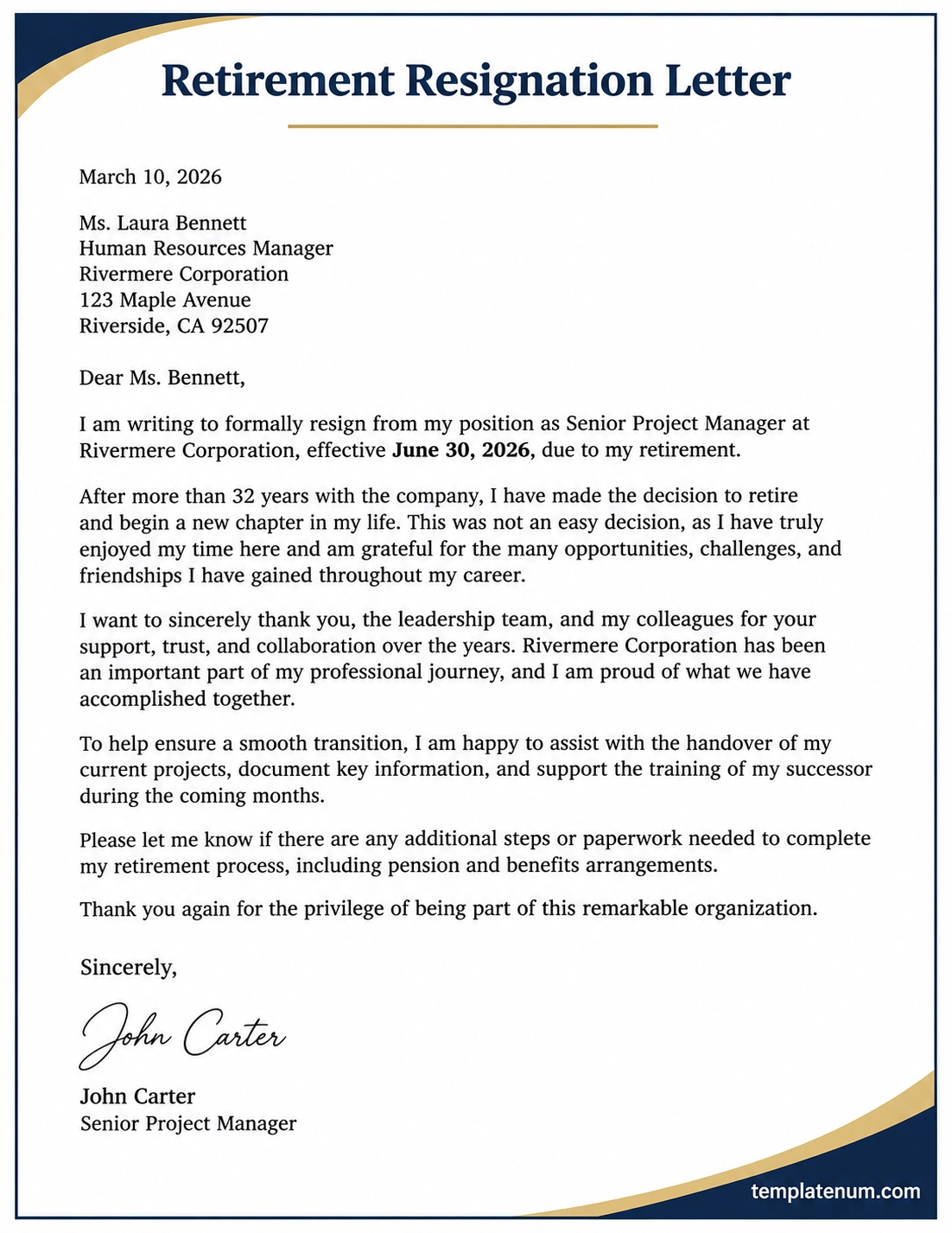
Complete Retirement Resignation Letter Example
March 10, 2026
Ms. Laura Bennett
Human Resources Manager
Rivermere CorporationDear Ms. Bennett,
I am writing to formally announce my retirement from my position as Senior Project Manager at Rivermere Corporation, effective June 30, 2026.
After more than 32 years with the company, I have decided that it is time to retire and begin a new chapter in my life. This decision has not been easy, as I have genuinely enjoyed my time here and am grateful for the many opportunities, challenges, and friendships I have experienced throughout my career.
I would like to sincerely thank you, the leadership team, and my colleagues for your support, trust, and collaboration over the years. Being part of Rivermere Corporation has been an important part of my professional journey, and I am proud of what we have accomplished together.
To help ensure a smooth transition, I would be happy to assist with handing over my current projects, documenting important information, and supporting the training of my successor during the coming months.
Please let me know if there are any additional steps or documents required to complete my retirement process, including pension and employee benefit arrangements.
Thank you again for the privilege of being part of this organization. I wish the company and everyone on the team continued success.
Sincerely,
John Carter
Senior Project Manager
Short Retirement Resignation Letter Example
If you prefer a shorter announcement, you can use a concise retirement resignation letter that covers the essential details without lengthy explanations.
Simple Retirement Resignation Letter
Subject: Retirement Resignation Notice
Dear [Manager’s Name],
I am writing to formally announce my retirement from my position as [Job Title] at [Company Name], effective [Retirement Date].
I am grateful for the opportunities, support, and professional experiences I have received during my time with the organization. Working with such a dedicated team has been a rewarding part of my career.
I am committed to helping ensure a smooth transition before my departure and would be happy to assist with any necessary handover arrangements.
Please let me know about any retirement-related paperwork or administrative procedures I should complete before my final working day.
Thank you for everything. I wish you and the company continued success.
Sincerely,
[Your Full Name]
When Should You Submit a Retirement Resignation Letter?
The appropriate time to submit a retirement resignation letter depends on your employment agreement, company policies, and the complexity of your responsibilities.
As a general professional courtesy, providing several weeks or a few months of notice can give your employer sufficient time to prepare for your departure.
Consider the following factors when choosing your submission date:
- Company notice requirements: Review your employment contract and employee handbook for applicable notice provisions.
- Management responsibilities: Senior employees may need additional time to transfer knowledge and ongoing projects.
- Retirement benefit procedures: Contact HR early to understand pension, insurance, and retirement paperwork deadlines.
- Personal retirement plans: Coordinate your final working date with your intended retirement schedule.
- Project deadlines: Consider important business activities that may require a planned handover.
It is also helpful to speak with your manager before submitting the formal letter, especially if you have worked for the organization for many years.
Tips for Writing a Professional Retirement Letter
A well-written retirement resignation letter should reflect your professionalism and appreciation. Keep these practical tips in mind before sending it.
Keep the Tone Positive
Focus on gratitude and future plans rather than workplace complaints or unresolved disagreements. Even if your employment experience has been challenging, maintain a respectful tone.
Be Clear About Your Retirement Date
Do not leave your final working date open to interpretation. State the exact date and confirm it with your employer if necessary.
Avoid Unnecessary Personal Details
You do not need to explain your financial situation, health circumstances, or personal retirement plans unless you choose to share them. A simple statement that you are retiring is sufficient.
Proofread Before Submitting
Check the spelling of names, company details, job titles, and dates. A carefully reviewed letter creates a professional impression and reduces the risk of misunderstandings.
Keep a Copy for Your Records
Save a copy of your submitted retirement resignation letter and any written confirmation from your employer. These records may be useful when reviewing your final employment arrangements.
Frequently Asked Questions About Retirement Resignation Letters
What is a retirement resignation letter?
A retirement resignation letter is a formal written notice informing an employer that an employee is leaving their position because they are retiring. It usually includes the retirement date, appreciation for the organization, and an offer to help with the transition.
How do I write a retirement resignation letter?
Start with a formal greeting, clearly announce your retirement, specify your final working date, express appreciation for your employer, and offer reasonable transition assistance. Finish by asking about any required retirement procedures.
How much notice should I give before retiring?
The appropriate notice period depends on your employment agreement and company policy. Several weeks or a few months may be appropriate in many situations, particularly for senior positions that require a detailed handover.
Should I explain why I am retiring?
No. You do not need to provide a detailed explanation. Simply stating that you are retiring is generally sufficient. You may share additional personal details if you feel comfortable doing so.
Should I send my retirement resignation letter to HR or my manager?
In many organizations, the letter should be addressed to your direct manager, with a copy sent to HR if required by company policy. Check your organization’s retirement procedures before submitting it.
Can I submit a retirement resignation letter by email?
Yes. Many employers accept retirement notices by email. Use a professional subject line, include the essential details in the message, and follow any internal requirements for formal written documentation.
Should I mention pension and retirement benefits in my letter?
You can request information about pension arrangements, retirement benefits, insurance coverage, and final payments. However, it is better to discuss detailed eligibility and benefit calculations directly with HR or the relevant plan administrator.
Is a retirement resignation letter different from a regular resignation letter?
Yes. Both documents formally announce an employee’s departure, but a retirement resignation letter specifically identifies retirement as the reason. It also commonly includes appreciation for a long career and an offer to support the transition.
Can I write a short retirement resignation letter?
Absolutely. A short retirement letter is acceptable as long as it clearly states your retirement decision, effective date, appreciation, and willingness to assist with the transition when appropriate.
Do I need to include my retirement date in the letter?
Yes. Including a specific retirement date helps your employer understand when your employment is expected to end and plan the necessary administrative and operational arrangements.
Make Your Retirement Announcement Professional and Meaningful
A Retirement Resignation Letter is more than a formal employment notice. It represents the closing of an important professional chapter and provides an opportunity to recognize the experiences, relationships, and achievements gained throughout your career.
By clearly stating your retirement date, expressing appreciation, and offering reasonable transition assistance, you can leave your position on positive and professional terms.
Whether you choose a detailed retirement resignation letter or a shorter version, make sure your message is sincere, respectful, and aligned with your company’s procedures. A thoughtful letter helps create a smooth transition and allows you to begin retirement with confidence.
Download: Retirement Resignation Letter Template
