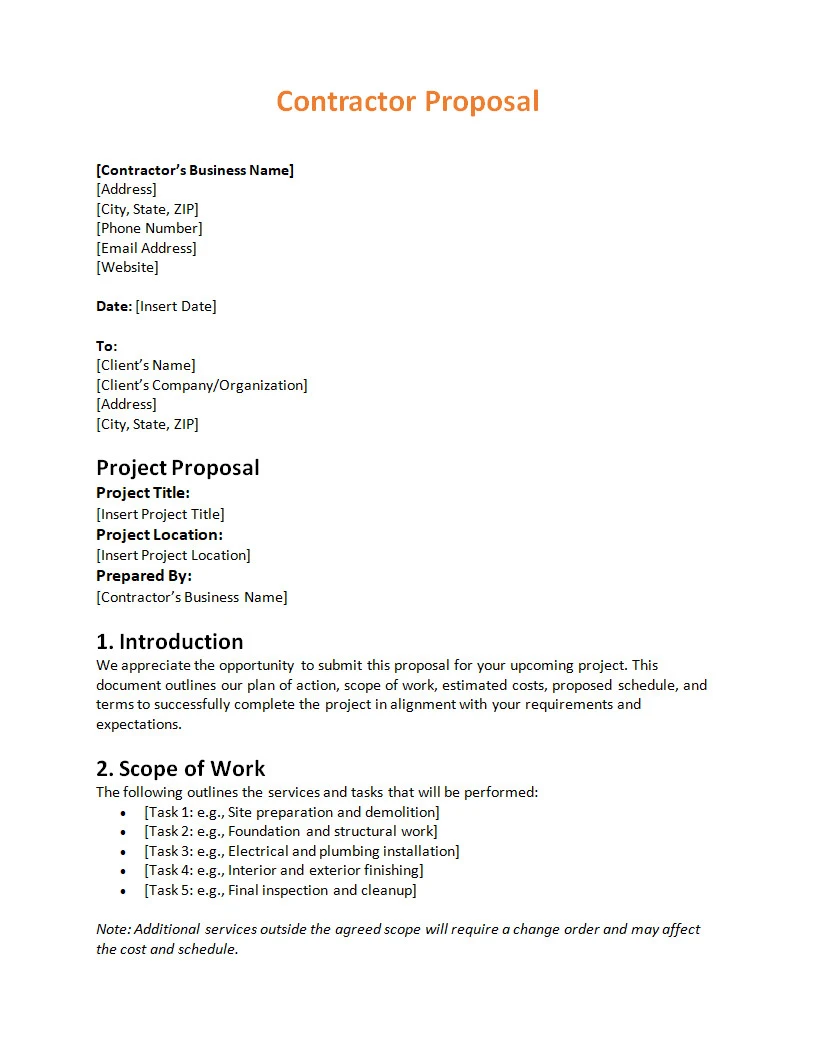
When embarking on a construction project, whether it’s a small renovation or a large-scale development, having a detailed, formal document outlining the contractor’s proposed plan is essential.
This document, known as a contractor proposal, serves as a crucial tool in securing the project by persuading the client and forming a basis for negotiation and the eventual contract. It functions as a sales tool to showcase the contractor’s value and a blueprint to ensure both parties are in agreement on project expectations before work begins.
What is a Contractor Proposal?
A contractor proposal is a detailed document that outlines the contractor’s proposed plan for a construction project. It includes the scope of work, costs, timeline, materials, and any other relevant details.
This document is typically submitted to the client as part of the bidding process and serves as a formal offer to complete the project according to the terms outlined.
Why are Contractor Proposals Important?
Contractor proposals are essential for several reasons. Firstly, they provide a clear and detailed outline of the project, ensuring that both the contractor and client are on the same page regarding expectations. Secondly, they serve as a legal document that can be used to resolve disputes or misunderstandings that may arise during the project.
Additionally, contractor proposals help to establish trust and credibility with the client by showcasing the contractor’s professionalism and expertise.
Key Elements of a Contractor Proposal
- Scope of Work. This section outlines the specific tasks and responsibilities that the contractor will undertake as part of the project.
- Costs. The proposal should include a detailed breakdown of costs, including labor, materials, permits, and any other expenses associated with the project.
- Timeline. A proposed timeline for the project, including start and completion dates, is crucial for setting expectations and managing the construction process.
- Materials. The type and quality of materials to be used in the project should be clearly specified in the proposal to ensure transparency and quality control.
- Terms and Conditions. This section outlines the terms of the agreement, including payment schedules, warranties, and any other relevant details.
How to Create a Contractor Proposal
Creating a contractor proposal requires careful planning and attention to detail. Here are some steps to help you create a comprehensive and effective proposal:
1. Start by gathering all necessary information about the project, including the client’s requirements, budget, and timeline.
2. Clearly define the scope of work, including specific tasks, deliverables, and milestones.
3. Provide a detailed breakdown of costs, including estimates for labor, materials, equipment, and any other expenses.
4. Develop a realistic timeline for the project, taking into account factors such as weather conditions, permits, and subcontractor availability.
5. Specify the type and quality of materials to be used in the project, ensuring that they meet the client’s expectations.
6. Include any terms and conditions that apply to the project, such as payment schedules, warranties, and dispute resolution procedures.
7. Proofread the proposal carefully to ensure that it is free of errors and clearly communicates your plan to the client.
8. Submit the proposal to the client on time and be prepared to answer any questions or provide additional information as needed.
9. Follow up with the client to discuss the proposal and address any concerns or revisions that may be required.
10. Once the proposal is accepted, work with the client to finalize the contract and begin the construction process.
Tips for Writing a Winning Contractor Proposal
Writing a winning contractor proposal requires a combination of professionalism, attention to detail, and persuasive communication. Here are some tips to help you create a successful proposal:
1. Tailor the proposal to the specific needs and preferences of the client, demonstrating that you understand their requirements and can deliver a solution that meets their expectations.
2. Use clear and concise language to communicate your plan, avoiding jargon or technical terms that may be confusing to the client.
3. Highlight your experience, qualifications, and track record of success in similar projects to build credibility and trust with the client.
4. Provide supporting documentation, such as references, certifications, and project portfolios, to demonstrate your expertise and capabilities.
5. Be transparent about costs and timelines, providing detailed estimates and realistic projections to set clear expectations with the client.
6. Include visuals, such as photos, diagrams, and renderings, to help the client visualize the project and understand your proposed plan.
7. Be responsive and proactive in your communication with the client, addressing any questions or concerns promptly and professionally.
8. Follow up with the client after submitting the proposal to ensure they have received it and offer to discuss any details or revisions.
9. Be flexible and open to negotiation, recognizing that the proposal is a starting point for discussion and may require adjustments to meet the client’s needs.
10. Approach the proposal as a collaborative effort to establish a partnership with the client and work together towards a successful project outcome.
In conclusion, a well-written contractor proposal is a crucial tool for securing construction projects, establishing expectations, and building trust with clients. By following the key elements and tips outlined in this guide, contractors can create compelling proposals that showcase their value, expertise, and commitment to delivering successful projects. Remember that a strong proposal not only persuades the client but also forms the foundation for a successful partnership and project completion.
Contractor Proposal Template – Word
