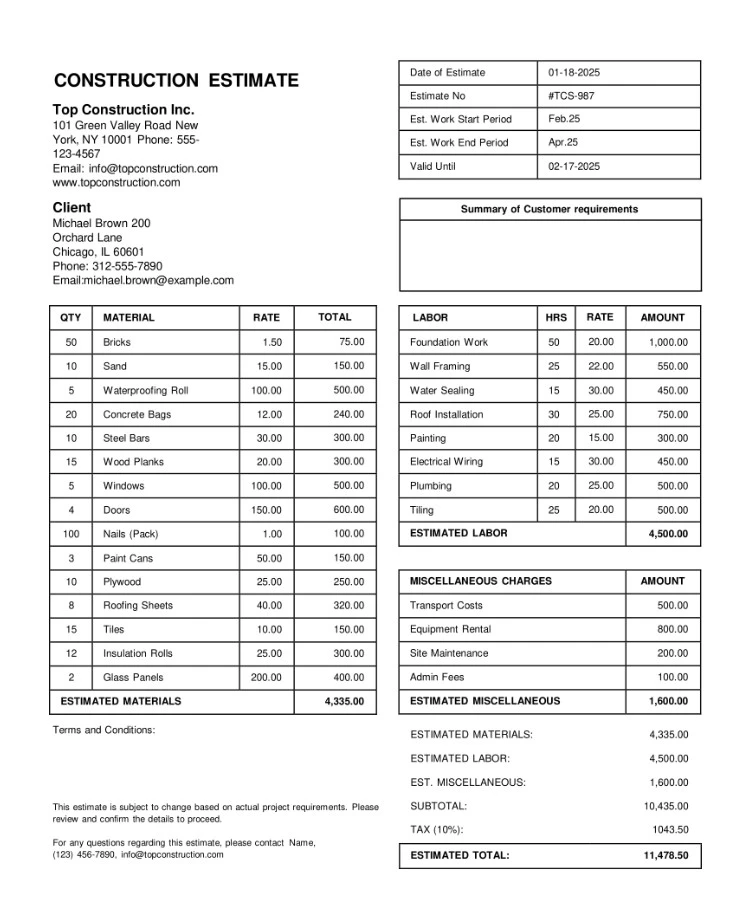
When embarking on a construction project, one of the first steps is to determine the potential expenses involved. This is where a construction estimate comes into play.
A construction estimate is a preliminary cost assessment for a construction project, providing a general idea of the potential expenses to clients and aiding in project planning and budgeting. It’s a crucial document for both contractors and clients to gauge project feasibility, manage expectations, and make informed decisions.
What is a Construction Estimate?
A construction estimate is a detailed breakdown of the costs associated with a construction project. It includes all the expenses involved in the project, such as materials, labor, equipment, permits, and any other relevant costs. The estimate is typically provided by the contractor or construction company to the client before the project commences to give an idea of the overall cost.
Creating an accurate construction estimate requires a thorough understanding of the project scope, materials needed, labor costs, and potential challenges that may arise during the construction process. Contractors use their expertise and industry knowledge to provide clients with a realistic estimate that reflects the true cost of the project.
The Importance of An Estimate for Contractors
For contractors, providing a detailed construction estimate is essential for several reasons. It helps them accurately price their services, ensuring they cover all the costs associated with the project while still making a profit. Additionally, a well-prepared estimate helps contractors manage client expectations and build trust by demonstrating transparency in their pricing.
Furthermore, a construction estimate serves as a roadmap for the project, outlining the scope of work and budget constraints. It allows contractors to plan the project effectively, allocate resources efficiently, and mitigate risks by identifying potential cost overruns early on.
Types of Construction Cost Estimates
There are several types of construction cost estimates that contractors may use depending on the project’s stage and complexity. These include:
- Preliminary Estimate: A rough cost assessment based on limited information, often used during the initial planning stages.
- Budget Estimate: A more detailed estimate used to determine whether a project is financially feasible.
- Definitive Estimate: A precise estimate based on detailed project plans and specifications, used for contract negotiations.
- Change Order Estimate: An estimate provided when changes are made to the original scope of work, outlining the additional costs involved.
- Unit Price Estimate: An estimate based on unit prices for materials and labor, used for projects with repetitive elements.
What are The Benefits of Cost Estimation?
Cost estimation plays a crucial role in the success of a construction project. Some of the key benefits of accurate cost estimation include:
- Financial Planning: Helps clients budget for the project and secure financing.
- Risk Management: Identifies potential cost overruns and allows for proactive risk mitigation.
- Resource Allocation: Ensures the efficient allocation of resources to maximize project efficiency.
- Client Satisfaction: Sets clear expectations for clients and builds trust through transparency.
- Competitive Advantage: Accurate cost estimation can give contractors a competitive edge in the market.
When Should You Use The Estimate Form?
It’s important to use a construction estimate form at the beginning of the project planning process. This allows clients to assess the feasibility of the project, make informed decisions, and plan their budget accordingly. Contractors should provide estimates before signing a contract to ensure that both parties are on the same page regarding project costs and expectations.
Regularly updating the estimate throughout the project is also recommended to account for any changes or unforeseen circumstances that may impact the budget. By continuously monitoring and adjusting the estimate, contractors can stay on track and avoid costly surprises.
How to Perform a Cost Estimation
Performing a cost estimation requires a systematic approach to ensure accuracy and reliability. The following steps are typically involved in the cost estimation process:
- Define the Scope: Clearly outline the project scope, deliverables, and objectives.
- Collect Data: Gather information on materials, labor costs, equipment, permits, and other relevant expenses.
- Quantify Costs: Break down the costs into categories and quantify each item based on current market rates.
- Account for Contingencies: Include a contingency fund to cover unforeseen expenses or changes in the project scope.
- Review and Adjust: Review the estimate with key stakeholders and make adjustments as needed to ensure accuracy.
Common Mistakes to Avoid
While performing a cost estimation, it’s important to avoid certain common mistakes that can lead to inaccurate estimates and cost overruns. Some of these mistakes include:
- Underestimating Labor Costs: Failing to account for labor costs accurately can result in significant budget overruns.
- Ignoring Contingencies: Not including a contingency fund in the estimate can leave the project vulnerable to unexpected expenses.
- Overlooking Scope Changes: Failure to account for changes in the project scope can lead to additional costs and delays.
- Using Outdated Data: Relying on outdated information for cost estimation can result in inaccurate estimates.
- Not Consulting Experts: Seeking input from industry experts and stakeholders can help ensure the accuracy of the estimate.
In conclusion, a construction estimate is a vital tool for contractors and clients alike to plan and manage construction projects effectively. By understanding the importance of cost estimation, the types of estimates available, and how to perform a thorough estimate, both parties can ensure project success and avoid costly surprises. By following best practices and avoiding common mistakes, contractors can provide accurate estimates that set the foundation for a successful construction project.
Construction Estimate Template – Free Download
