In today’s fast-paced world, it can be challenging to keep track of all the relationships and connections that make up our social support system. This is where ecomap templates come in handy.
Ecomap templates are visual tools used to map out a person’s or family’s relationships with their environment and social support systems. By creating an ecomap, individuals can gain a better understanding of their support network, identify sources of stress, and pinpoint areas where additional interventions or support might be needed.
What is an Ecomap?
An ecomap is a graphical representation of an individual’s or family’s social support system. It includes all the significant relationships that a person has within their community, such as family members, friends, colleagues, teachers, healthcare providers, and more. Ecomaps are typically created by the individual or with the help of a therapist, social worker, or counselor.
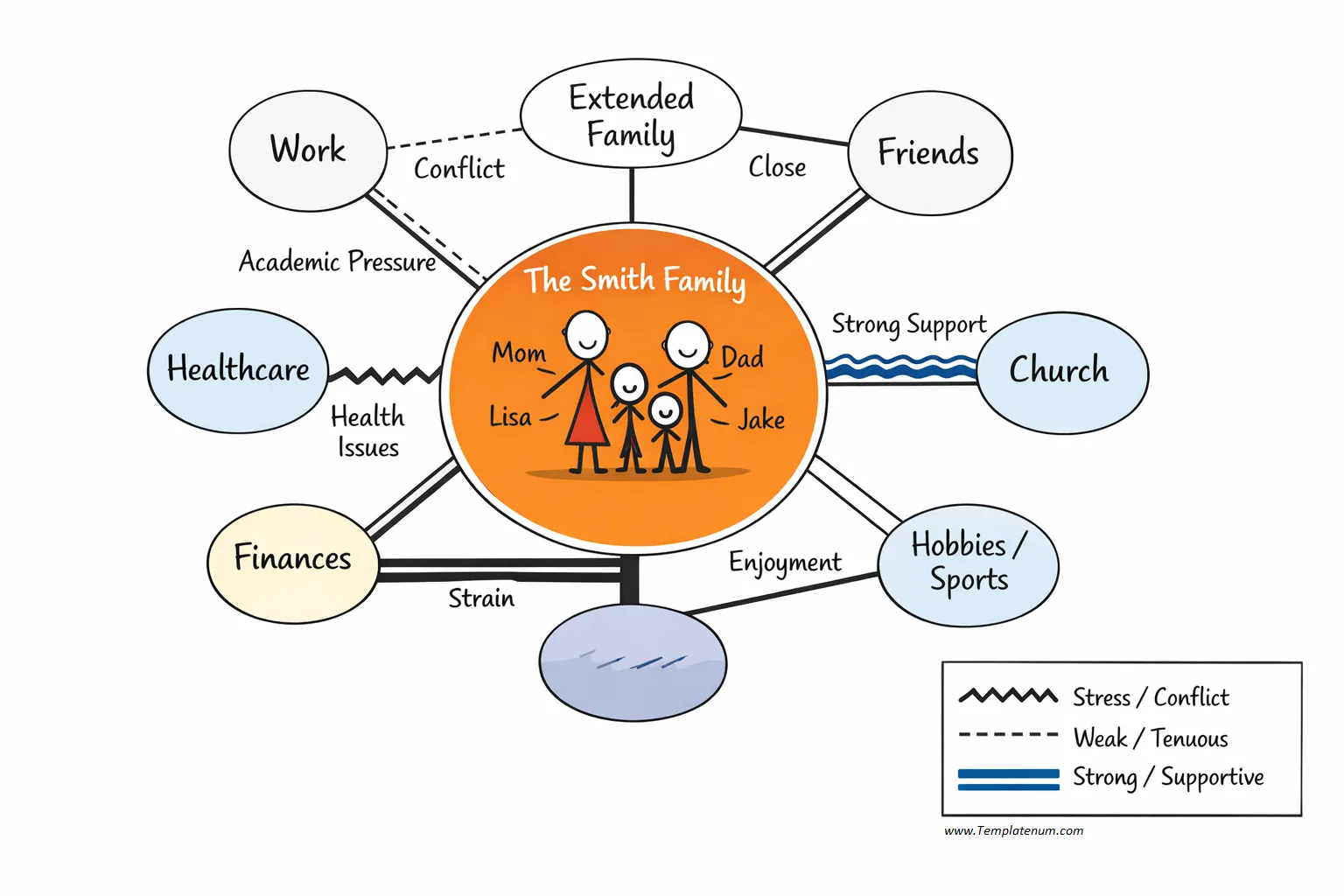
Ecomaps use symbols, lines, and colors to represent different types of relationships and connections. For example, a solid line may indicate a close relationship, while a dashed line may signify a more distant or strained relationship. By visually mapping out these connections, individuals can gain insights into the quality and strength of their support network.
The Benefits of Using an Ecomap
There are numerous benefits to using an ecomap template. Some of the key advantages include:
Increased Self-Awareness
Creating an ecomap requires individuals to reflect on their relationships and connections, which can lead to increased self-awareness. By visually mapping out their social support system, individuals can see how different relationships impact their well-being and identify areas where they may need to strengthen or change their connections. This process of self-reflection can help individuals gain insights into their own needs, values, and priorities, leading to a greater sense of self-awareness and personal growth.
Identifying Sources of Stress
One of the key benefits of using an ecomap is the ability to identify sources of stress in one’s life. By mapping out their relationships and connections, individuals can see which areas of their social support system may be causing tension, conflict, or stress. For example, a strained relationship with a family member or a lack of support from friends may be sources of stress that are highlighted on an ecomap. Once these sources of stress are identified, individuals can take steps to address them, such as setting boundaries, seeking therapy, or reaching out for additional support.
Highlighting Areas for Intervention
Ecomaps can be valuable tools for identifying areas where additional support or interventions may be needed. By visually mapping out their social support system, individuals can see where there may be gaps or weaknesses in their relationships. For example, an individual may notice that they have a limited support network or that they rely heavily on one person for emotional support. In these cases, an ecomap can highlight the need for additional interventions, such as joining a support group, seeking therapy, or reaching out to other friends and family members for support.
Enhancing Communication
Ecomaps can serve as a communication tool for individuals to discuss their relationships and support systems with others. For example, sharing an ecomap with a therapist or counselor can help facilitate discussions about the quality of relationships, sources of stress, and areas for growth. Family ecomaps can also be used to improve communication within families by visually representing the strengths and weaknesses of the family support system. By using ecomaps as a communication tool, individuals and families can have more open and honest conversations about their relationships and support networks.
Types of Ecomap
There are two main types of ecomaps: individual ecomaps and family ecomaps. Each type serves a different purpose and provides unique insights into an individual’s or family’s social support system.
Individual Ecomap
An individual ecomap focuses on mapping out an individual’s relationships with their environment and social support systems. This type of ecomap typically includes the individual’s immediate family members, extended family, friends, colleagues, and healthcare providers. By creating an individual ecomap, individuals can gain insights into the quality and strength of their support network, identify sources of stress, and pinpoint areas where additional interventions or support may be needed.
Family Ecomap
A family ecomap provides a visual representation of the relationships within a family unit and their connections to the broader community. Family ecomaps typically include immediate family relationships, extended family connections, support systems, and healthcare providers involved with the family. By creating a family ecomap, families can gain a better understanding of their support network, identify areas for growth and intervention, and improve communication within the family unit.
What’s included in an Individual Ecomap?
An individual ecomap typically includes the following components:
Immediate Family Members
Immediate family members are typically the closest and most significant relationships in an individual’s life. Parents, siblings, children, and other close family members play a crucial role in providing emotional support, guidance, and companionship. When creating an individual ecomap, individuals can represent these relationships using symbols or colors that reflect the strength and quality of the connection. For example, a solid line may be used to represent a strong relationship with a parent, while a dashed line may indicate a more distant relationship with a sibling.
Extended Family
Extended family members, such as grandparents, aunts, uncles, cousins, and other relatives, also play important roles in an individual’s social support system. These relationships can provide additional layers of emotional support, connection to cultural heritage, and a sense of belonging. When mapping out extended family connections on an ecomap, individuals can use different symbols or colors to represent the varying degrees of closeness and involvement with each family member. By including extended family relationships on an ecomap, individuals can gain a more comprehensive understanding of their support network and the sources of strength within their family.
Friends
Friends are an essential part of an individual’s social support system, providing companionship, emotional support, and a sense of belonging. Close friends, acquaintances, and social connections can play different roles in an individual’s life, from providing a listening ear during challenging times to offering companionship and shared experiences. When creating an individual ecomap, individuals can map out their relationships with friends using symbols or colors that reflect the closeness and significance of each friendship. By including friends on an ecomap, individuals can see how these relationships contribute to their overall well-being and identify areas where additional support or connection may be needed.
Colleagues
Colleagues and professional connections are an important part of an individual’s social support system, providing opportunities for collaboration, networking, and professional growth. Coworkers, supervisors, and other professional connections can offer support, guidance, and mentorship in the workplace. When creating an individual ecomap, individuals can include their relationships with colleagues by using symbols or colors to represent the nature of their professional connections. By mapping out these relationships, individuals can see how their work environment impacts their overall well-being and identify areas where additional support or collaboration may be beneficial.
Healthcare Providers
Healthcare providers, including doctors, therapists, counselors, and other medical professionals, play a crucial role in an individual’s health and well-being. These professionals provide support, treatment, and guidance for physical, mental, and emotional health needs. When creating an individual ecomap, individuals can include their relationships with healthcare providers to see how these connections contribute to their overall well-being. By mapping out these relationships, individuals can identify areas where additional medical support or interventions may be needed and ensure that they have a comprehensive healthcare team to address their health needs.
What’s included in a Family Ecomap?
A family ecomap includes similar components as an individual ecomap, but with a focus on the relationships within the family unit. Some common elements found in a family ecomap include:
Immediate Family Relationships
Immediate family relationships, such as parent-child, sibling, and spousal relationships, are at the core of a family ecomap. These relationships play a fundamental role in providing emotional support, stability, and connection within the family unit. When creating a family ecomap, family members can visually represent these relationships using symbols or colors that reflect the strength and quality of each bond. By including immediate family relationships on a family ecomap, families can see how these connections impact their overall well-being and communication within the family.
Extended Family Connections
Extended family connections, including relationships with grandparents, aunts, uncles, cousins, and other relatives, provide additional layers of support and connection within a family ecosystem. These relationships can offer cultural heritage, shared traditions, and a sense of belonging to the family unit. When mapping out extended family connections on a family ecomap, families can use symbols or colors to represent the varying degrees of closeness and involvement with each family member. By including extended family relationships on a family ecomap, families can see how these connections contribute to their overall support network and identify areas where additional family involvement or connection may be beneficial.
Support Systems
Support systems are external sources of support that play a vital role in a family’s well-being and functioning. These systems may include schools, churches, community organizations, social services, and other resources that provide assistance and support to the family unit. When creating a family ecomap, families can include their connections to these support systems to see how they contribute to their overall support network. By mapping out these connections, families can identify areas where additional support or intervention from external sources may be needed to strengthen their family unit and address any challenges they may be facing.
Healthcare Providers
Healthcare providers are essential members of a family’s support system, providing medical care, treatment, and guidance for the health needs of family members. Doctors, therapists, counselors, and other medical professionals can offer support for physical, mental, and emotional health concerns within the family unit. When creating a family ecomap, families can include their relationships with healthcare providers to see how these connections contribute to their overall well-being. By mapping out these connections, families can ensure that they have a comprehensive healthcare team to address their health needs and identify areas where additional medical support or interventions may be needed for family members.
How to Use an Ecomap
Creating an ecomap is a straightforward process that involves the following steps:
Gather Information
The first step in creating an ecomap is to gather information about one’s relationships and connections. This may involve reflecting on the significant people in one’s life, such as family members, friends, colleagues, and healthcare providers. Individuals can make a list of these relationships and consider the quality and strength of each connection before moving on to the next step.
Draw the Ecomap
Once the information is gathered, individuals can begin to draw their ecomap using a blank template or ecomap software. Ecomaps typically use symbols, lines, and colors to represent different types of relationships and connections. Individuals can use these visual elements to map out their relationships and connections, making sure to include all significant people and the nature of their relationships on the ecomap.
Analyze the Ecomap
After creating the ecomap, individuals can analyze the relationships and connections that have been mapped out. This analysis involves reflecting on the quality and strength of each relationship, identifying sources of stress or conflict, and pinpointing areas where additional support or intervention may be needed. By examining the ecomap, individuals can gain insights into their social support system and see how different aspects of their environment impact their well-being.
Identify Areas for Intervention
One of the key purposes of using an ecomap is to identify areas where additional support or interventions may be needed. By analyzing the relationships on the ecomap, individuals can pinpoint areas where there may be gaps or weaknesses in their social support system. This may include strained relationships, limited sources of support, or areas of stress or conflict. By identifying these areas for intervention, individuals can take steps to address these issues, such as seeking therapy, setting boundaries, or reaching out for additional support from friends and family members.
Discuss with a Professional
Lastly, individuals can share their ecomap with a therapist, counselor, or social worker to further explore the findings and develop a plan for addressing any identified issues. Professionals can provide insights, guidance, and support based on the information presented in the ecomap. By discussing the ecomap with a professional, individuals can receive additional tools and resources to strengthen their social support system, improve their well-being, and foster healthier relationships.
Ecomap Template – WORD
