Employee Non-Disclosure Agreements (NDAs) are essential legal tools that help companies safeguard their confidential information, such as trade secrets, proprietary data, and customer lists. These agreements establish a contractual framework that binds employees to secrecy during and after their employment, ensuring that sensitive information remains protected.
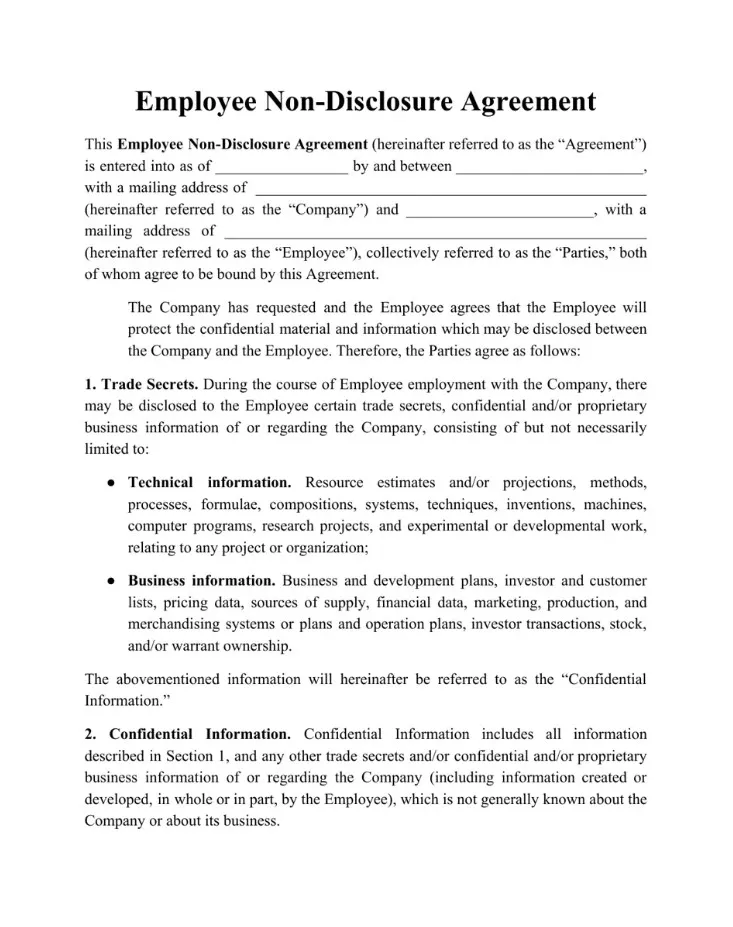
In this article, we will delve into the significance of NDAs in protecting company confidentiality and explore the key elements that should be included in these agreements.
What is an Employee NDA?
An Employee Non-Disclosure Agreement (NDA) is a legally binding contract between an employer and an employee that outlines the terms of confidentiality. By signing an NDA, employees agree to keep certain information confidential and not disclose it to third parties.
NDAs typically define what information is considered confidential, specify the obligations of the employee to maintain secrecy, and establish the consequences of breaching the agreement.
Why Employee NDAs are Important?
Employee NDAs play a crucial role in protecting a company’s sensitive information and preserving its competitive advantage. Here are some key reasons why NDAs are essential:
Protecting Trade Secrets
One of the primary reasons companies use NDAs is to protect their trade secrets. Trade secrets are valuable information that gives a business a competitive edge, such as formulas, processes, designs, or customer lists. By requiring employees to keep trade secrets confidential, NDAs help prevent competitors from gaining access to proprietary information.
Safeguarding Proprietary Data
Companies often have proprietary data that is crucial to their operations, such as client information, marketing strategies, or research findings. NDAs ensure that this information remains confidential and is not misused or shared inappropriately. By safeguarding proprietary data, companies can maintain their unique competitive position in the market.
Securing Customer Lists
Customer lists are a valuable asset for many businesses, as they represent a source of potential revenue and strategic advantage. NDAs prevent employees from using or disclosing customer lists for personal gain or to benefit a competitor. By securing customer lists, companies can protect their relationships with clients and maintain a competitive edge in the industry.
Maintaining Brand Reputation
Confidentiality breaches can have serious consequences for a company’s brand reputation. If sensitive information is leaked or misused, it can damage trust with customers, partners, and stakeholders. NDAs help prevent such breaches by establishing clear guidelines for handling confidential information. By maintaining brand reputation through confidentiality, companies can uphold their credibility and trustworthiness in the market.
What to Include in an Employee NDA?
When creating an Employee Non-Disclosure Agreement, it is crucial to include specific elements that provide comprehensive protection for the company’s confidential information. Here are key components to include in an NDA:
Definition of Confidential Information
The NDA should clearly define what constitutes confidential information, including specific examples of the types of information that must be kept confidential. This may include intellectual property, financial data, client lists, product designs, and any other proprietary information that the company wishes to protect.
Obligations of the Employee
The NDA should outline the responsibilities of the employee regarding the handling of confidential information. This may include requirements to maintain confidentiality, restrict access to confidential information, refrain from sharing information with unauthorized parties, and return or destroy confidential materials at the end of employment.
Duration of the Agreement
The NDA should specify the duration for which the agreement remains in effect. This typically includes the period during which the employee is employed by the company and extends beyond the termination of employment. By establishing a clear timeframe for confidentiality obligations, both parties understand the duration of their commitment to keeping information confidential.
Scope of Confidentiality
The NDA should clearly define the scope of confidentiality, outlining the specific information that is considered confidential and subject to the agreement. This may include categories of information, specific documents or data sets, and any other details that help delineate the boundaries of what must be kept confidential.
Exclusions from Confidentiality
The NDA should specify any exclusions from confidentiality obligations, such as information that is already in the public domain, independently developed by the employee, or disclosed with the company’s consent. By clarifying what is not covered by the agreement, both parties can understand the limits of confidentiality obligations.
Return or Destruction of Information
The NDA should establish procedures for the return or destruction of confidential information at the end of the agreement or termination of employment. This may include requirements to return physical documents, delete electronic files, and certify compliance with the agreement’s terms. By outlining these procedures, the NDA ensures that confidential information is handled appropriately when no longer needed.
Dispute Resolution Mechanisms
The NDA should include provisions for resolving disputes related to confidentiality obligations, such as mediation, arbitration, or litigation. By specifying how disputes will be addressed, the agreement provides a framework for resolving conflicts and enforcing compliance with confidentiality requirements.
Severability Clause
The NDA should include a severability clause, which states that if any provision of the agreement is deemed invalid or unenforceable, the remaining provisions will still be in effect. This protects the overall integrity of the agreement and ensures that a single invalid clause does not render the entire NDA unenforceable.
Governing Law
The NDA should specify the governing law under which the agreement will be interpreted and enforced. This may include the laws of a specific jurisdiction or state that govern contractual agreements. By identifying the governing law, the NDA provides clarity on legal standards and guidelines for interpreting its terms.
Confidentiality Training
The NDA may include provisions for confidentiality training for employees, outlining the company’s expectations regarding the handling of sensitive information. This training can help employees understand the importance of confidentiality, recognize potential risks to information security, and comply with the terms of the NDA.
How to Implement Employee NDAs
Implementing Employee Non-Disclosure Agreements involves several steps to ensure effective protection of confidential information and compliance with legal requirements:
Identify Confidential Information
The first step in implementing NDAs is to identify the confidential information that needs to be protected. This may include trade secrets, proprietary data, customer lists, financial information, and other sensitive data that could harm the company if disclosed.
Draft the NDA Agreement
Once the confidential information has been identified, the next step is to draft a comprehensive NDA agreement that clearly outlines the terms of confidentiality. The agreement should include all necessary components, such as definitions of confidential information, obligations of the employee, duration of the agreement, consequences of breach, and other relevant provisions.
Communicate and Educate Employees
After drafting the NDA agreement, it is important to communicate its terms to employees and provide education on the importance of confidentiality. Training sessions can help employees understand their obligations under the NDA, recognize the value of protecting confidential information, and comply with the terms of the agreement.
Obtain Signatures
Once employees have been educated on the NDA terms, it is crucial to obtain their signatures as confirmation of their agreement to the terms. Signatures indicate that employees understand their obligations under the NDA and commit to maintaining confidentiality as outlined in the agreement.
Enforce the Agreement
After employees have signed the NDA agreement, it is essential to monitor compliance with its terms and take appropriate action in case of any breaches. This may include
Monitoring Compliance
Regular monitoring of employee compliance with the NDA is essential to ensure that confidential information is adequately protected. This may involve implementing access controls, conducting audits, and monitoring employee behavior to detect any potential breaches of confidentiality.
Handling Breaches
In the event of a breach of the NDA, it is important to take swift and decisive action to address the situation. This may include conducting an investigation to determine the extent of the breach, implementing corrective measures to prevent future incidents, and, if necessary, pursuing legal recourse against the responsible party.
Updating NDAs
NDAs should be periodically reviewed and updated to ensure that they reflect the current business environment and adequately protect sensitive information. Changes in business operations, technology, or regulations may necessitate revisions to the NDA to address new risks and ensure ongoing compliance.
Employee Departures
When employees leave the company, it is crucial to remind them of their ongoing obligations under the NDA and ensure that all confidential information is returned or destroyed. Exit interviews and checklists can help reinforce the importance of confidentiality and facilitate a smooth transition for departing employees.
Legal Consultation
Seeking legal advice when drafting, modifying, or enforcing NDAs can help ensure that the agreements are legally sound and enforceable. Legal counsel can provide guidance on the specific language to include in the NDA, potential risks to consider, and best practices for protecting confidential information.
Tips for Effective Employee NDA Management
Managing Employee Non-Disclosure Agreements effectively requires attention to detail, proactive monitoring, and ongoing communication with employees. Here are some tips for ensuring the success of your NDA management strategy:
Regular Review
Periodically review and update NDAs to ensure that they remain current and align with the company’s evolving needs. Regular reviews can help identify any gaps in protection, address new risks, and ensure that confidential information is adequately safeguarded.
Training and Awareness
Provide regular training to employees on the importance of confidentiality, the terms of the NDA, and best practices for protecting sensitive information. By raising awareness and educating employees on the significance of confidentiality, you can promote a culture of security and compliance within the organization.
Secure Document Storage
Implement secure document storage and access controls to prevent unauthorized disclosure of confidential information. This may include encryption, password protection, restricted access, and other security measures to ensure that sensitive data remains protected from unauthorized access or disclosure.
Regular Audits
Conduct regular audits of employee compliance with the NDA to identify any potential risks or breaches of confidentiality. Audits can help detect unauthorized access, sharing of information, or other violations of the agreement, allowing you to take corrective action promptly.
Employee Acknowledgment
Require employees to acknowledge their understanding of the NDA terms and their commitment to maintaining confidentiality. This acknowledgment can serve as a record of their agreement to the terms and reinforce their obligations under the NDA.
Confidentiality Policies
Establish clear confidentiality policies and guidelines that complement the NDA and provide additional context for employees on how to protect sensitive information. These policies can outline best practices, procedures for handling confidential data, and expectations for maintaining confidentiality in various situations.
Regular Communication
Communicate regularly with employees about the importance of confidentiality, updates to the NDA, and any changes in policies or procedures. Open communication can help reinforce the significance of protecting sensitive information and promote a culture of compliance within the organization.
Employee Training Programs
Develop comprehensive training programs that cover the basics of confidentiality, the terms of the NDA, common risks to information security, and best practices for safeguarding sensitive data. Training programs can help educate employees on their responsibilities and empower them to protect confidential information effectively.
Employee Monitoring
Implement monitoring mechanisms to track employee access to confidential information, detect unusual behavior or patterns, and identify potential risks to data security. Monitoring can help prevent unauthorized disclosures and ensure that confidential information remains protected at all times.
Confidentiality Culture
Foster a culture of confidentiality within the organization by promoting the importance of protecting sensitive information, recognizing employees who uphold confidentiality standards, and creating a supportive environment for compliance. A strong culture of confidentiality can reinforce the value of NDAs and encourage employees to prioritize data security.
In Conclusion
Employee Non-Disclosure Agreements are indispensable tools for companies seeking to protect their confidential information, maintain a competitive advantage, and safeguard their brand reputation. By establishing clear guidelines for confidentiality, defining what information is considered sensitive, and outlining the consequences of breaching the agreement, NDAs help companies mitigate the risks of information leakage and ensure the protection of their trade secrets, proprietary data, and customer lists.
Effective implementation and management of NDAs can help businesses uphold their confidentiality obligations, promote a culture of security, and preserve their competitive edge in the market.
Employee NDA Template – DOWNLOAD
