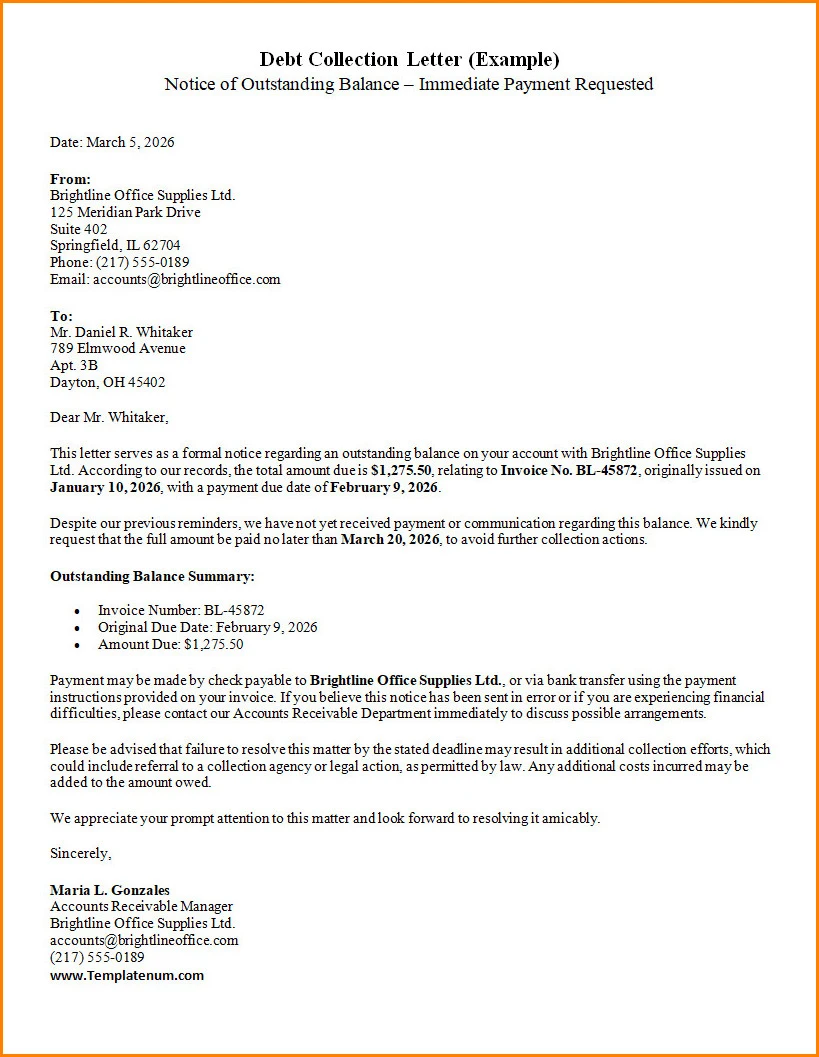
Debt collection letters are a vital component of the accounts receivable process, serving as a formal request for payment of outstanding debts.
These letters act as a documented record of the collection attempt, conveying to the debtor the amount owed, the due date for payment, and the potential consequences of non-payment. They play a crucial role in establishing a sense of urgency and often precede more aggressive actions like legal proceedings if the debt remains unpaid.
What is a Debt Collection Letter?
A debt collection letter is a written communication sent by a creditor or a collection agency to a debtor who has failed to fulfil their financial obligations. It serves as an official notice outlining the specifics of the debt, including the total amount owed, any accrued interest or fees, and the deadline for payment.
The purpose of the letter is to prompt the debtor to take immediate action to settle the outstanding debt.
Why Send a Debt Collection Letter?
Debt collection letters are an essential part of the debt recovery process for several reasons.
Legal Compliance
One of the primary reasons for sending a debt collection letter is to comply with legal requirements governing debt collection practices. In many jurisdictions, creditors and collection agencies are required to send a formal written notice to debtors before taking further action to recover the debt. By adhering to these legal guidelines, creditors and collection agencies protect themselves from potential legal challenges and ensure that their debt collection practices are lawful.
Documentation
Another important reason for sending debt collection letters is to create a documented record of the debt collection process. These letters serve as proof that the creditor or collection agency has made a formal attempt to recover the debt and has communicated the necessary information to the debtor. This documentation can be valuable in legal proceedings or disputes regarding the debt.
Communication Clarity
Debt collection letters also help clarify the communication between the creditor or collection agency and the debtor. By clearly stating the amount owed, the due date for payment, and the potential consequences of non-payment, the letter ensures that both parties have a mutual understanding of the situation. This clarity can prevent misunderstandings and disputes over the debt.
Establishing Expectations
Moreover, debt collection letters are instrumental in establishing expectations for both parties involved. By outlining the amount owed, the deadline for payment, and the consequences of non-compliance, the letter sets a clear framework for resolving the debt. This framework helps ensure that both the creditor and the debtor are aware of their responsibilities and the potential outcomes of non-payment.
Creating Urgency
Debt collection letters also create a sense of urgency for the debtor to address the outstanding debt promptly. By clearly communicating the consequences of non-payment, such as legal action or credit damage, the letter motivates the debtor to take immediate action to settle the debt. This urgency can increase the likelihood of successful debt recovery and prompt the debtor to prioritize payment.
Maintaining Professionalism
Furthermore, debt collection letters help maintain a level of professionalism in the debt recovery process. By providing a formal written notice to the debtor, the creditor or collection agency conveys a sense of seriousness and urgency regarding the outstanding debt. This professionalism can influence the debtor’s response and willingness to cooperate in resolving the debt.
Encouraging Compliance
Debt collection letters also encourage compliance with the debt repayment terms outlined by the creditor or collection agency. By clearly stating the amount owed, the due date for payment, and the consequences of non-payment, the letter motivates the debtor to fulfill their financial obligations. This encouragement can lead to prompt resolution of the debt and prevent further escalation of the collection process.
Protecting Rights
Another crucial aspect of sending debt collection letters is to protect the rights of both the creditor and the debtor. By clearly outlining the obligations of the debtor and the consequences of non-payment, the letter ensures that both parties understand their rights and responsibilities. This protection ensures that the debt collection process is conducted fairly and transparently, respecting the rights of all parties involved.
Improving Communication
Debt collection letters also improve communication between the creditor or collection agency and the debtor. By providing a formal written notice of the debt, the letter opens a channel for the debtor to seek clarification or discuss payment options. This improved communication can facilitate the resolution of the debt and prevent misunderstandings or disputes between the parties.
Enhancing Debt Recovery
Ultimately, the primary goal of sending debt collection letters is to enhance the debt recovery process for creditors and collection agencies. By clearly communicating the amount owed, the due date for payment, and the consequences of non-payment, these letters increase the likelihood of successful debt resolution. They serve as a critical step in the accounts receivable process, setting the foundation for further action if the debt remains unpaid.
What to Include in a Debt Collection Letter?
When drafting a debt collection letter, it is essential to include specific elements to ensure its effectiveness in prompting the debtor to settle the outstanding debt. These key components help convey the seriousness of the situation and provide the necessary information for the debtor to take action.
Debtor Information
One of the first elements to include in a debt collection letter is the debtor’s information, such as their name, address, and account number. Providing this information ensures that the letter is directed to the correct individual and account, minimizing any confusion or errors in communication.
Amount Owed
The total amount owed by the debtor should be clearly stated in the debt collection letter. This includes the original debt amount, any accrued interest or fees, and the total outstanding balance. Providing a detailed breakdown of the amount owed helps the debtor understand the full extent of their financial obligation.
Due Date
Another critical element to include in a debt collection letter is the due date for payment. Clearly specifying the deadline by which the debtor must settle the debt helps create a sense of urgency and emphasises the importance of timely payment. This due date serves as a guideline for the debtor to prioritise the debt repayment
Consequences of Non-Payment
It is crucial to outline the potential consequences of non-payment in the debt collection letter. This may include legal action, credit damage, or involvement of a collection agency. Clearly communicating the repercussions of failing to settle the debt can motivate the debtor to take immediate action to avoid further complications.
Contact Information
Providing contact information for the creditor or collection agency in the debt collection letter is essential. This allows the debtor to reach out with any questions or concerns regarding the debt or payment options. Clear communication channels can facilitate a dialogue between the parties and help resolve any issues that may arise during the debt collection process.
Payment Options
Offering payment options in the debt collection letter can encourage the debtor to settle the outstanding debt promptly. Providing flexibility in payment methods and deadlines allows the debtor to choose a solution that aligns with their financial situation. Offering multiple payment options can increase the likelihood of successful debt recovery.
Debt Collection Letter Template – DOWNLOAD
