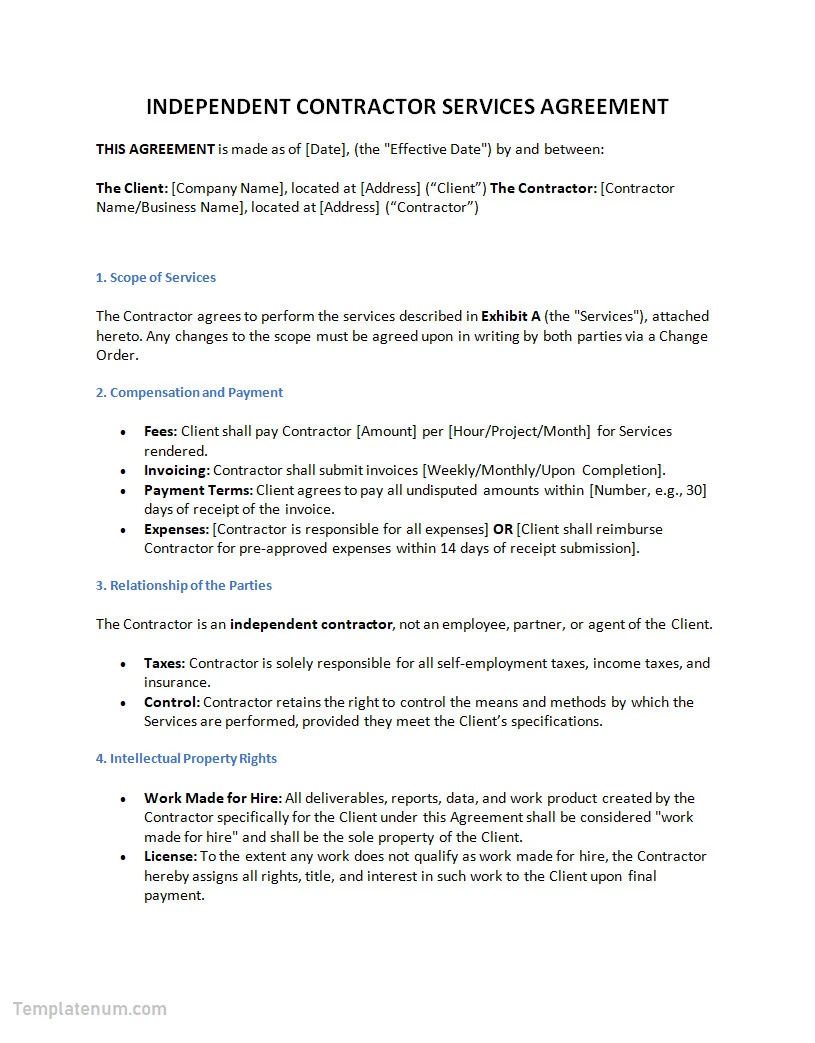
When hiring an independent contractor for your business, clarity is key. A contractor services agreement is a vital document that outlines the terms of the working relationship between a client and an independent contractor. By clearly defining the rights, responsibilities, deliverables, and payment terms, this legally binding document protects both parties’ interests and helps minimize miscommunication and legal risks.
In this article, we will delve into the key elements of a contractor services agreement and how to create one that sets the stage for a successful partnership.
What is a Contractor Services Agreement?
A contractor services agreement, also known as an independent contractor agreement, is a document that establishes the terms of engagement between a client and an independent contractor.
This agreement outlines the scope of work, project timeline, payment terms, and other essential details to ensure both parties are on the same page. It is a crucial tool for protecting the interests of both the client and the contractor and provides a clear framework for the successful completion of services.
Why You Need a Contractor Services Agreement
Having a contractor services agreement in place offers several benefits for both clients and independent contractors. For clients, it helps protect their business interests by clearly defining the scope of work, deliverables, and payment terms.
This document also ensures that the contractor meets certain standards and deadlines, reducing the risk of legal disputes down the line. For contractors, a services agreement provides them with a sense of security and clarity regarding their responsibilities and payment expectations. It also helps establish a professional relationship with the client and sets clear boundaries for the project.
Key Elements of a Contractor Services Agreement
When drafting a contractor services agreement, there are several key elements that should be included to ensure clarity and protection for both parties. These elements may vary depending on the nature of the project, but some common components include:
- Scope of Work: Clearly define the tasks and responsibilities of the contractor.
- Project Timeline: Set deadlines for deliverables and milestones.
- Payment Terms: Outline the payment schedule, rates, and method of payment.
- Confidentiality Clause: Protect sensitive information shared during the project.
- Intellectual Property Rights: Specify who owns the rights to any work created during the project.
- Termination Clause: Establish conditions under which either party can terminate the agreement.
- Indemnification: Define each party’s liability in case of disputes or damages.
How to Create a Contractor Services Agreement
Creating a contractor services agreement doesn’t have to be a daunting task. By following these steps, you can draft a comprehensive and effective document that protects both your business and the independent contractor:
- Define the Scope of Work: Clearly outline the tasks, deliverables, and expectations for the project.
- Set Payment Terms: Agree on rates, payment schedule, and any additional fees.
- Include Legal Language: Consult with a legal professional to ensure your agreement is legally binding and enforceable.
- Review and Revise: Carefully review the agreement with the contractor and make any necessary revisions before signing.
Tips for a Successful Contractor Services Agreement
To ensure your contractor services agreement is thorough and effective, consider the following tips:
- Be Specific: Clearly define the scope of work, deliverables, and payment terms to avoid misunderstandings.
- Communicate Clearly: Keep the lines of communication open with the contractor throughout the project.
- Seek Legal Advice: Consult with a lawyer to ensure that your agreement complies with relevant laws and regulations.
In Conclusion
A contractor services agreement is a crucial document that lays the groundwork for a successful working relationship between a client and an independent contractor. By clearly defining the terms of engagement, both parties can avoid misunderstandings, reduce legal risks, and establish a framework for completing services efficiently.
By incorporating the key elements outlined in this article and following the tips provided, you can create a comprehensive agreement that protects your business interests and sets the stage for a successful partnership.
Contractor Services Agreement Template – Word
