Decision-making can be a daunting task, especially when faced with complex and multifaceted choices. This is where decision trees come into play, offering a structured and visual framework to break down intricate decisions into simpler components.
Decision trees provide a roadmap to navigate through various possibilities, outcomes, and probabilities to help guide individuals towards the best possible result. They are not only useful in strategic planning but also in data analysis, such as classification and regression, as well as in comparing the costs and benefits of different paths. By making complex choices clearer and more logical, decision trees can streamline the decision-making process and enhance overall outcomes.
What is a Decision Tree?
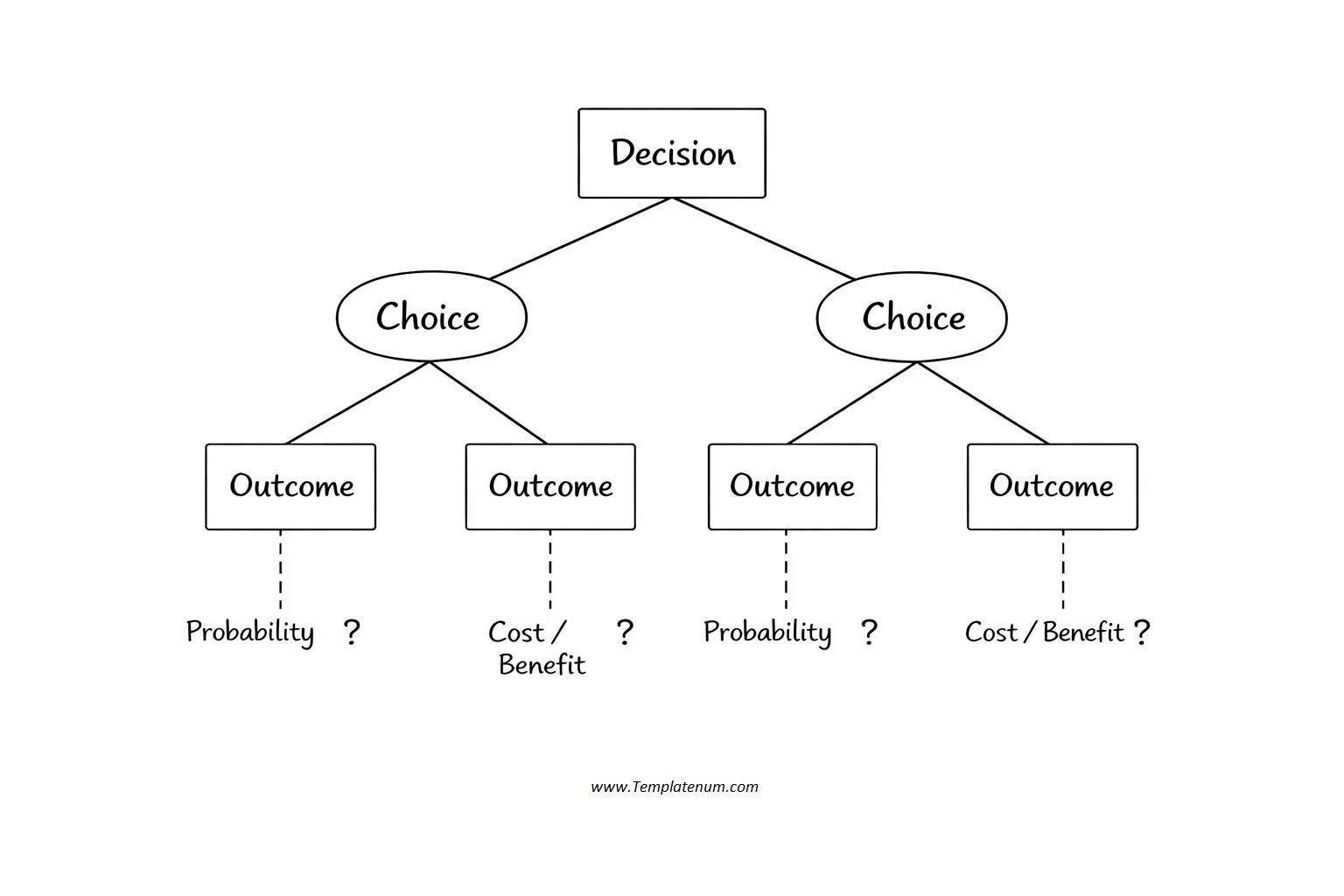
A decision tree is a graphical representation of a decision-making process, resembling an actual tree with branches and nodes. Each node represents a decision point or outcome, while the branches depict different paths that can be taken based on those decisions.
The tree starts with a root node and branches out into various options, ultimately leading to end nodes that signify outcomes. By visually mapping out all possible choices and their consequences, decision trees provide a clear and structured way to analyze complex decisions.
Why Use Decision Trees?
Decision trees offer several advantages when it comes to making complex decisions. Some of the key benefits include:
Clarity
One of the primary advantages of decision trees is their ability to provide clarity in the decision-making process. By visually representing all possible choices and outcomes, decision trees simplify complex decisions and make them easier to understand. The structured nature of decision trees helps individuals see the relationships between different options and the consequences of their decisions, leading to clearer and more informed choices.
Visual Representation
The graphical nature of decision trees makes them a powerful tool for visually representing complex decision-making processes. Instead of sorting through lengthy lists or tables of data, individuals can simply follow the branches and nodes of the tree to see the different paths and outcomes available to them. This visual representation enhances understanding and communication, allowing individuals to grasp the complexities of a decision at a glance.
Probabilistic Analysis
Decision trees enable probabilistic analysis by assigning probability values to branches and nodes, indicating the likelihood of specific outcomes. This feature allows individuals to assess the risks and benefits associated with each choice, making it easier to weigh different options and make informed decisions. By incorporating probabilities into the decision-making process, decision trees help individuals account for uncertainty and variability in their choices.
Strategic Planning
Decision trees are valuable tools for strategic planning, as they allow individuals to map out different scenarios and evaluate the best course of action. By considering various options and their potential outcomes, decision trees help individuals make strategic decisions that align with their long-term goals and objectives. Whether used in business planning or personal decision-making, decision trees provide a structured framework for strategic thinking and decision-making.
Data Analysis
In addition to strategic planning, decision trees are also useful for data analysis tasks such as classification and regression. Decision trees can categorize and organize data into distinct groups based on predefined criteria, making them valuable tools for analyzing and interpreting complex datasets. By breaking down data into smaller components, decision trees help individuals identify patterns, trends, and relationships that may not be apparent through traditional data analysis methods.
Key Elements of a Decision Tree
A decision tree consists of several key elements that work together to facilitate the decision-making process. These elements include:
Root Node
The root node is the starting point of the decision tree, representing the initial decision to be made. It is where the decision-making process begins, branching out into different options and paths based on the choices made at each node. The root node sets the stage for the entire decision tree, guiding individuals towards subsequent decisions and outcomes.
Branches
Branches in a decision tree represent the different paths or choices that can be taken at each decision point. Each branch extends from a node and leads to a specific outcome or decision based on the criteria defined in the tree. Branches illustrate the various options available to individuals and show the consequences of each choice, helping them navigate through complex decision-making processes.
Nodes
Nodes are decision points within the decision tree where choices are made, leading to subsequent branches and outcomes. Each node represents a specific decision that individuals must make, influencing the direction of the tree and the ultimate outcomes. Nodes help individuals evaluate different options, consider the potential consequences of their decisions, and move through the decision-making process in a structured and logical manner.
End Nodes
End nodes in a decision tree signify the outcomes or results of the decision-making process. These nodes represent the conclusions that individuals can reach based on the choices made at each decision point. By reaching an end node, individuals can understand the potential consequences of their decisions and make informed choices that align with their goals and objectives. End nodes provide clarity and direction in the decision-making process, guiding individuals towards the most favorable results.
Probability Values
Probability values are numerical estimates assigned to branches and nodes in a decision tree to indicate the likelihood of specific outcomes. These values help individuals assess the risks and benefits associated with each choice, enabling them to make informed decisions based on the probabilities of different outcomes. By incorporating probability values, decision trees add a quantitative aspect to the decision-making process, enhancing the accuracy and reliability of the tree’s predictions.
How to Create a Decision Tree
Creating a decision tree involves a systematic approach to delineating various decision points and outcomes. The process typically includes the following steps:
Define the Decision
The first step in creating a decision tree is to clearly outline the decision to be made and identify the key factors involved. Define the problem or question that needs to be addressed and establish the criteria for evaluating different options.
Identify Options
Once the decision has been defined, list all possible choices and outcomes that could result from the decision. Consider different scenarios and explore the various paths that could be taken to reach a solution.
Assign Probabilities
Estimate the likelihood of each outcome and assign probability values to branches and nodes in the decision tree. Consider factors such as historical data, expert opinions, and other sources of information to determine the probabilities of different outcomes.
Construct the Tree
Draw the decision tree, starting with the root node and branching out into different paths based on the decisions to be made. Use symbols or labels to represent nodes, branches, and end nodes, making the tree easy to follow and interpret.
Analyze Paths
Evaluate each path within the decision tree, considering probabilities, costs, benefits, and potential risks associated with different choices. Examine the consequences of each decision and assess the impact of various factors on the outcomes predicted by the tree.
Tips for Successful Decision Trees
To ensure the effectiveness of decision trees in guiding complex decisions, consider the following tips:
Keep it Simple
Avoid unnecessary complexity in the decision tree to maintain clarity and ease of understanding. Use clear and concise language, simple symbols, and logical connections to make the tree accessible to all users.
Update Regularly
Review and update the decision tree as new information or factors come to light to reflect the most current data. Update probability values, outcomes, and decision points to ensure that the tree remains accurate and relevant to the decision-making process.
Seek Input
Involve relevant stakeholders or experts in the decision-making process to gather diverse perspectives and insights. Consider the input of others to identify potential blind spots, alternative solutions, or unforeseen consequences that may impact the decision tree.
Test Scenarios
Run simulations or test different scenarios within the decision tree to explore various outcomes and potential risks. Use hypothetical situations to analyze the robustness of the tree, identify weaknesses or uncertainties, and consider alternative paths that could lead to better outcomes.
Consider Sensitivity Analysis
Conduct a sensitivity analysis to assess the impact of different variables on the outcomes predicted by the decision tree. Test the tree’s resilience to changes in probabilities, costs, or other factors to determine the stability and reliability of the tree’s predictions.
Free Decision Tree Template
A Decision Tree helps you map out choices, possible outcomes, and consequences in a clear and visual format. It provides a structured approach to analyzing options, identifying risks, and understanding decision paths, making complex decisions easier to evaluate. With a well-designed template, you can improve clarity, support logical thinking, and make informed decisions with confidence.
Download our Decision Tree Template today to visualize your options and choose the best path forward with ease.
Decision Tree Template – DOWNLOAD
