When it comes to crafting a standout resume, the traditional chronological format may not always be the best choice. For career changers, individuals with employment gaps, or those with limited work experience, a functional resume can be a game-changer. This unique format highlights a candidate’s skills and accomplishments alongside their work history, making it easier for employers to see the value they can bring to the table. Let’s delve deeper into what makes a functional resume so effective and how you can create one that stands out from the crowd.
What is a Functional Resume?
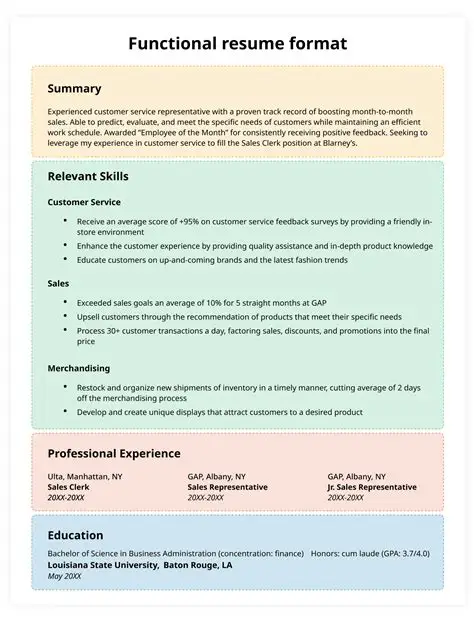
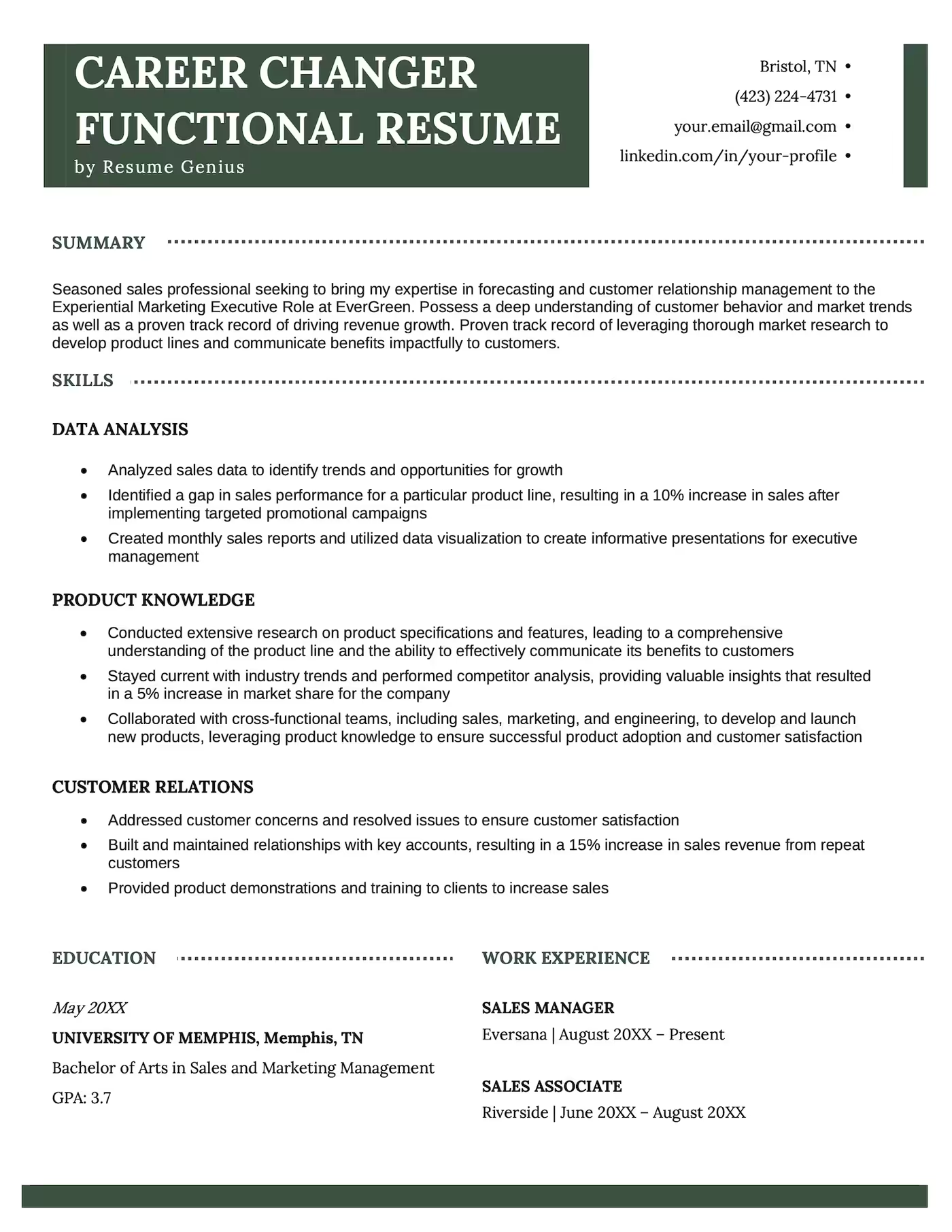
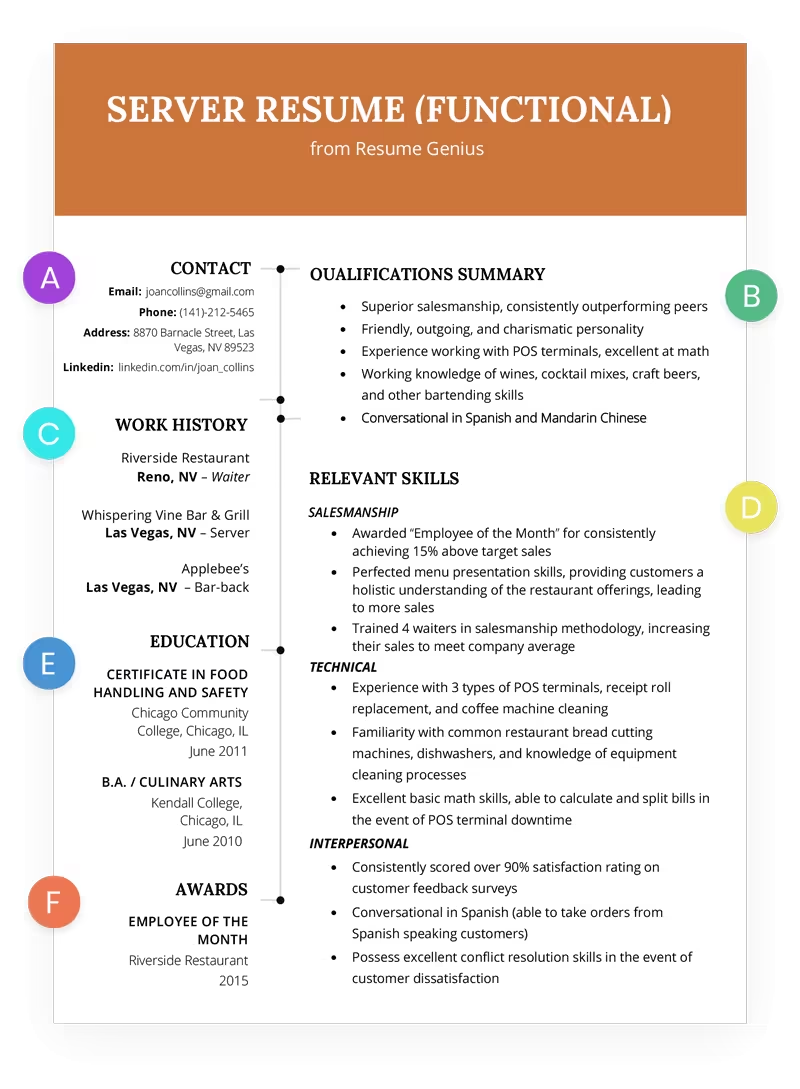
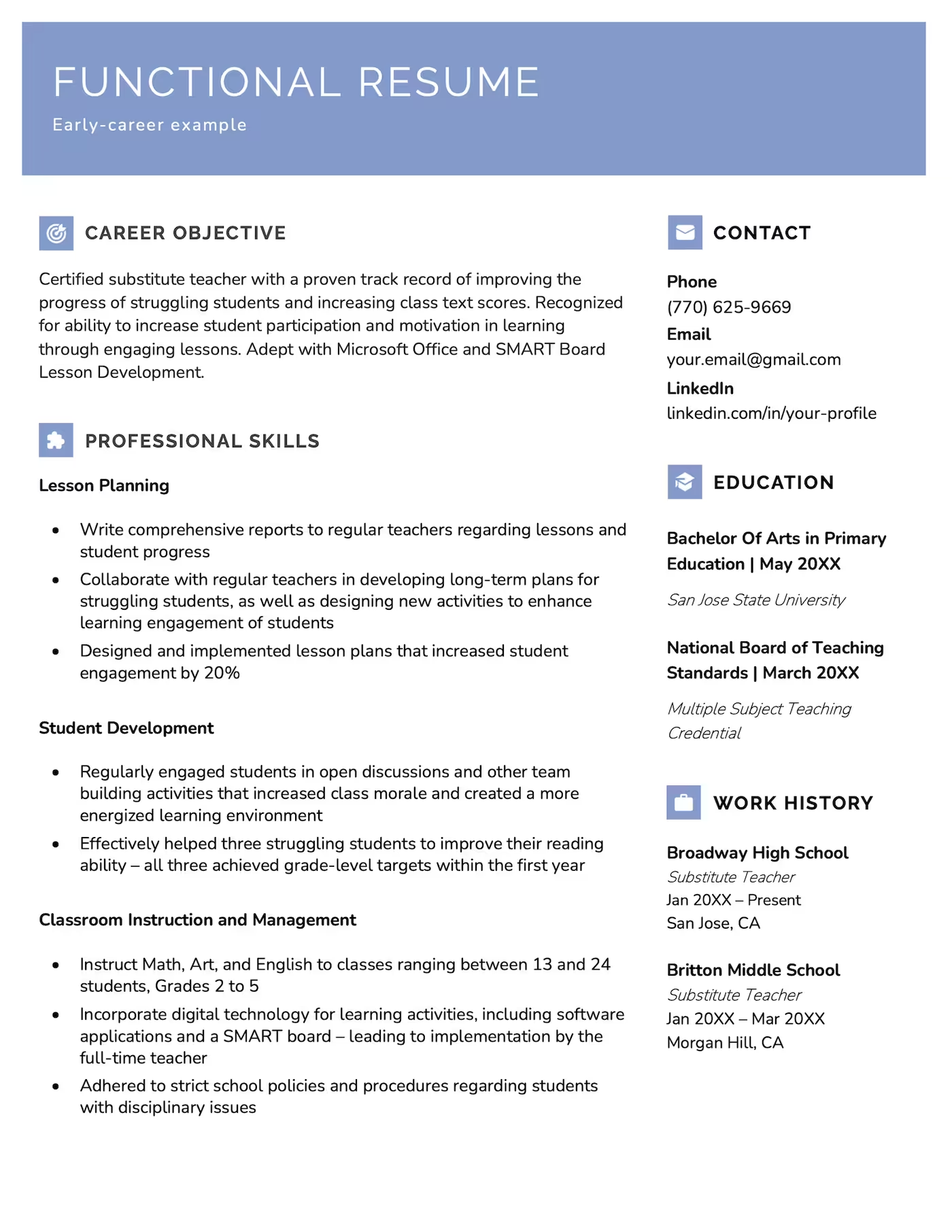
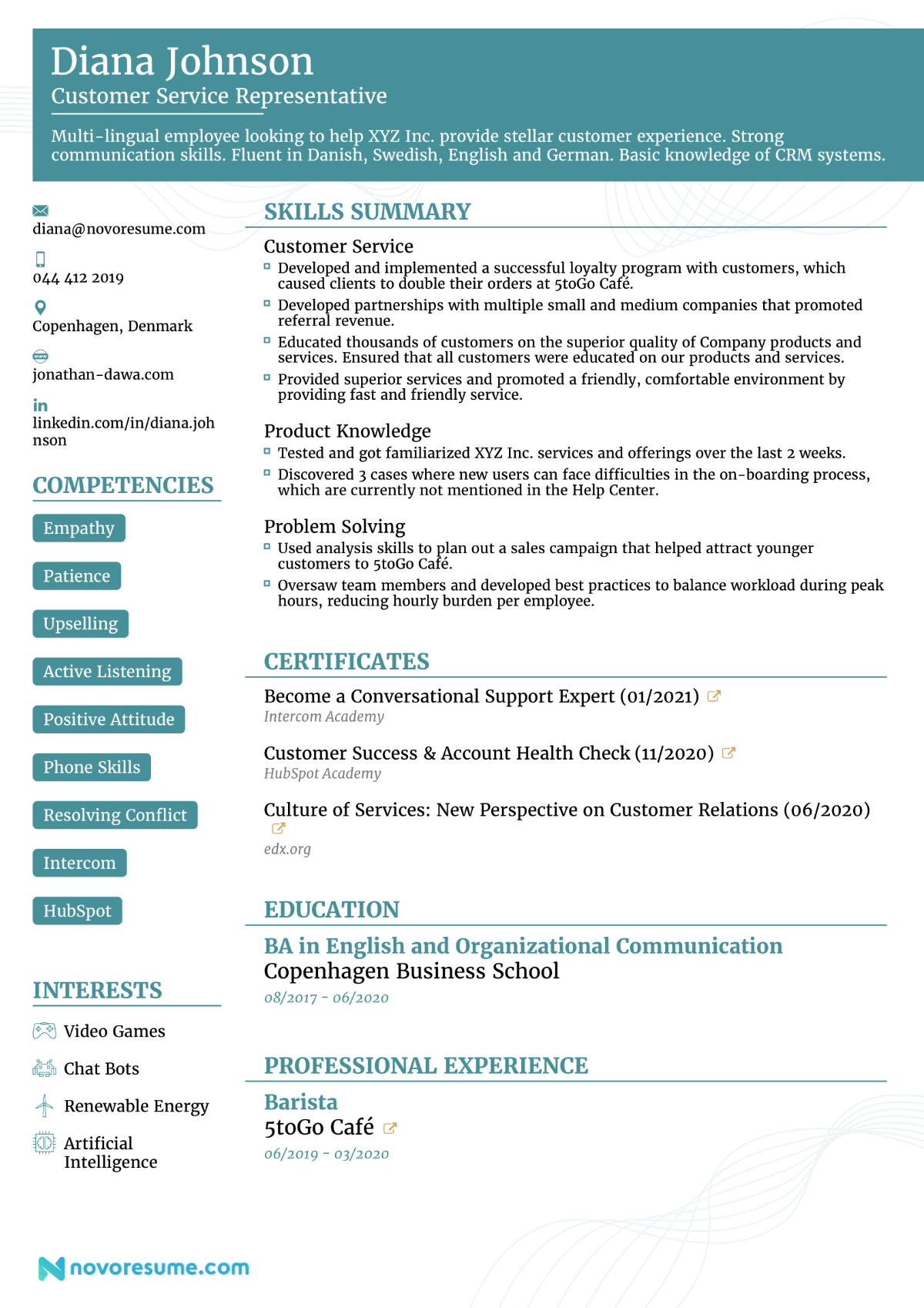
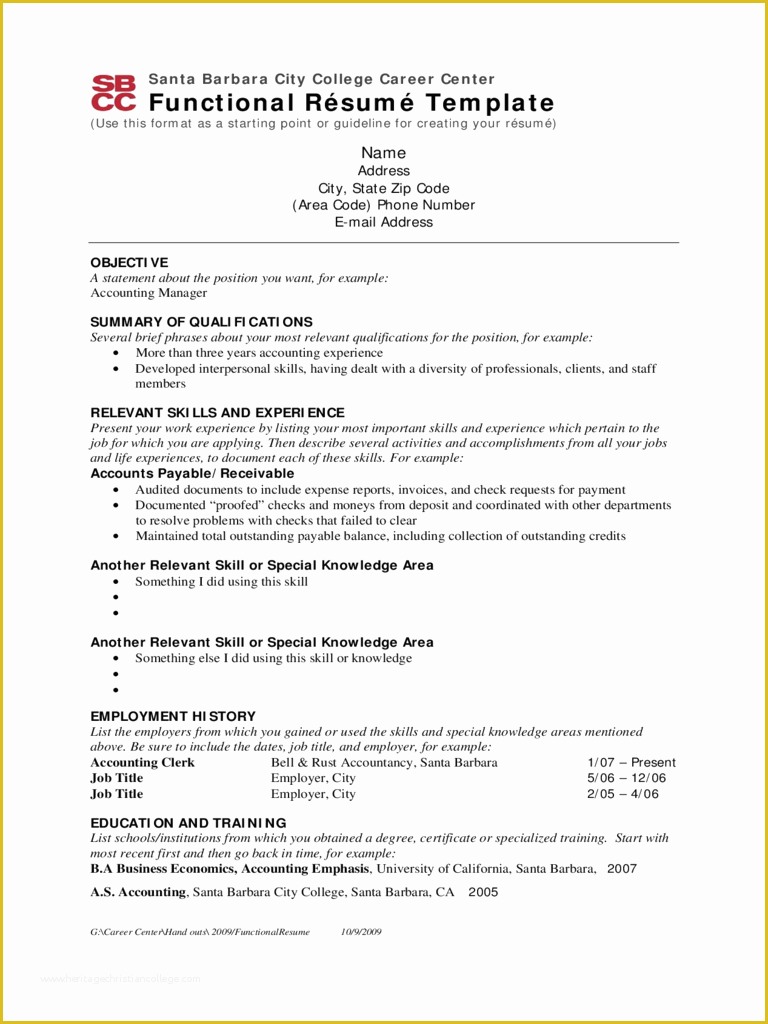
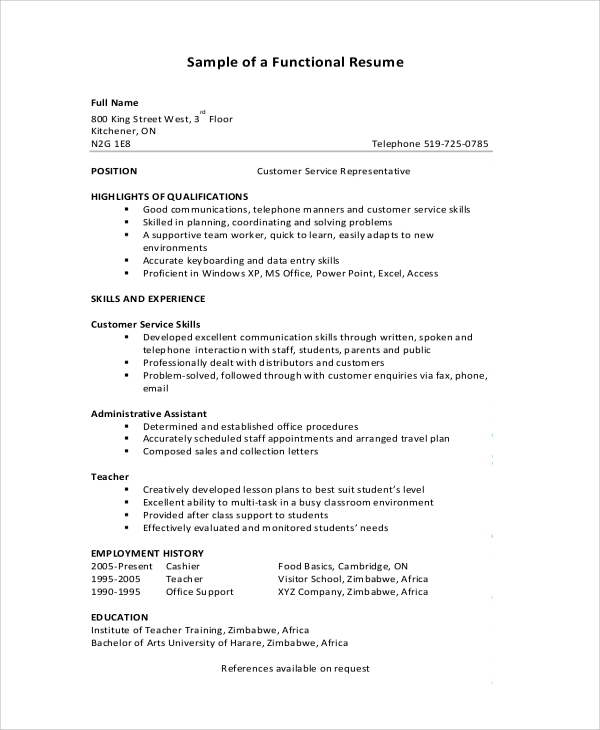
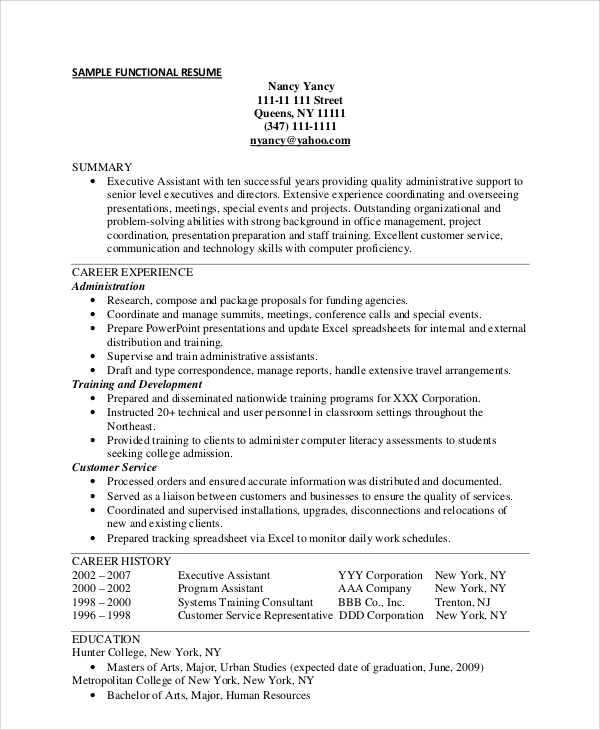
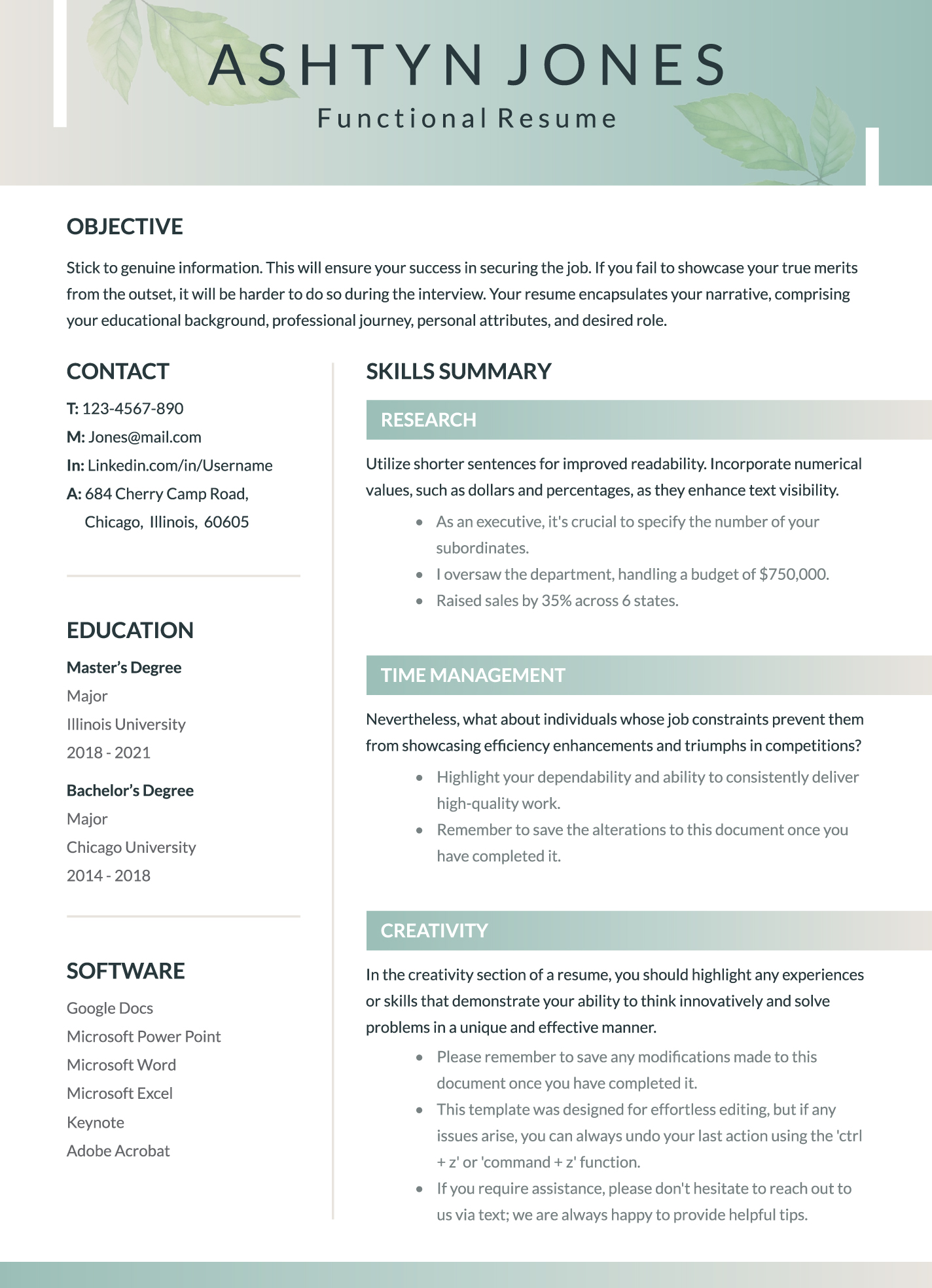
A functional resume is a type of resume format that emphasizes a candidate’s skills and accomplishments rather than their chronological work history. Instead of listing work experience in chronological order, a functional resume groups skills into categories that are relevant to the target job. This allows employers to quickly see how a candidate’s strengths and qualifications align with the position’s requirements, without getting bogged down in the specifics of their job timeline.
Why Choose a Functional Resume?
There are several reasons why a functional resume may be the best choice for certain job seekers. Here are a few scenarios where a functional resume can be particularly beneficial:
- Career changers: If you are transitioning to a new field and want to highlight transferable skills.
- Employment gaps: For candidates who have gaps in their work history and want to focus on their skills and achievements instead.
- Limited work experience: Individuals with limited work experience can use a functional resume to showcase relevant skills and qualifications.
What to Include in a Functional Resume
When creating a functional resume, there are several key elements to include to ensure it effectively showcases your skills and accomplishments:
- Contact information: Include your name, phone number, email address, and LinkedIn profile (if applicable).
- Summary or objective statement: A brief overview of your skills, accomplishments, and career goals.
- Skills section: Group your skills into categories that are relevant to the job you are applying for.
- Work experience: Instead of listing jobs in chronological order, focus on highlighting accomplishments and experiences that demonstrate your skills.
- Educational background: Include any relevant degrees, certifications, or training programs.
Examples
How to Create a Standout Functional Resume
Now that you understand the basics of a functional resume, let’s explore some tips for creating a standout document that will catch the eye of potential employers:
- Customize for each job: Tailor your skills and accomplishments to match the requirements of each job you apply for.
- Quantify your achievements: Use numbers and specific examples to demonstrate the impact of your work.
- Use keywords: Incorporate relevant keywords from the job description to help your resume get noticed by applicant tracking systems.
- Keep it concise: Aim for a one-page resume that highlights your most relevant skills and accomplishments.
- Proofread carefully: Check for spelling and grammar errors to ensure your resume is polished and professional.
Tips for Successful Functional Resumes
Here are a few additional tips to keep in mind as you create your functional resume:
1. Focus on transferable skills:
Highlight skills that are relevant to the job you are applying for, even if they were gained in a different industry or role.
2. Use a clean, professional design:
Choose a simple, easy-to-read format that allows your skills and accomplishments to stand out.
3. Be strategic with your section headings:
Organize your resume in a way that makes it easy for employers to quickly find the information they are looking for.
4. Include a portfolio or links to work samples:
If relevant, provide links to online portfolios or work samples that showcase your skills and accomplishments.
5. Get feedback from peers or professionals:
Have someone else review your resume to provide feedback on its clarity, relevance, and overall effectiveness.
Conclusion
A functional resume can be a powerful tool for job seekers looking to highlight their skills and accomplishments in a way that traditional resumes may not allow. By focusing on what you can bring to the table rather than where you’ve been, you can create a compelling document that showcases your value to potential employers. With the right approach and attention to detail, a functional resume can help you stand out from the competition and land your dream job.
