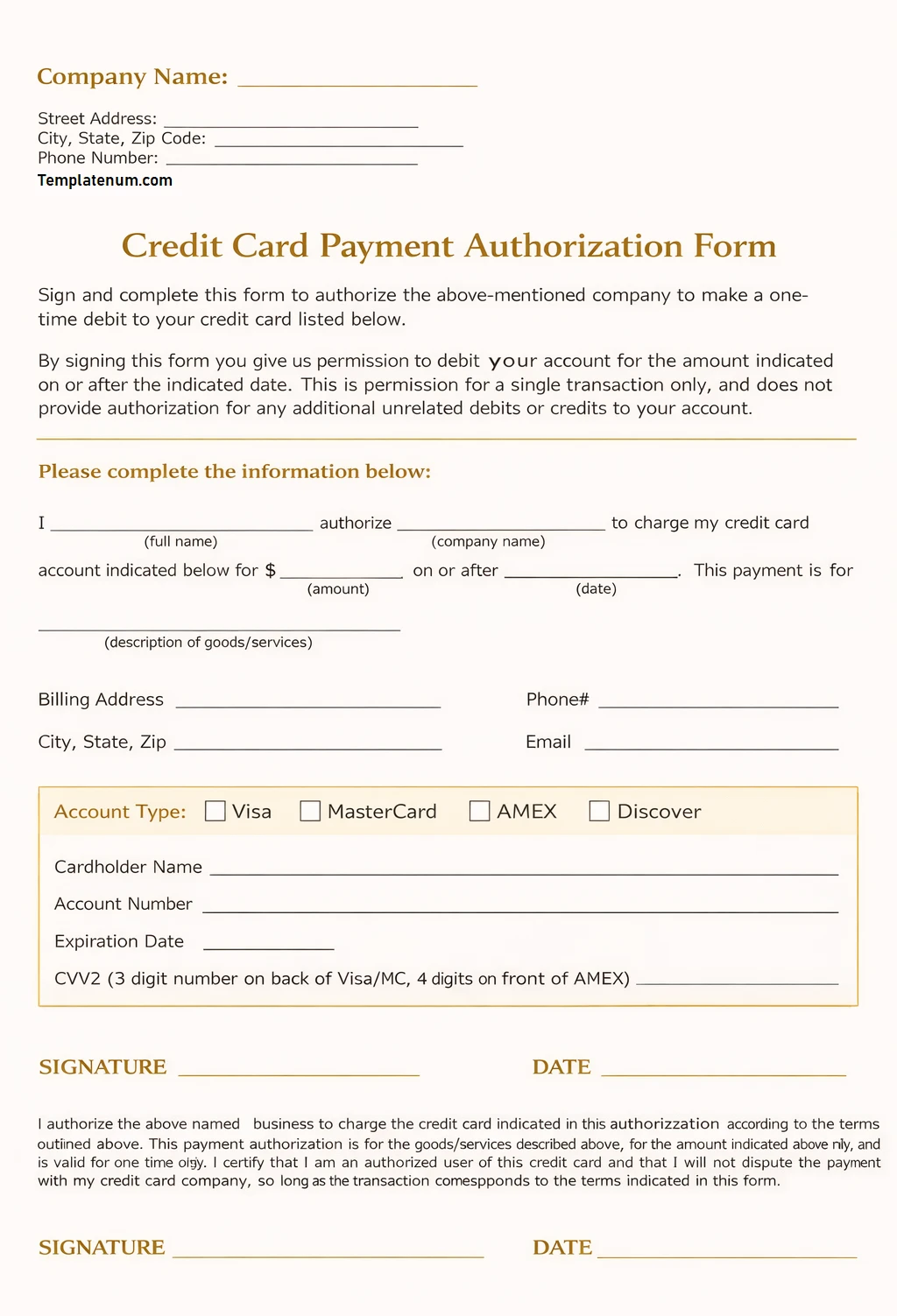
When making purchases online, over the phone, or setting up recurring payments, a credit card authorization form plays a crucial role.
This form serves as written permission from a cardholder to a business, allowing them to charge the cardholder’s credit card for a specific transaction or series of transactions. It comes in handy when the cardholder isn’t physically present to provide the card and signature during the transaction, providing a secure and efficient way to conduct business.
What is a Credit Card Authorization?
A credit card authorization form is a document that gives a business the legal right to charge a cardholder’s credit card for a specific transaction or a set of transactions. It contains all the necessary details required to process the payment securely and efficiently, ensuring that the cardholder’s information is protected.
This form is commonly used in situations where the cardholder is not physically present, such as online purchases, phone orders, or recurring payments like subscriptions.
How Do Credit Card Authorizations Work?
When a cardholder provides their credit card information to a business, either online or over the phone, the business captures this data and stores it securely. By filling out a credit card authorization form, the cardholder gives the business consent to charge their credit card for the specified amount.
The business then processes the payment through their payment gateway, which securely transmits the transaction information to the cardholder’s bank for approval. Once the transaction is authorized, the business can complete the sale and provide the goods or services to the cardholder.
1. Ensuring Security:
Businesses must take proper measures to ensure the security of the cardholder’s information. This includes encrypting data, using secure payment gateways, and complying with industry standards such as PCI DSS.
2. Transaction Processing:
Once the authorization is obtained, the business processes the payment through their payment gateway, which communicates with the cardholder’s bank for approval.
3. Completion of Sale:
After receiving approval from the cardholder’s bank, the business can complete the sale and provide the goods or services to the cardholder.
Basic Elements of a Credit Card Authorization
A credit card authorization form typically includes the following key elements:
- Cardholder Information: Name, billing address, contact information
- Credit Card Details: Card number, expiration date, CVV code
- Transaction Details: Amount to be charged, description of goods or services
- Authorization Signature: Signature of the cardholder authorizing the transaction
How Long Does a Credit Card Authorization Last?
The duration of a credit card authorization can vary depending on the business and the nature of the transaction. In general, authorizations are typically valid for a certain period, such as 7 days or 30 days. If the transaction is not completed within this timeframe, a new authorization may be required to proceed with the payment.
Tips to Remember When Accepting a Credit Card Authorization
When accepting credit card authorizations, businesses should keep the following tips in mind:
- Verify Cardholder Information: Ensure that the information provided on the authorization form matches the cardholder’s details.
- Secure Data Storage: Store cardholder information securely to prevent unauthorized access.
- Obtain Proper Authorization: Make sure to obtain the cardholder’s signature on the authorization form before processing the payment.
- Comply with Regulations: Follow industry regulations and standards to protect cardholder data and prevent fraud.
- Communicate Clearly: Clearly outline the terms and conditions of the transaction on the authorization form to avoid misunderstandings.
By understanding the ins and outs of credit card authorization forms, businesses can streamline their payment processes and provide a secure and convenient way for cardholders to make transactions without being physically present.
Credit Card Authorization Form Template – Download
