During challenging times, such as a job loss, illness, or unexpected expenses, meeting financial obligations can become overwhelming. If you find yourself in a difficult financial situation where you are unable to make payments to creditors, landlords, or lenders, a financial hardship letter can be a useful tool to formally inform them of your circumstances and request temporary relief.
This letter serves as a way to explain the reasons behind your hardship and seek a mutually beneficial solution to help you manage your finances during this tough period.
What is a Financial Hardship Letter?
A financial hardship letter is a formal document that explains your current situation to a creditor, landlord, or lender when you are facing difficulties in meeting your payment obligations. It allows you to provide details about the reasons for your financial hardship and request temporary relief, such as a payment pause, reduced payments, or a loan modification.
This letter is crucial in initiating a dialogue with the party you owe money to, demonstrating your commitment to resolving the issue and seeking a solution that works for both parties.
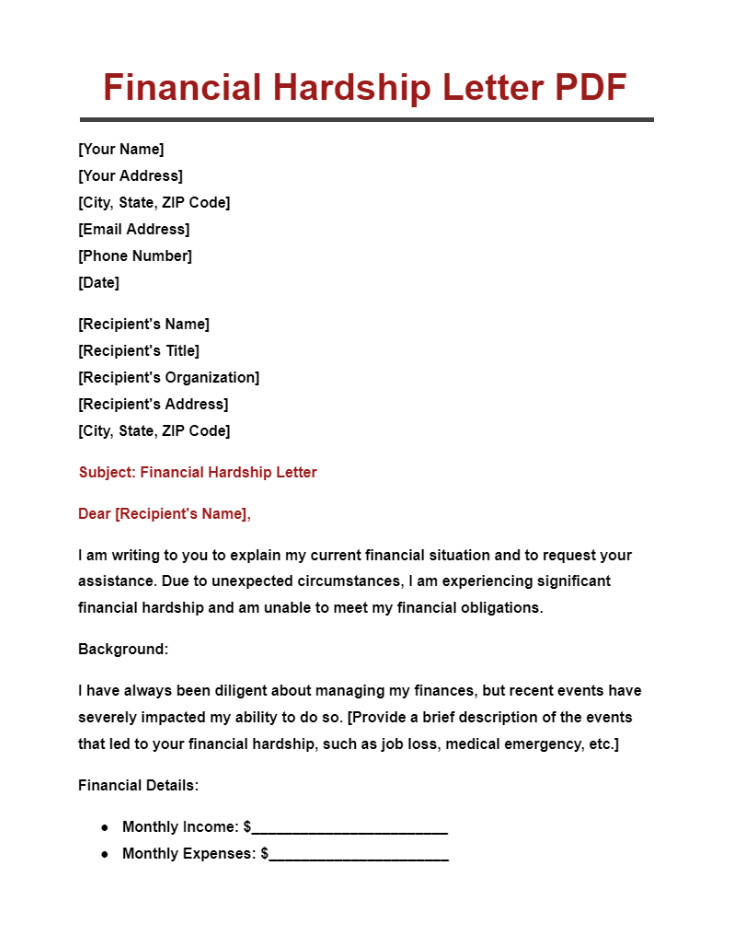
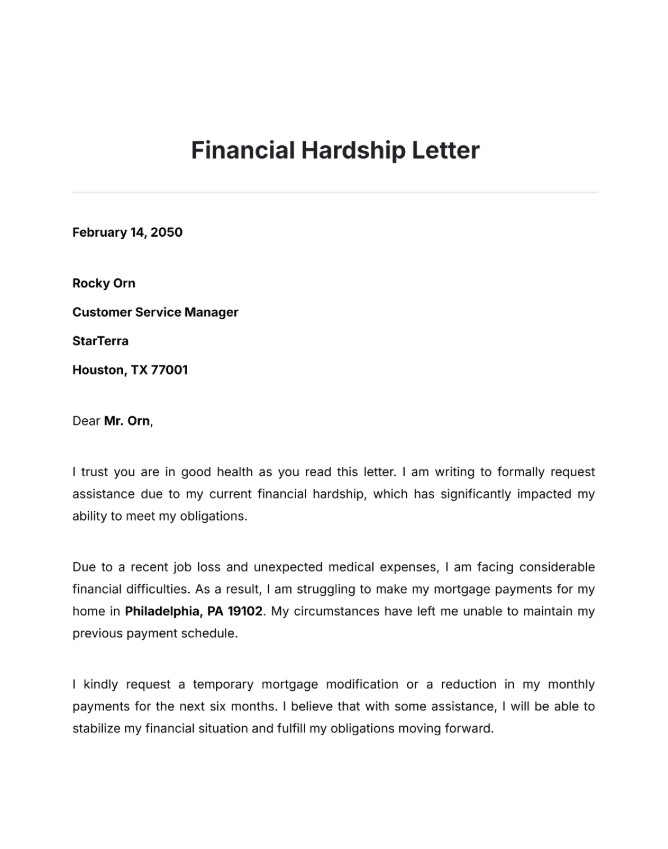
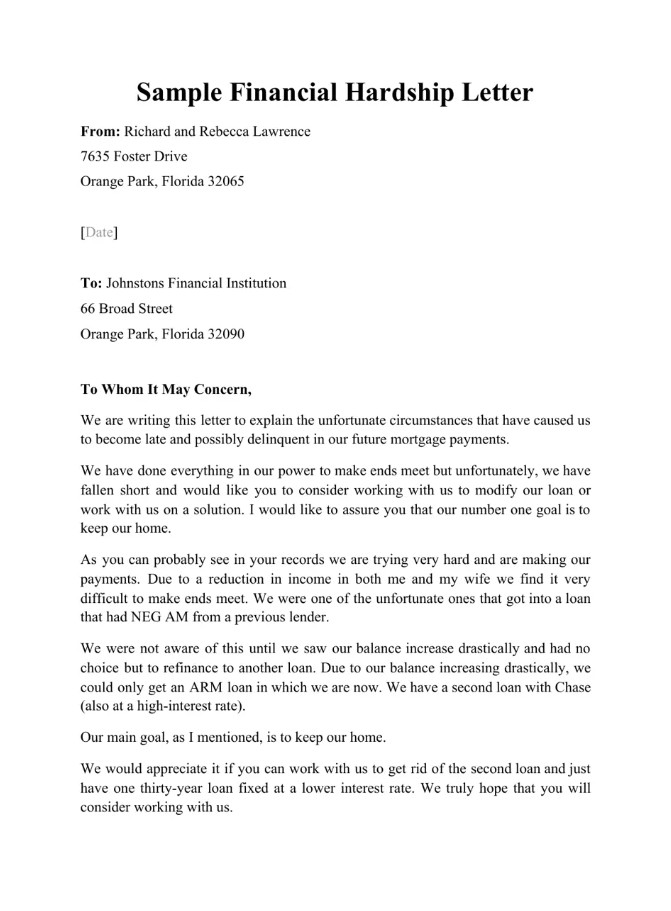
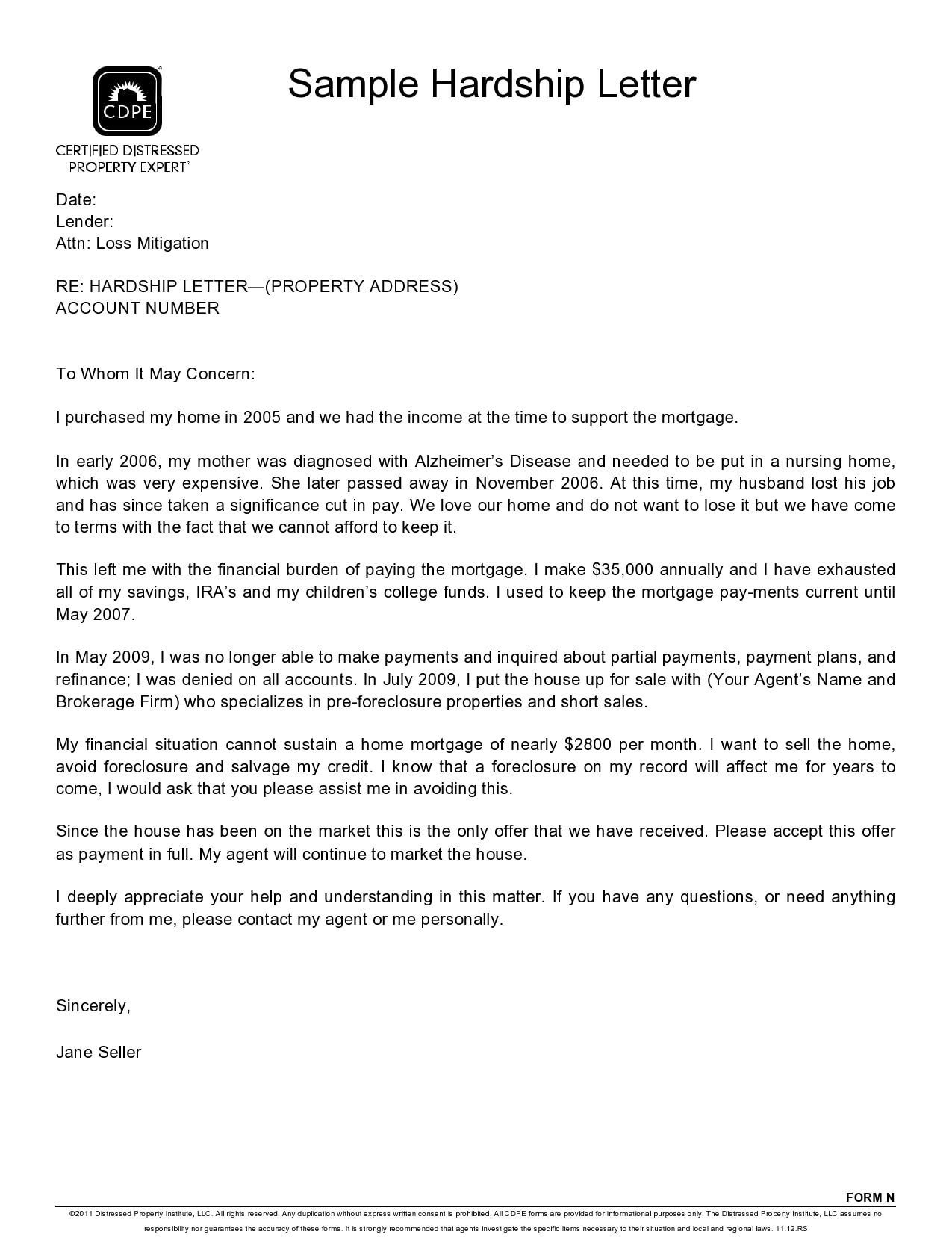
Examples
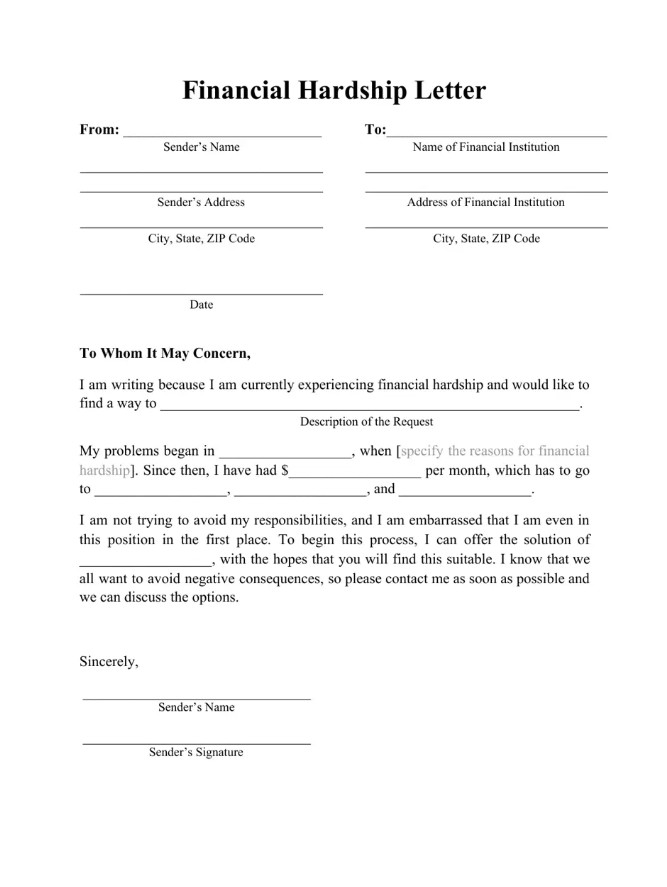
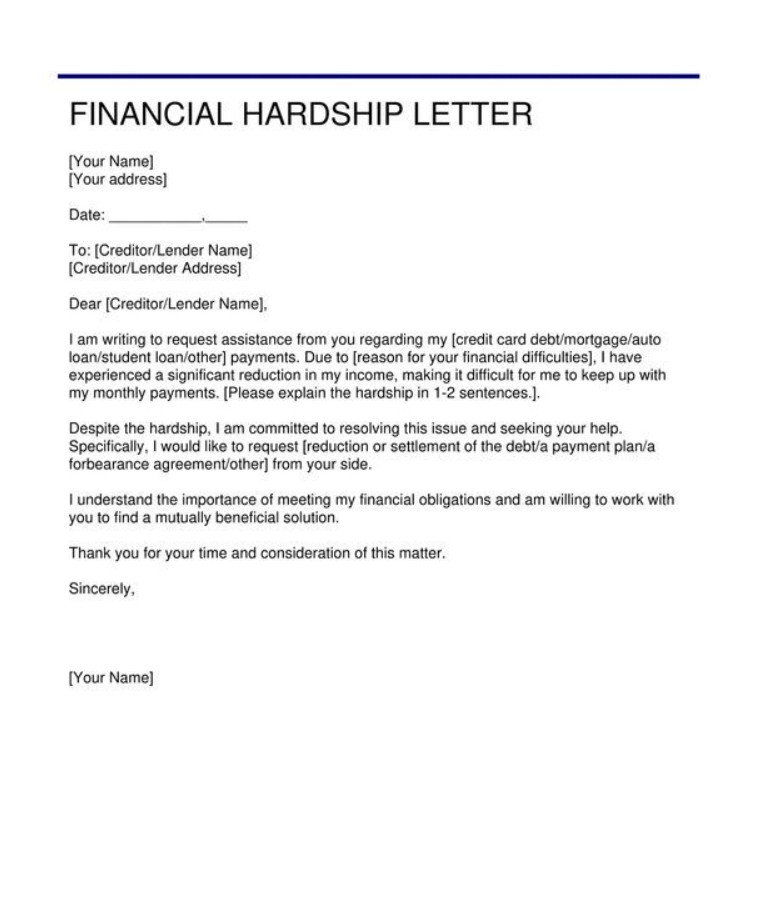
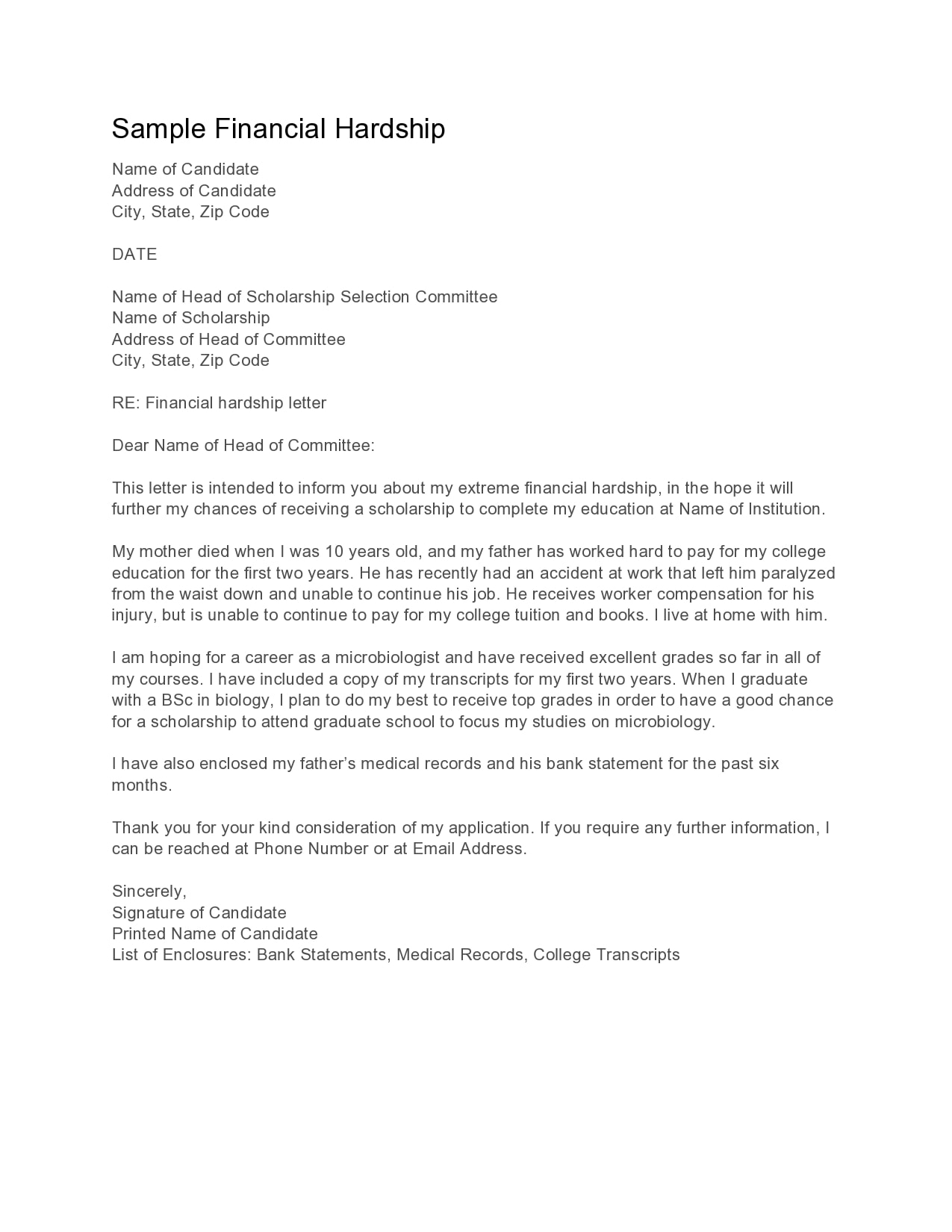
Why Write a Financial Hardship Letter?
Writing a financial hardship letter can be beneficial for both parties involved.
For the individual experiencing financial difficulties, it provides an opportunity to formally communicate their circumstances and seek assistance in managing their obligations. By explaining the reasons behind the hardship and proposing a temporary solution, the letter can help alleviate some of the financial stress and pave the way for a mutually agreeable arrangement.
On the other hand, for creditors, landlords, or lenders, receiving a well-written financial hardship letter demonstrates the borrower’s commitment to resolving the issue and may encourage them to work towards a solution that minimizes losses while maintaining a positive relationship with the borrower.
What to Include in a Financial Hardship Letter?
When writing a financial hardship letter, it is essential to include specific details about your situation to help the recipient understand the severity of your circumstances. Here are some key elements to include in your letter:
1. Explanation of the Hardship
Clearly describe the reasons behind your financial difficulties, such as job loss, illness, divorce, or unexpected expenses. Providing a detailed explanation of the events or circumstances that led to your current financial situation can help the recipient empathize with your plight and understand the challenges you are facing.
2. Impact on Finances
Outline how the hardship has affected your ability to meet your payment obligations and provide details about your current financial situation. By quantifying the impact of the hardship on your income, expenses, and overall financial stability, you can paint a clearer picture of the challenges you are dealing with.
3. Request for Relief
Clearly state the type of assistance you are seeking, whether it is a payment pause, reduced payments, or a loan modification. Be specific about the relief you need and how it would help alleviate your financial burden. Providing a clear request for relief demonstrates that you have thoughtfully considered your options and have a plan in place to address your difficulties.
4. Proposed Plan
Offer a proposed plan for how you intend to address the financial hardship and make payments in the future. This can include details about how you plan to increase your income, reduce expenses, or seek additional financial assistance to meet your obligations. By presenting a proactive plan for overcoming your challenges, you show your commitment to resolving the issue and regaining financial stability.
5. Contact Information
Provide your contact information so that the recipient can reach out to discuss possible solutions. Include your phone number, email address, and any other relevant contact details to make it easy for the recipient to follow up with you. Being accessible and responsive can help facilitate communication and expedite the process of finding a resolution to your financial hardship.
How to Write a Financial Hardship Letter
Writing a financial hardship letter requires a thoughtful approach to effectively convey your situation and request for assistance. Here are some tips to help you craft a compelling letter:
1. Be Honest and Transparent
Provide accurate information about your financial situation and the reasons for your hardship. Be honest about your challenges and avoid exaggerating or downplaying the severity of your situation. Transparency is key to building trust and credibility with the recipient.
2. Be Concise and Clear
Keep your letter brief and to the point, focusing on the essential details of your circumstances. Avoid rambling or including unnecessary information that may distract from your main message. A clear and concise letter is more likely to be read and understood by the recipient.
3. Be Polite and Professional
Maintain a respectful tone throughout the letter, expressing gratitude for any assistance provided. Use polite language and professional formatting to convey your message in a professional manner. Demonstrating professionalism and courtesy can help set a positive tone for the conversation and enhance your credibility.
4. Provide Supporting Documentation
Include any relevant documents, such as medical bills, termination notices, or budget statements, to support your claims. Providing documentary evidence of your financial hardship can strengthen your case and help the recipient better understand the challenges you are facing. Be sure to include only essential documents that directly support your request for relief.
5. Follow Up
After sending the letter, follow up with the recipient to ensure they have received it and discuss potential solutions. Following up shows your commitment to finding a resolution and allows you to clarify any questions or concerns the recipient may have. By staying engaged in the process, you demonstrate your proactive approach to addressing your financial hardship.
Tips for Writing an Effective Financial Hardship Letter
When writing a financial hardship letter, consider the following tips to increase the chances of a positive outcome:
1. Start with a Clear Introduction
Begin your letter by clearly stating the purpose of your communication and providing a brief overview of your situation. Introduce yourself and explain why you are writing the letter, setting the stage for the rest of your message. A clear introduction helps the recipient understand the context of your letter and prepares them for the information that follows.
2. Use a Professional Format
Format your letter professionally, using a business letter template and including your contact information at the top. Use a standard font and font size,
3. Express Gratitude
Express gratitude for any assistance previously provided by the recipient and acknowledge their role in helping you during this challenging time. Showing appreciation for any support or understanding the recipient has shown can help strengthen your relationship and create a more positive atmosphere for discussing potential solutions. A heartfelt thank you can go a long way in building rapport and goodwill.
4. Proofread Carefully
Proofread your letter carefully to ensure it is free of errors and conveys your message accurately. Check for spelling and grammar mistakes, as well as clarity and coherence in your writing. A well-written letter demonstrates attention to detail and professionalism, enhancing the overall impact of your message.
5. Seek Legal Advice if Needed
If you are unsure about the legal implications of your situation, seek advice from a financial advisor or attorney before sending the letter. Legal experts can provide guidance on your rights and obligations, as well as offer recommendations on how to approach your financial hardship effectively. Consulting with a professional can help you navigate complex legal issues and ensure you are making informed decisions.
Conclusion
A financial hardship letter is a valuable tool for individuals facing financial difficulties to formally inform creditors, landlords, or lenders of their situation and request temporary relief. By explaining the reasons behind the hardship, outlining the impact on finances, and proposing a mutually beneficial solution, this letter can help initiate a dialogue and pave the way for a positive resolution. By following the tips outlined in this guide, you can effectively communicate your circumstances and increase the likelihood of finding a solution that works for both parties.
