A household budget is a practical plan for managing the money that comes into your home and the expenses that go out. By tracking income, bills, everyday spending, and savings, you can create a clearer picture of your household finances and make more informed decisions about your money.
A well-organized household budget can help you stay on top of regular expenses, prepare for larger purchases, and set aside money for unexpected costs. It also gives you a simple framework for understanding where your household money goes each month.
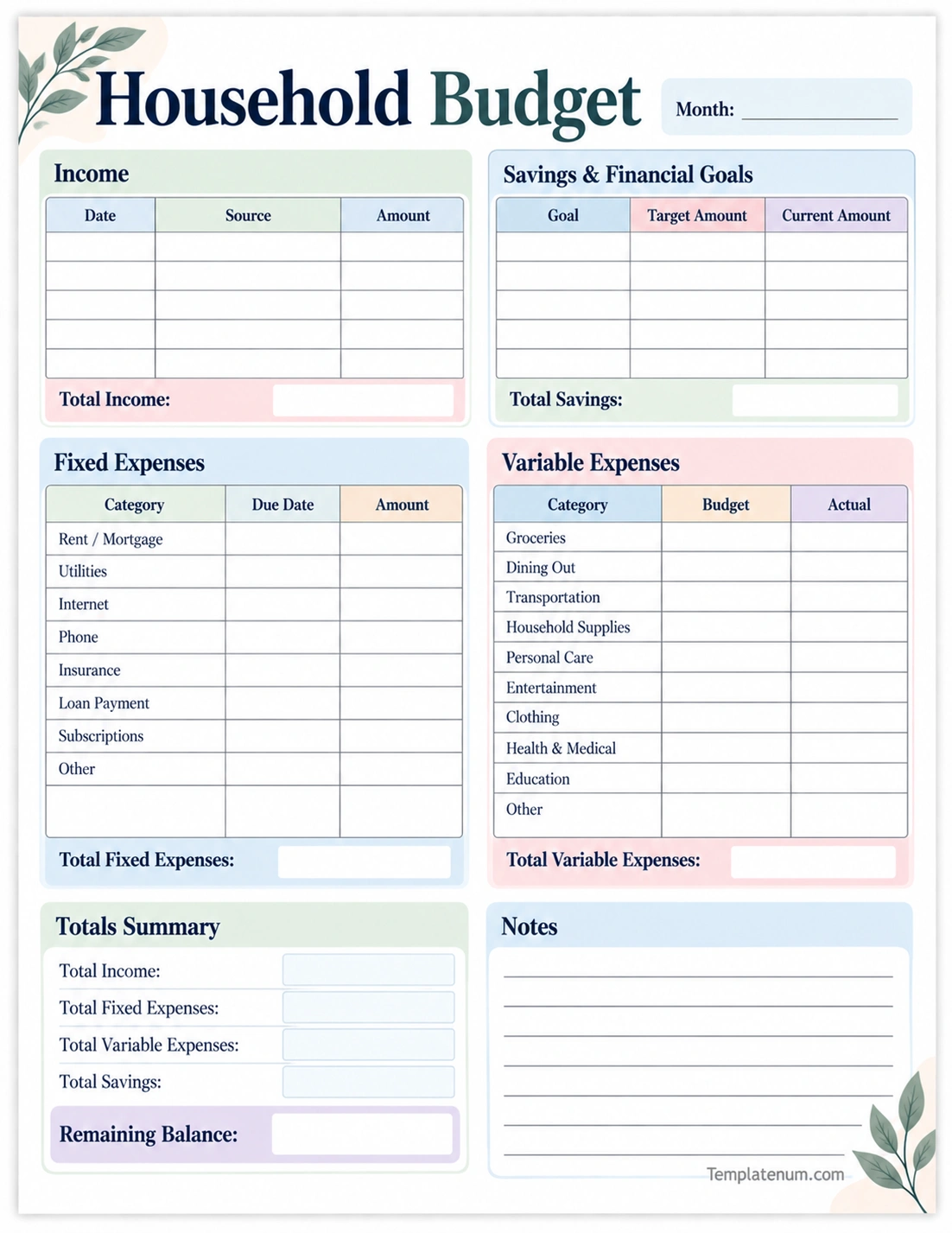
You do not need a complicated spreadsheet or financial software to get started. A printable household budget worksheet can provide a straightforward place to record income, fixed expenses, variable expenses, savings goals, and your remaining balance.
What Is a Household Budget?
A household budget is a plan that organizes the income and expenses of a household over a specific period, usually one month. It helps you compare the money available with the money you expect to spend and save.
A basic household budget usually includes several important categories:
- Income: Money received from employment, self-employment, benefits, or other regular sources.
- Fixed expenses: Costs that are generally consistent, such as rent, mortgage payments, or insurance.
- Variable expenses: Costs that can change from month to month, such as groceries, transportation, and entertainment.
- Savings: Money set aside for financial goals or future needs.
- Remaining balance: The amount left after planned expenses and savings are accounted for.
The exact categories can vary depending on your household. The goal is to create a system that reflects your actual financial situation and is easy to maintain.
Why Is a Household Budget Important?
Without a clear plan, it can be difficult to know how much money is available for bills, everyday expenses, savings, and other priorities. A household budget provides a simple overview that can make financial planning more organized.
Track Household Income
Recording your household income gives you a starting point for your monthly budget. Include the income sources that you expect to receive during the budgeting period.
If your income varies from month to month, you can use a conservative estimate and update the budget when actual income is known.
Organize Monthly Expenses
Listing expenses helps you see how much money is allocated to housing, utilities, food, transportation, insurance, subscriptions, and other categories.
Separating fixed and variable expenses can make your budget easier to understand because some costs are relatively predictable while others can change significantly.
Plan for Savings
Savings can be included as a planned part of the household budget rather than something that happens only when money is left over. You can create separate savings categories for different goals.
Examples may include:
- Emergency savings
- Major purchases
- Home maintenance
- Annual expenses
- Education goals
- Travel plans
Prepare for Unexpected Expenses
Household expenses do not always follow a predictable schedule. Repairs, medical costs, replacement items, and other unexpected expenses can arise.
Including an emergency savings goal in your household budget can help you prepare for expenses that are not part of your normal monthly bills.
What Should Be Included in a Household Budget?
A useful household budget should contain enough information to help you understand your monthly financial picture without becoming unnecessarily complicated.
Household Income
Begin with your expected household income. Depending on your situation, this may include wages, freelance income, business income, benefits, or other regular sources.
If there are multiple income sources, list them separately. This makes it easier to see where the total monthly income comes from.
Fixed Expenses
Fixed expenses are costs that tend to remain relatively stable from month to month. Examples include:
- Rent or mortgage payments
- Insurance
- Loan payments
- Internet services
- Phone plans
- Subscriptions
Some fixed expenses may change occasionally, so review them periodically and update your budget when necessary.
Variable Expenses
Variable expenses can change depending on your household’s activities and needs. Common examples include groceries, transportation, dining out, household supplies, clothing, entertainment, and personal care.
Tracking these categories can help you understand which expenses fluctuate the most from month to month.
Savings and Financial Goals
Add your savings goals to the budget so they remain visible alongside your regular expenses. You can record the target amount and track progress toward each goal.
Notes and Adjustments
A notes section can be useful for recording upcoming expenses, changes to bills, annual payments, or other information that may affect the current month’s budget.
How to Create a Household Budget
Creating a household budget can be done in a few practical steps. Start with information you already have and refine the budget as you learn more about your actual spending.
1. Calculate Your Expected Income
List the income you expect to receive during the month. Add each source separately and calculate the total expected household income.
2. List Your Regular Expenses
Write down your recurring expenses, including housing, utilities, insurance, subscriptions, transportation, and other regular payments.
3. Estimate Variable Spending
Estimate how much you expect to spend on categories that change each month. Looking at previous spending can help you create more realistic estimates.
4. Add Savings Goals
Record the amount you plan to set aside for savings. If you have multiple goals, list them separately so you can track your progress.
5. Calculate the Remaining Balance
Compare your expected income with your planned expenses and savings. The remaining balance shows what is left after those planned allocations.
6. Review and Adjust
At the end of the month, compare your budget with your actual income and spending. Use what you learn to make the next month’s budget more accurate.
Fixed Expenses vs. Variable Expenses
Separating fixed and variable expenses is a useful part of household budgeting. The distinction helps you understand which costs are relatively predictable and which ones may require more attention.
Fixed expenses are generally recurring costs that remain similar from month to month. Housing payments and insurance are common examples.
Variable expenses can change based on usage, household needs, or personal choices. Groceries, dining out, transportation, and entertainment are common examples.
Not every expense fits perfectly into one category. The important thing is to use categories that make sense for your household and help you understand your spending.
How to Make a Household Budget Work
Creating a budget is only the first step. The system becomes more useful when you review it regularly and update it when circumstances change.
- Keep your budget simple: Use categories that are easy to understand and maintain.
- Review bills regularly: Check recurring expenses for changes in amounts or due dates.
- Track variable spending: Pay attention to categories that change significantly each month.
- Update your estimates: Replace estimates with actual amounts when they become available.
- Review savings goals: Check your progress and adjust targets when appropriate.
- Keep previous budgets: Older worksheets can help you compare household spending over time.
Printable Household Budget Benefits
A printable household budget can be a convenient option if you prefer a physical planning system. A worksheet can provide dedicated sections for income, fixed expenses, variable expenses, savings, totals, and notes.
Some practical benefits include:
- Easy to view: Important budget information can fit on one page.
- Simple to update: Write changes directly on the worksheet.
- Flexible: Add categories that match your household’s needs.
- Easy to review: Keep the worksheet somewhere accessible during the month.
- Useful for monthly planning: Create a new worksheet for each budgeting period.
Household Budget Categories to Consider
Every household has different financial needs, so there is no single list of categories that works for everyone. However, the following categories can provide a useful starting point.
- Housing: Rent, mortgage, property-related costs, and maintenance.
- Utilities: Electricity, water, gas, and other household services.
- Food: Groceries and dining expenses.
- Transportation: Fuel, public transportation, vehicle costs, and maintenance.
- Insurance: Relevant household insurance expenses.
- Health and medical: Healthcare-related expenses and regular medical costs.
- Education: School, tuition, supplies, or educational services.
- Personal care: Haircuts, toiletries, and other personal expenses.
- Entertainment: Streaming services, hobbies, and recreational activities.
- Savings: Emergency savings and other financial goals.
Household Budget vs. Personal Budget
A personal budget generally focuses on one person’s income and expenses, while a household budget can combine financial information for a household.
A household budget may be useful when multiple people contribute to household income or share expenses. It can provide a broader picture of housing, utilities, food, transportation, savings, and other shared financial responsibilities.
The right format depends on how your household manages money. Some households may benefit from one shared budget, while others may keep separate personal budgets alongside a shared household plan.
How Often Should You Review a Household Budget?
A household budget can be reviewed at several points during the month. A quick weekly review can help you stay aware of upcoming expenses, while a more detailed monthly review can help you compare planned and actual spending.
It is also useful to review your budget when something changes, such as a new recurring expense, a change in income, or a significant change in household spending.
Regular reviews help keep the budget relevant instead of allowing it to become an outdated document.
Frequently Asked Questions About Household Budgets
What is a household budget?
A household budget is a plan for organizing household income, expenses, savings, and financial goals. It helps provide a clear overview of how money is expected to be allocated during a specific period.
How do I create a household budget?
Start by recording expected household income. Then list fixed expenses, estimate variable expenses, add savings goals, and calculate the remaining balance. Review the results and adjust the amounts as needed.
What expenses should be included in a household budget?
Common categories include housing, utilities, food, transportation, insurance, healthcare, education, personal care, entertainment, subscriptions, and savings. You can add or remove categories based on your household’s needs.
Should savings be included in a household budget?
Yes. Including savings as a budget category can make financial goals more visible. You can create separate categories for emergency savings, major purchases, annual expenses, or other goals.
What is the difference between fixed and variable expenses?
Fixed expenses generally remain relatively consistent from month to month, while variable expenses can change. Housing payments and insurance are examples of fixed expenses, while groceries and entertainment are examples of variable expenses.
Can I use a printable household budget?
Yes. A printable household budget worksheet can provide a simple physical format for recording income, expenses, savings goals, and monthly totals. You can create a new worksheet for each month.
How often should I make a household budget?
Many households create or update their budget monthly. A monthly schedule makes it easier to account for changing bills, variable expenses, income, and savings goals.
What should I do if my actual spending is different from my budget?
Review the category where the difference occurred and compare the planned amount with the actual amount. You can then use that information to create a more realistic estimate for the next budgeting period.
Final Thoughts
A household budget provides a practical framework for organizing income, expenses, savings, and financial goals. By keeping these elements together, you can create a clearer picture of your household finances and make monthly planning more structured.
The most useful budget is one that you can maintain consistently. Start with the categories that matter most, record realistic amounts, review your spending regularly, and update the worksheet when your household’s financial situation changes.
Whether you use a printable household budget, spreadsheet, or digital budgeting tool, having a clear system for tracking income and expenses can make everyday financial organization easier.
Download: Household Budget Template
