A house cleaning schedule makes it easier to keep your home clean, organized, and comfortable without spending an entire day cleaning. Instead of waiting for dirt, dust, and clutter to build up, you can divide household chores into smaller tasks that fit naturally into your routine.
A practical cleaning schedule can also make housework feel less overwhelming. Daily tasks keep frequently used areas under control, weekly chores handle regular cleaning, and monthly or seasonal tasks take care of areas that need less frequent attention.
Whether you live in a small apartment, a family home, or a larger house, this cleaning routine can be adjusted to fit your space, schedule, and household needs.
What Is a House Cleaning Schedule?
A house cleaning schedule is a simple plan that organizes household cleaning tasks by frequency. Instead of trying to clean everything at once, you assign specific chores to different days, weeks, or months.
A basic cleaning schedule usually includes:
- Daily cleaning tasks for quick maintenance
- Weekly cleaning tasks for commonly used areas
- Monthly cleaning tasks for deeper cleaning
- Seasonal cleaning tasks for occasional maintenance
- Room-by-room cleaning checklists for specific areas
The goal is not to create a rigid routine. A good house cleaning schedule should make cleaning easier and more manageable while allowing you to adjust tasks when your schedule changes.
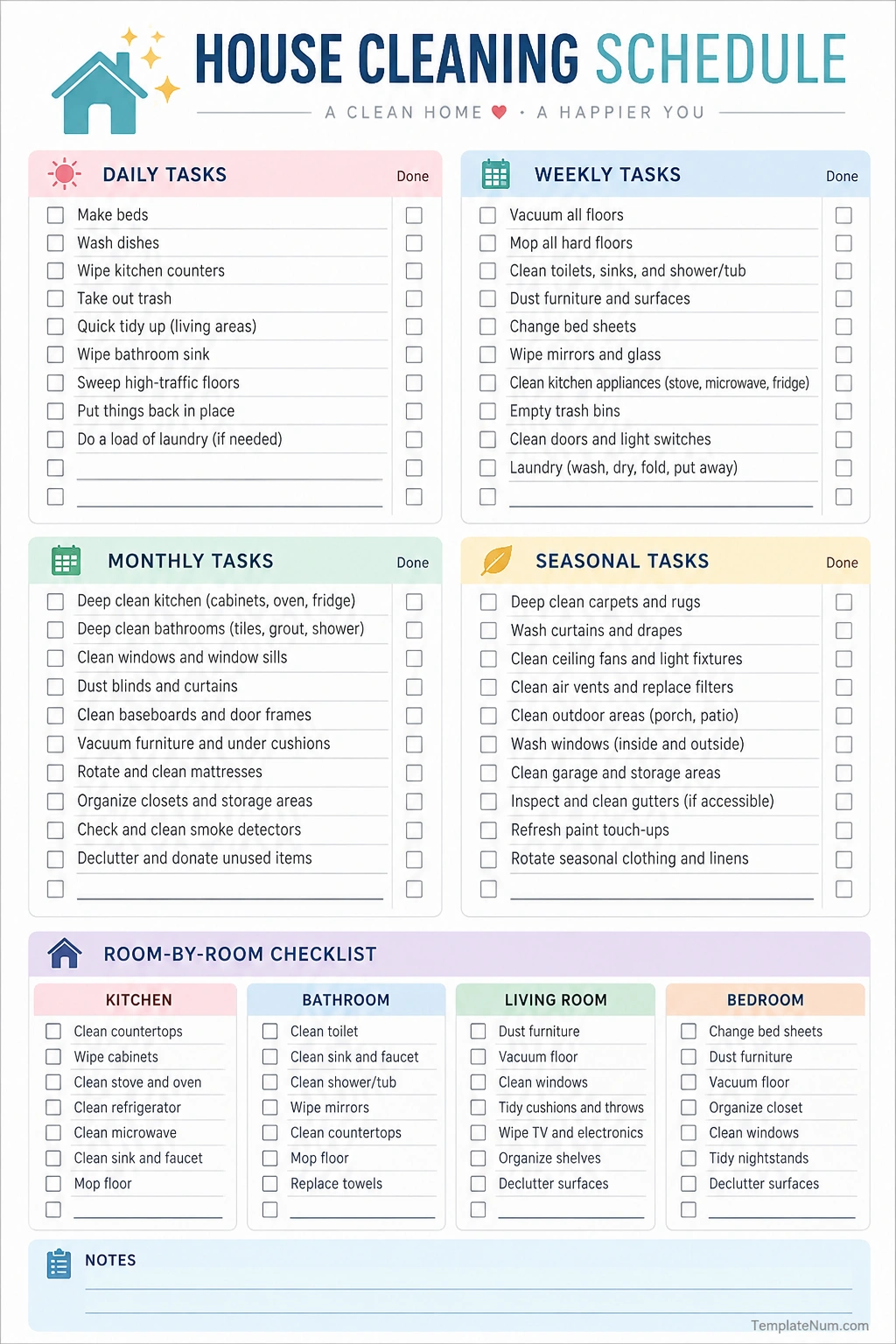
House Cleaning Schedule Template
A printable cleaning schedule can help you see your household chores at a glance. You can use it as a weekly cleaning checklist, mark completed tasks, and add your own chores based on the needs of your home.
For best results, place your cleaning schedule somewhere easy to see, such as on a refrigerator, bulletin board, home office wall, or inside a household planner.
Daily House Cleaning Schedule
Daily cleaning does not have to take hours. The purpose of daily chores is to prevent small messes from becoming larger cleaning projects.
Make the Beds
Start the day by making the beds. This simple task immediately makes bedrooms look more organized and takes only a few minutes.
Clean the Kitchen
Wash dishes, wipe kitchen counters, clean the sink, and quickly wipe areas where food has been prepared. Keeping the kitchen clean each day helps prevent crumbs, spills, and food residue from accumulating.
Tidy Common Areas
Return items to their proper places, straighten cushions, clear tables, and remove visible clutter from living areas. A short daily reset can make the entire home feel more organized.
Handle Small Laundry Tasks
If necessary, wash, dry, fold, or put away one load of laundry. Doing laundry regularly can prevent large piles from accumulating later in the week.
Take Out the Trash
Check kitchen and bathroom trash bins and empty them when needed. This is especially important if they contain food waste or other items that can create unpleasant odors.
Weekly House Cleaning Schedule
Weekly cleaning involves tasks that need more attention than a daily tidy-up. You can complete these chores on one day or divide them across several days.
Vacuum and Sweep Floors
Vacuum carpets, rugs, and upholstered areas. Sweep hard floors and pay extra attention to high-traffic areas where dust and dirt accumulate quickly.
Mop Hard Floors
After sweeping or vacuuming, mop hard floors according to the manufacturer’s cleaning recommendations. Focus on kitchens, bathrooms, entryways, and other frequently used spaces.
Clean Bathrooms
Clean toilets, sinks, countertops, showers, and tubs. Wipe mirrors and replace used towels. Regular bathroom cleaning helps keep the space fresh and prevents buildup.
Dust Furniture and Surfaces
Dust shelves, tables, furniture, window sills, and other exposed surfaces. Start with higher surfaces and work downward so dust does not settle on areas you have already cleaned.
Change Bed Sheets
Wash and replace bed sheets and pillowcases regularly. Adjust the frequency according to household needs, personal preferences, and recommendations for your specific bedding.
Clean Kitchen Appliances
Wipe the outside of frequently used appliances such as the refrigerator, microwave, stove, and dishwasher. Remove visible spills and food residue before they become difficult to clean.
Monthly House Cleaning Tasks
Some areas of your home do not require attention every day or every week. Adding monthly chores to your house cleaning schedule helps prevent these areas from being forgotten.
- Deep clean the kitchen cabinets and refrigerator
- Clean the oven and microwave thoroughly
- Deep clean bathroom tiles and grout
- Clean windows and window sills
- Dust blinds, curtains, and less accessible surfaces
- Clean baseboards and door frames
- Vacuum furniture and underneath cushions
- Organize closets and storage areas
- Clean and inspect smoke detectors
- Declutter unused household items
You do not need to complete every monthly chore on the same day. Assigning two or three tasks to different weeks can make deep cleaning much easier to manage.
Seasonal Cleaning Schedule
Seasonal cleaning focuses on tasks that only need to be completed a few times each year. These chores often involve areas that are easy to overlook during regular cleaning.
- Deep clean carpets and rugs
- Wash curtains and larger fabric items
- Clean ceiling fans and light fixtures
- Clean air vents and replace filters when appropriate
- Wash windows inside and outside when practical
- Clean garages and storage areas
- Clean outdoor areas such as patios and porches
- Rotate seasonal clothing and linens
- Declutter storage spaces
- Inspect areas that may need maintenance or repair
Seasonal cleaning is also a good opportunity to review belongings and remove items that are no longer useful.
Room-by-Room Cleaning Checklist
A room-by-room cleaning checklist can make your routine more specific. Instead of thinking about the entire house, focus on one room at a time.
Kitchen Cleaning Checklist
- Wipe countertops
- Clean the sink and faucet
- Wipe cabinet doors
- Clean the stove and oven
- Clean the refrigerator
- Wipe the microwave
- Sweep and mop the floor
- Empty the trash
Bathroom Cleaning Checklist
- Clean the toilet
- Clean the sink and faucet
- Wipe countertops
- Clean the shower or bathtub
- Wipe mirrors
- Mop the floor
- Replace towels
- Empty the trash
Living Room Cleaning Checklist
- Dust furniture and shelves
- Vacuum or sweep the floor
- Clean windows and window sills
- Wipe frequently touched surfaces
- Organize books and other items
- Vacuum upholstery when needed
- Remove unnecessary clutter
Bedroom Cleaning Checklist
- Make the bed
- Change bed sheets
- Dust furniture
- Vacuum or sweep the floor
- Clean mirrors and windows
- Organize closets
- Tidy nightstands
- Remove unnecessary items
How to Create a House Cleaning Routine That Works
The best cleaning routine is one that you can consistently follow. You do not need to copy someone else’s schedule exactly. Instead, create a plan based on the size of your home, the number of people living there, and how much time you have available.
Start With Essential Tasks
Begin by identifying the chores that have the biggest impact on your home. Dishes, laundry, kitchen surfaces, bathroom cleaning, floors, and clutter are common priorities.
Divide Large Chores Into Smaller Tasks
Deep cleaning an entire house can feel overwhelming. Break larger projects into smaller jobs. For example, clean kitchen cabinets one week and tackle bathroom grout the following week.
Assign Tasks to Specific Days
Giving each chore a place in your weekly routine reduces the need to decide what to clean every day. For example, you might vacuum on Monday, clean bathrooms on Wednesday, and change bed sheets on Saturday.
Keep Cleaning Supplies Organized
Store frequently used cleaning supplies in an accessible location. Having the necessary tools ready can make short cleaning sessions faster and easier.
Adjust the Schedule When Necessary
A cleaning schedule should support your life rather than make it more stressful. If you miss a task, simply move it to another day. Consistency over time matters more than following the schedule perfectly every week.
How Long Should You Clean Your House Each Day?
There is no single amount of time that works for every household. A small home may require only a short daily reset, while a larger household may need more time.
One practical approach is to spend a small amount of time each day on essential tasks and reserve longer cleaning sessions for weekly or monthly chores. Even 10 to 20 minutes of focused tidying can help prevent clutter from becoming overwhelming.
The key is to prioritize high-impact tasks rather than trying to clean every surface every day.
Tips for Staying Consistent With Your Cleaning Schedule
- Keep your cleaning checklist visible.
- Start with the most important chores.
- Use short cleaning sessions when you are busy.
- Clean one room or zone at a time.
- Put items back in their proper places after using them.
- Do not postpone small messes when they can be handled quickly.
- Share appropriate household chores with other family members.
- Review and adjust your cleaning routine when your household needs change.
Remember that the purpose of a house cleaning schedule is to make cleaning more manageable. It should reduce decision-making and help you maintain a reasonably clean home without relying on occasional marathon cleaning sessions.
Frequently Asked Questions About House Cleaning Schedules
What is the best house cleaning schedule?
The best house cleaning schedule is one that divides chores into daily, weekly, monthly, and seasonal tasks that fit your household. A practical schedule should be simple enough to follow consistently and flexible enough to accommodate changes.
How often should you clean your house?
Frequently used areas such as kitchens, bathrooms, and floors usually need more regular attention than less-used areas. Daily tidying combined with weekly cleaning and occasional deep cleaning provides a practical starting point for many households.
Should I clean my whole house in one day?
You can clean your entire house in one day, but you do not have to. Dividing chores throughout the week can make cleaning less tiring and easier to maintain.
What should I clean every day?
Common daily cleaning tasks include washing dishes, wiping kitchen counters, making beds, putting items away, tidying living areas, handling laundry when needed, and taking out the trash.
What should be included in a weekly cleaning checklist?
A weekly cleaning checklist can include vacuuming, sweeping, mopping, bathroom cleaning, dusting, changing bed sheets, cleaning kitchen appliances, wiping mirrors, and emptying household trash bins.
How can I keep my house clean with a busy schedule?
Focus on essential chores and divide them into short sessions. A few minutes of daily tidying can prevent clutter from building up, while larger cleaning tasks can be assigned to specific days of the week or month.
Conclusion
A house cleaning schedule can turn household cleaning from an overwhelming chore into a manageable routine. By dividing tasks into daily, weekly, monthly, and seasonal categories, you can keep your home cleaner without trying to do everything at once.
Use a printable cleaning checklist to organize your routine, adjust the tasks to match your household, and focus on consistency rather than perfection. The goal is a practical cleaning system that helps your home stay comfortable, tidy, and easier to maintain.
Download: House Cleaning Schedule Template
