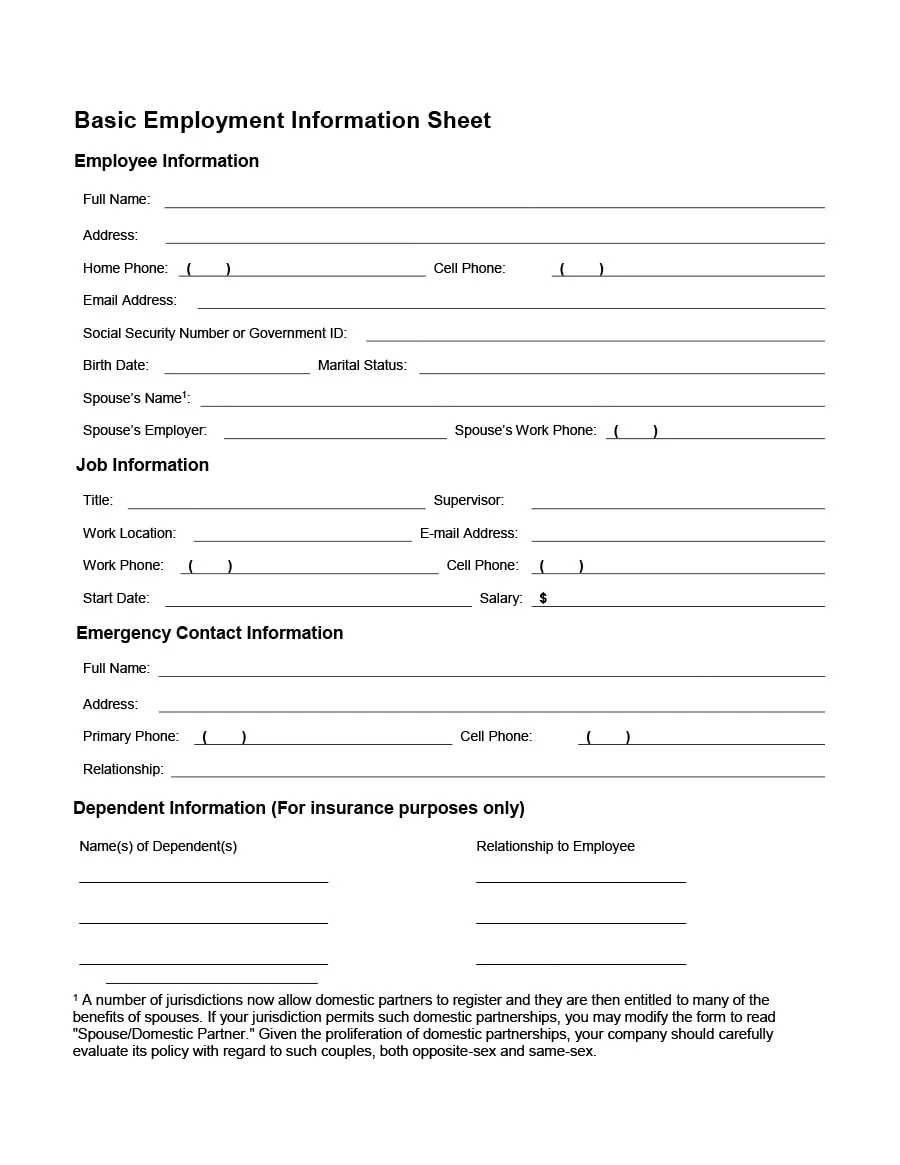
What is an Employee Information Form?
An employee information form is a critical document used by organizations to collect essential personal, professional, and emergency contact details from their employees.
This comprehensive form serves as a centralized record for various HR functions like onboarding, benefits administration, communication, and legal compliance throughout an employee’s tenure. By capturing vital data for purposes like payroll processing, tax compliance, benefits enrollment, and emergencies, employee information forms play a crucial role in streamlining HR processes and ensuring organizational efficiency.
Why Are Employee Information Forms Important?
Employee information forms play a vital role in HR management for several reasons that are essential for the smooth functioning of organizations:
- Legal Compliance: Employee information forms help organizations comply with state and federal regulations by ensuring that they have accurate and up-to-date employee data for tax, payroll, and benefits purposes.
- Administrative Efficiency: By centralizing employee information in one document, organizations can streamline their HR processes and administrative tasks, saving time and resources.
- Emergency Preparedness: Having access to employees’ emergency contact details allows companies to respond promptly in case of accidents, injuries, or other critical incidents.
- Communication: Employee information forms provide a means for HR to communicate effectively with employees regarding benefits, policies, and other important information.
Key Elements of an Employee Information Form
Employee information forms typically consist of several key elements that are essential for gathering comprehensive details about employees:
- Personal Information: This section includes fields for the employee’s name, address, contact details, date of birth, and social security number.
- Professional Information: Details like job title, department, employment status, and hire date are captured in this section.
- Emergency Contact Information: Employees provide the name, relationship, and contact number of a person to reach in case of an emergency.
- Benefits Enrollment: Information related to health insurance, retirement plans, and other benefits offered by the organization is included in this section.
- Tax Withholding: Employees complete tax withholding forms like the W-4 to specify federal and state tax deductions from their paychecks.
- Direct Deposit: Bank account details are collected for setting up direct deposit of payroll earnings.
How to Fill Out an Employee Information Form
Filling out an employee information form correctly is crucial for ensuring that the data collected is accurate and up-to-date. Here are some tips on how to fill out an employee information form effectively:
Review the Form Carefully
Before starting to fill out the employee information form, take the time to review the entire document carefully. Pay attention to any instructions provided and ensure that you have all the necessary information and documents on hand before you begin.
Provide Accurate Information
When completing the form, make sure to provide accurate and up-to-date information in all required fields. Double-check your entries for errors or omissions before submitting the form to avoid any delays or issues with processing.
Follow Guidelines for Each Section
Each section of the employee information form may have specific guidelines or requirements for filling it out. Pay close attention to these guidelines and provide the requested information accordingly to ensure that all necessary details are captured.
Seek Assistance if Needed
If you have any questions or are unsure about how to fill out certain sections of the form, don’t hesitate to seek assistance from your HR department. They can provide guidance and clarification on how to complete the form correctly.
Submit the Form Promptly
Once you have completed the employee information form, submit it to the HR department promptly to ensure that your information is processed promptly. Keeping your details up-to-date is important for payroll, benefits enrollment, and emergency contact purposes.
Tips for Successful Employee Information Management
Effective management of employee information forms is essential for HR departments to ensure data accuracy, compliance, and efficiency. Here are some tips for successful employee information management:
Secure Storage
It is crucial to store employee information forms in a secure location, whether in physical or digital format, to protect sensitive data from unauthorized access or breaches. Implementing access controls and encryption measures can help
Regular Updates
Encourage employees to update their information regularly, especially in cases of changes like address, contact details, or emergency contacts. Keeping employee data current ensures that organizations have accurate and up-to-date information for payroll processing, benefits administration, and emergency response.
Training and Education for HR Staff
Provide training to HR staff on handling employee information securely and in compliance with privacy laws. Educating HR personnel on data protection best practices, confidentiality protocols, and legal requirements can help prevent data breaches and ensure that employee information is handled responsibly.
Effective Communication
Clearly communicate the purpose and importance of employee information forms to employees to encourage their cooperation and understanding. Explain how the information collected will be used, the significance of data accuracy, and the confidentiality measures in place to protect their personal information.
Regular Compliance Monitoring
Regularly review employee information forms for compliance with legal requirements and internal policies. Conduct audits to ensure that employee data is collected, stored, and processed in accordance with data protection laws, industry regulations, and organizational guidelines.
Employee Privacy and Data Protection
Respect employee privacy and data protection by implementing strict confidentiality measures and access controls for employee information. Limit access to sensitive data only to authorized personnel and ensure that data is securely stored and transmitted to prevent unauthorized disclosure or misuse.
Employee Consent and Data Usage
Obtain employee consent for collecting and using their personal information for specific purposes outlined in the employee information form. Clearly communicate how the data will be utilized, stored, and shared within the organization to ensure transparency and compliance with data privacy regulations.
Employee Information Form Template
An Employee Information Form helps employers collect and organize essential details about employees, such as personal information, contact details, emergency contacts, tax data, and employment-related records. It ensures accurate documentation, supports HR and payroll processes, and helps maintain up-to-date records for compliance and communication purposes. With a clear and structured form, you can streamline onboarding and manage employee information efficiently.
Download our Employee Information Form today to keep your employee records accurate, organized, and easy to manage.
Employee Information Form Template – DOWNLOAD
