An hourly planner is a simple but effective tool for organizing your day into clear time blocks. Instead of keeping a long list of tasks in your head, an hourly schedule lets you decide when specific activities, appointments, and responsibilities will happen. This makes it easier to see how your day fits together and where your available time can be used most effectively.
Whether you are managing work, school, household responsibilities, appointments, or personal goals, an hourly planner can help you create a more structured daily routine. By assigning tasks to specific hours, you can prioritize important work, reduce distractions, and avoid trying to accomplish everything at once.
A good hourly planner does not require you to schedule every minute of your day. It simply provides a visual framework that helps you understand how your time is allocated and what needs your attention first.
What Is an Hourly Planner?
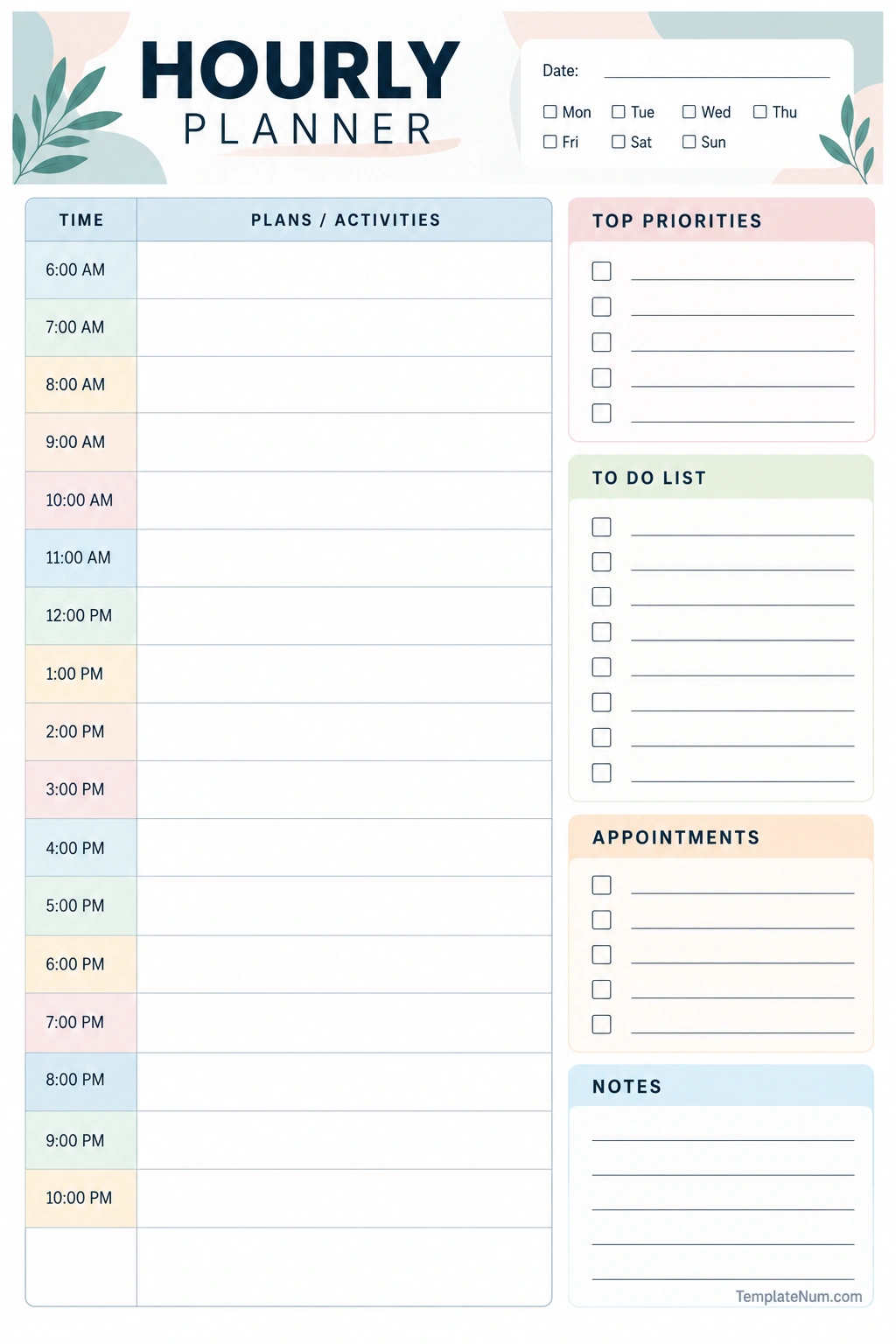
An hourly planner is a daily planning tool that divides the day into individual time slots, usually in one-hour increments. Each time slot provides space to write down a task, appointment, activity, or other commitment planned for that period.
Unlike a basic to-do list, an hourly schedule gives each task a place in your day. This distinction can make a significant difference because knowing what needs to be done is only part of effective time management. You also need to decide when you will do it.
Depending on the design, an hourly planner may include additional sections for priorities, appointments, reminders, notes, meals, habits, or unfinished tasks.
Why Use an Hourly Planner?
Planning your day by the hour can make a busy schedule easier to understand. Instead of looking at a collection of tasks without a clear order, you can see how your responsibilities fit within the available hours.
An hourly planner can help you:
- Organize tasks according to specific times.
- Prioritize important responsibilities.
- Keep appointments and commitments visible.
- Create a more structured daily routine.
- Reduce the feeling of being overwhelmed by a long task list.
- Identify periods of available time.
- Protect time for focused work and personal activities.
- Reduce unnecessary switching between unrelated tasks.
- Review how you actually spend your day.
The goal is not to make your day rigid. Instead, the planner gives you a framework that can be adjusted when priorities or circumstances change.
How an Hourly Planner Works
The basic concept is straightforward. Start with the hours you expect to be active, then assign activities to the appropriate time slots.
Start With Your Fixed Commitments
Begin by adding appointments, meetings, classes, work shifts, school schedules, or other commitments that occur at specific times. These activities create the framework for the rest of your day.
For example, if you have a meeting from 10:00 AM to 11:00 AM, that period is already reserved. You can then plan flexible tasks around it.
Add Your Most Important Tasks
Once fixed commitments are entered, identify the tasks that matter most. Place these activities into realistic time slots instead of simply adding them to a general to-do list.
If an important project requires two hours of focused attention, consider reserving two consecutive time blocks rather than assuming you will find time for it later.
Include Breaks and Personal Time
A productive schedule should not consist entirely of work. Include time for meals, short breaks, exercise, personal responsibilities, and other activities that help you maintain a sustainable routine.
Leaving some open space can also make the planner more practical. Unexpected phone calls, delays, urgent tasks, and other interruptions are part of everyday life.
What to Include in an Hourly Planner
A useful hourly planner can contain more than a simple list of times. The right combination of sections depends on how you use the planner.
Hourly Schedule
The main section should provide clearly labeled time slots. Common schedules may begin at 6:00 AM and continue through the evening, but the ideal hours depend on your routine.
Top Priorities
A priority section helps you identify the few tasks that deserve the most attention. This is particularly useful when your daily schedule contains many smaller responsibilities.
To-Do List
A separate to-do list can hold tasks that need to be completed but do not necessarily have a fixed time. You can assign these tasks to open time slots as your schedule develops.
Appointments
Appointments, meetings, calls, and other time-sensitive commitments can be recorded separately so they are easy to find at a glance.
Notes
A notes area gives you room for reminders, ideas, follow-ups, or information that does not belong in a specific hourly block.
How to Create an Effective Hourly Schedule
Creating an hourly schedule is easy, but making it realistic requires some thought. A common mistake is trying to fill every available hour with tasks.
1. Review Your Day Before Scheduling
Take a few minutes to identify your fixed commitments and determine what you realistically need to accomplish. This prevents you from creating a schedule that looks productive but is impossible to follow.
2. Estimate Task Duration
Think about how long each task will actually take. If you expect a task to require 90 minutes, do not assign it to a single one-hour block without making an adjustment.
3. Schedule High-Priority Work First
Place important tasks into your schedule before filling the remaining time with minor activities. This gives your most valuable work a defined place in the day.
4. Group Similar Tasks
Whenever practical, group similar activities together. For example, you might handle emails, phone calls, and administrative tasks during the same part of the day.
5. Leave Buffer Time
Avoid scheduling your day at 100 percent capacity. Buffer periods provide flexibility when a meeting runs late, a task takes longer than expected, or an unexpected responsibility appears.
Hourly Planner for Work
An hourly planner can be especially useful for professionals who manage multiple projects, meetings, deadlines, and administrative responsibilities.
For a typical workday, you might schedule your most demanding task during a period when you can work without interruptions. Meetings and collaborative activities can occupy other blocks, while email and administrative work can be grouped together.
This approach can make it easier to distinguish between scheduled commitments and focused work time.
Hourly Planner for Students
Students can use an hourly planner to organize classes, study sessions, assignments, extracurricular activities, meals, and personal time.
Instead of writing “study for exam” on a general task list, a student can reserve a specific period for reviewing notes, completing practice questions, or preparing an assignment.
A student daily planner can also make large assignments feel more manageable by dividing them into smaller scheduled sessions.
Hourly Planner for Home and Personal Life
Time management is not limited to work and school. An hourly planner can also help organize household responsibilities, errands, exercise, appointments, family activities, and personal projects.
For example, a person might reserve one part of the morning for household tasks, an afternoon block for errands, and an evening period for exercise or personal activities.
The advantage is that responsibilities become visible instead of competing for attention throughout the day.
Hourly Planner vs. To-Do List
An hourly planner and a to-do list serve different purposes, and they can work well together.
A to-do list answers the question, “What do I need to do?” An hourly planner answers the question, “When will I do it?”
For example, a to-do list might contain:
- Reply to emails.
- Finish project report.
- Buy groceries.
- Call the dentist.
An hourly schedule takes those responsibilities and gives them a place in the day. This can transform a general list into a practical action plan.
Tips for Using an Hourly Planner Consistently
The effectiveness of an hourly planner depends largely on how consistently you use it. These simple habits can make daily planning easier.
- Plan the night before: Prepare your schedule before the next day begins.
- Keep priorities limited: Focus on a small number of genuinely important tasks.
- Be realistic: Do not assign more work than your available time can reasonably accommodate.
- Use flexible time blocks: Leave room for unexpected events.
- Review unfinished tasks: Move incomplete tasks intentionally instead of allowing them to disappear.
- Adjust your routine: Change your planning approach when your schedule or responsibilities change.
- Review your day: Compare your planned schedule with what actually happened.
How to Avoid Overplanning Your Day
Detailed planning can be helpful, but too much scheduling can become counterproductive. If every minute is assigned to a task, even a small interruption can make the entire schedule feel unsuccessful.
Instead, think of your hourly planner as a flexible guide. Schedule the activities that genuinely need a specific time, reserve blocks for important work, and leave enough space for unexpected events.
You can also use broader time blocks for activities that do not require precise scheduling. This provides structure without making your day unnecessarily rigid.
Using a Printable Hourly Planner
A printable hourly planner is a convenient option for people who prefer writing by hand. A physical page can be placed on a desk, clipboard, planner binder, or other visible location where the schedule can be referenced throughout the day.
A printable template also makes it easy to create a fresh schedule each day. You can write appointments, priorities, tasks, and notes directly into the designated sections without having to redesign your daily schedule from scratch.
For people who enjoy handwriting their plans, a printable hourly schedule can also provide a simple alternative to digital planning applications.
How to Make an Hourly Planner Work for You
There is no single perfect daily schedule. Your ideal hourly planner should reflect your actual responsibilities, energy levels, work patterns, and personal commitments.
Start with a simple schedule and observe how well it works. If certain tasks consistently take longer than expected, adjust the time blocks. If you regularly have unused periods, use them for flexible tasks or recovery time.
Over time, your planner can become more than a scheduling sheet. It can help you recognize patterns in how you use your time and identify opportunities to improve your daily routine.
Final Thoughts on Hourly Planners
An hourly planner provides a practical way to organize a busy day by giving tasks, appointments, and activities specific places in your schedule. By breaking the day into manageable time blocks, you can make priorities more visible and reduce the uncertainty that often comes with an overloaded task list.
The best hourly schedule is not necessarily the most detailed one. It is the one that gives you enough structure to stay focused while leaving enough flexibility to handle real-life changes.
Whether you are planning a workday, school schedule, household responsibilities, or personal goals, an hourly planner can help you make better use of your available time and approach each day with a clearer sense of direction.
Download: Hourly Planner Template
