Hiring multiple candidates for an open position can quickly become complicated without a clear plan. Recruiters need to coordinate interview times, communicate with hiring managers, reserve meeting rooms, and ensure that every candidate receives the correct information. An interview schedule helps bring these details together in one organized document, making the hiring process easier to manage.
Whether you are hiring for one position or coordinating interviews across several departments, a structured interview schedule can reduce scheduling conflicts and improve communication. It allows recruiters to track candidate names, interview dates, time slots, interviewers, and recruitment status at a glance.
A printable interview schedule template is particularly useful for hiring teams that prefer a simple overview of their daily or weekly interviews. You can use it alongside a digital calendar, an applicant tracking system, or a recruitment spreadsheet. With the right format, your team can spend less time managing appointments and more time evaluating qualified candidates.
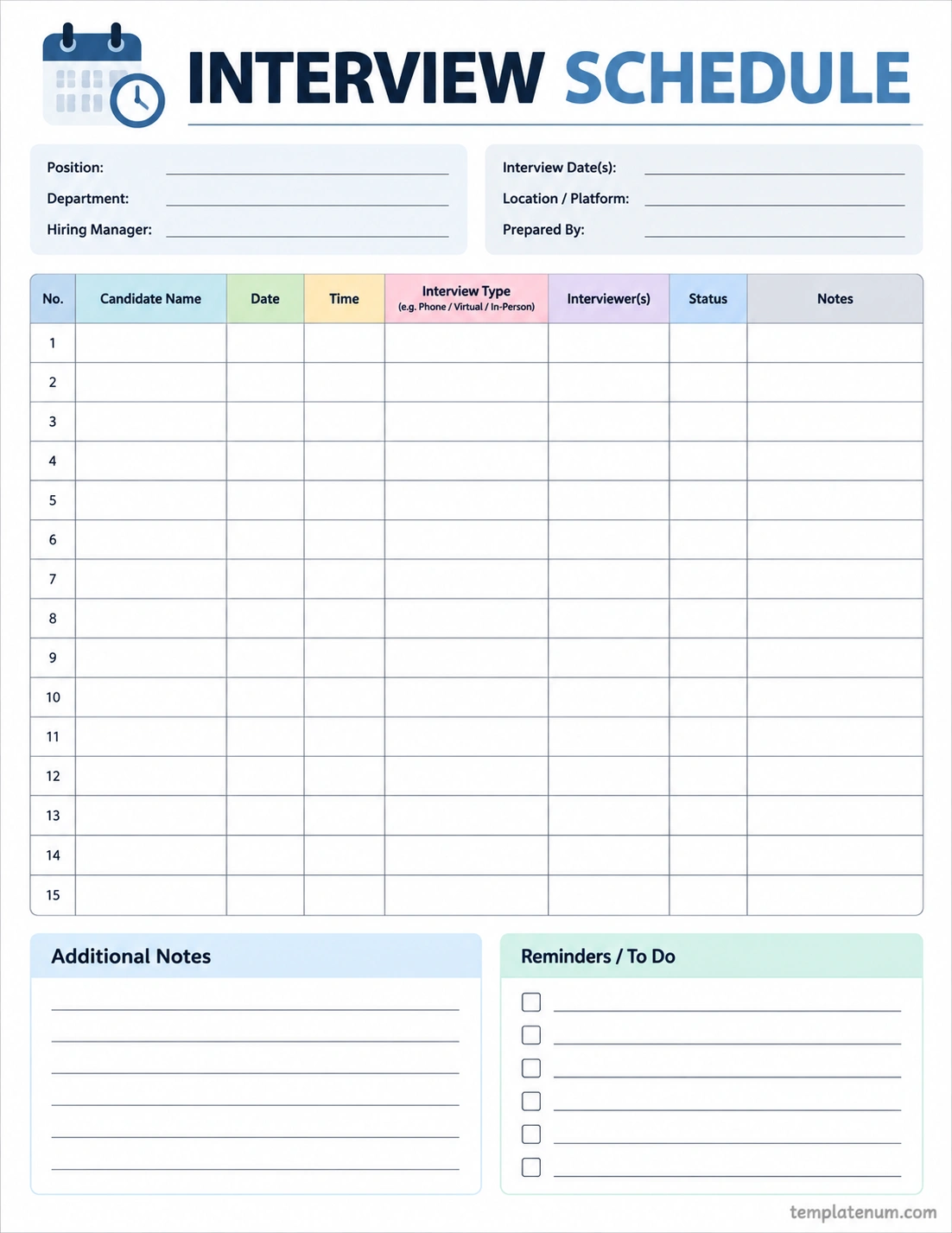
What Is an Interview Schedule?
An interview schedule is a planning document that lists job interviews and the information needed to coordinate them. It helps employers organize candidate appointments, assign interviewers, and monitor the progress of the hiring process.
Depending on the recruitment process, an interview schedule may cover a single day, an entire week, or several stages of interviews. A simple schedule might include candidate names and appointment times, while a more detailed version can track interview types, panel members, locations, and follow-up actions.
An interview schedule is useful for:
- Recruiters: Coordinate candidate appointments and communicate interview details.
- Hiring managers: Review interview commitments and prepare for each candidate.
- Human resources teams: Manage interview schedules across departments.
- Interview panels: Coordinate availability when multiple employees evaluate candidates.
- Small businesses: Organize recruitment without needing a complicated scheduling system.
Why an Interview Schedule Is Important
A well-organized interview schedule supports a more efficient and professional recruitment process. It helps everyone involved understand their responsibilities and reduces the risk of missed appointments.
Prevent Scheduling Conflicts
When several candidates are being interviewed, overlapping appointments can create unnecessary delays. A centralized interview calendar makes it easier to identify available time slots and avoid assigning the same interviewer to two meetings at once.
Improve Communication
Recruiters can use the schedule to confirm dates, times, interview formats, and locations. Hiring managers also have a reliable reference for their upcoming appointments. Clear communication helps candidates understand what to expect and where they need to be.
Save Time for Hiring Teams
Without a consistent schedule, recruiters may spend valuable time checking emails, comparing calendars, and confirming appointment details. Recording the information in one place makes it easier to review the day’s activities and identify tasks that still need attention.
Create a Better Candidate Experience
A smooth interview process reflects positively on an employer. Candidates are more likely to have a professional experience when invitations contain accurate information, appointments begin on time, and schedule changes are communicated promptly.
Track Recruitment Progress
An interview schedule can include a status field for each candidate. Labels such as Scheduled, Completed, Rescheduled, or Follow-Up Needed help recruiters see which appointments have taken place and which actions remain outstanding.
What to Include in an Interview Schedule Template
The best interview schedule template contains enough information to coordinate appointments without making the document difficult to read. Adjust the fields to suit your hiring process and the number of candidates involved.
Job and Recruitment Details
Start with the position title, department, hiring manager, and recruitment contact. These details help identify which vacancy the schedule covers, especially when a company is recruiting for multiple roles at the same time.
Candidate Information
Include each candidate’s name and any internal reference number needed to distinguish applicants. Store additional personal information separately when it is not necessary for scheduling.
Date and Time
Record the interview date and start time for every candidate. For longer interviews, include the expected end time or duration. If participants work in different time zones, specify the relevant time zone in invitations and calendar entries.
Interview Type and Location
Identify whether the appointment is a phone screening, video interview, in-person meeting, technical assessment, or panel interview. Add the office address, meeting room, or video conference link where appropriate. Keep confidential meeting links accessible only to authorized participants.
Assigned Interviewers
List the recruiter, hiring manager, or panel members responsible for each interview. This helps the team confirm availability and understand who should prepare the questions or evaluation materials.
Status and Notes
A status column allows recruiters to monitor each appointment. The notes field can record practical details, such as confirmation sent, assessment required, or follow-up scheduled. Avoid placing unnecessary sensitive candidate information in a shared schedule.
How to Create an Effective Interview Schedule
Creating an interview schedule becomes easier when you establish a consistent process. Follow these steps to organize interviews for multiple candidates.
Confirm the Hiring Requirements
Before scheduling interviews, identify the position, interview stages, required participants, and expected duration. Confirm whether candidates need to complete assessments or prepare specific materials. This information helps you estimate the time required for each appointment.
Check Interviewer Availability
Consult the calendars of hiring managers and interview panel members before offering time slots to candidates. Reserve enough time between appointments for breaks, preparation, and unexpected delays. Avoid creating a schedule that depends on every meeting ending exactly on time.
Group Interviews Where Practical
If several candidates are being interviewed for the same role, grouping appointments into dedicated interview blocks can simplify coordination. However, make sure each candidate receives sufficient time and that interviewers have opportunities to record their evaluations between meetings.
Send Invitations and Confirmations
Once the appointments are agreed upon, send each candidate a clear invitation. Include the date, time, expected duration, interview format, interviewer names when appropriate, and joining instructions. Ask candidates to confirm attendance if your process requires it.
Prepare a Backup Plan
Interviews sometimes need to be rescheduled because of illness, emergencies, or technical issues. Identify alternative time slots and decide who will communicate changes. For virtual interviews, ensure that participants know how to contact the recruiter if the meeting link fails.
Update the Schedule After Every Change
Keep the central interview schedule current whenever an appointment is confirmed, canceled, or moved. If multiple team members use the document, establish one source of truth to prevent conflicting versions from circulating.
Interview Schedule Example for Multiple Candidates
A daily interview schedule can organize appointments in chronological order. For example, a hiring team recruiting a marketing coordinator might plan the day as follows:
- 9:00 AM: Candidate A — initial phone screening.
- 10:00 AM: Candidate B — hiring manager interview.
- 11:15 AM: Candidate C — skills assessment discussion.
- 1:00 PM: Candidate D — panel interview.
- 2:30 PM: Candidate E — final interview.
This example is illustrative rather than a recommended universal timetable. Actual appointment lengths should reflect the role, interview format, and evaluation requirements. Add transition time where necessary and confirm that all participants are available.
For larger recruitment campaigns, create separate schedules for different positions or interview stages. This makes it easier to coordinate multiple hiring managers without overcrowding a single worksheet.
Printable Interview Schedule vs. Digital Calendar
Both printable and digital tools can help employers manage recruitment appointments. The right option depends on the complexity of the hiring process and how your team works.
- Printable interview schedule: Provides a quick overview, supports handwritten notes, and works well during in-person interview days.
- Digital calendar: Offers invitations, automatic reminders, availability checks, and easier schedule changes.
- Recruitment spreadsheet: Helps track many candidates, interview stages, and follow-up actions in one table.
- Applicant tracking system: Can centralize candidate records, interview feedback, and recruitment workflows when supported by the platform.
Many hiring teams benefit from combining these options. Use a digital calendar for appointment notifications and a printable interview schedule as a quick reference during a busy recruitment day. Keep candidate information secure and restrict access to authorized team members.
Best Practices for Managing Interview Schedules
A schedule is most effective when the entire hiring team follows the same process. These practices can improve consistency and reduce administrative work.
- Use a standard format: Keep column names, time formats, and status labels consistent.
- Allow preparation time: Give interviewers time to review resumes and prepare questions before each meeting.
- Send timely reminders: Remind participants about upcoming interviews and required materials.
- Communicate changes promptly: Notify everyone affected when an appointment moves or is canceled.
- Protect candidate privacy: Limit access to contact details, evaluation notes, and other confidential information.
- Review the schedule daily: Check upcoming appointments, outstanding confirmations, and follow-up tasks.
- Use consistent evaluation criteria: Coordinate interview questions and assessment standards to support fair comparisons between candidates.
These simple habits help recruiters maintain an organized process while giving candidates a more consistent experience.
Common Interview Scheduling Mistakes to Avoid
Even a detailed interview calendar can fail if important information is missing. Watch for these common problems:
- Overlapping appointments: Check the availability of every required interviewer before confirming a meeting.
- Missing meeting details: Include the location or video link, time zone when relevant, and contact information for assistance.
- Unrealistic time slots: Allow sufficient time for interviews, breaks, and evaluation notes.
- Outdated information: Update the master schedule whenever a candidate reschedules or an interviewer changes.
- Unclear ownership: Assign responsibility for invitations, confirmations, and follow-up communications.
- Excessive information sharing: Avoid exposing confidential candidate details to people who do not need access.
Reviewing these details before interview day can prevent avoidable confusion and delays.
Frequently Asked Questions About Interview Schedules
What is an interview schedule?
An interview schedule is a document or calendar that organizes job interview appointments. It typically includes candidate names, dates, times, interview types, interviewers, locations, and scheduling status.
Why do employers need an interview schedule?
Employers use interview schedules to prevent appointment conflicts, coordinate hiring teams, communicate with candidates, and track recruitment progress. A centralized schedule makes multiple interviews easier to manage.
What should an interview schedule template include?
A useful template includes the position title, candidate names, interview dates and times, interview format, location, assigned interviewers, status, and notes. Optional fields can cover preparation tasks and follow-up actions.
How do I schedule interviews with multiple candidates?
Confirm interviewer availability, determine the duration of each interview, allocate suitable time slots, and send clear invitations. Add preparation breaks and update the central schedule whenever changes occur.
Can I use a printable interview schedule for virtual interviews?
Yes. A printable schedule can track virtual interviews just as effectively as in-person meetings. Include the platform, meeting time, and a note indicating where authorized participants can access the meeting link.
How much time should I allow between interviews?
The appropriate interval depends on the interview length, format, and preparation requirements. Allow enough time for interviewers to write notes, take breaks, and prepare for the next candidate rather than scheduling meetings back to back by default.
Is a spreadsheet better than a printable interview schedule?
A spreadsheet is often more convenient for sorting candidates, updating status fields, and managing large recruitment campaigns. A printable schedule is useful as a quick reference during interview days. The two formats can complement each other.
Make Recruitment Easier With an Interview Schedule
An interview schedule is a practical tool for organizing candidates, coordinating interviewers, and keeping recruitment activities on track. By recording essential details in one place, hiring teams can reduce scheduling conflicts, prepare more effectively, and provide candidates with clear communication.
Choose a printable interview schedule template or digital format that matches your hiring needs. Add the necessary candidate and appointment details, confirm availability, and review the schedule regularly. With a consistent process, your team can manage multiple interviews more efficiently and focus on selecting the right person for the role.
Download: Interview Schedule Template
