An income and expense worksheet helps individuals and businesses track money coming in and going out. By recording income sources, everyday spending, and recurring bills, you can understand your financial situation and make better budgeting decisions.
Whether you manage household finances, organize freelance earnings, or monitor small business expenses, an income and expense worksheet provides a simple way to record transactions and identify spending patterns. It can also help you prepare a monthly budget, plan savings goals, and recognize opportunities to reduce unnecessary costs.
In this guide, you will learn how an income and expense worksheet works, what information to include, and how to use it effectively. You will also find practical examples, budgeting tips, and answers to common questions about tracking income and expenses.
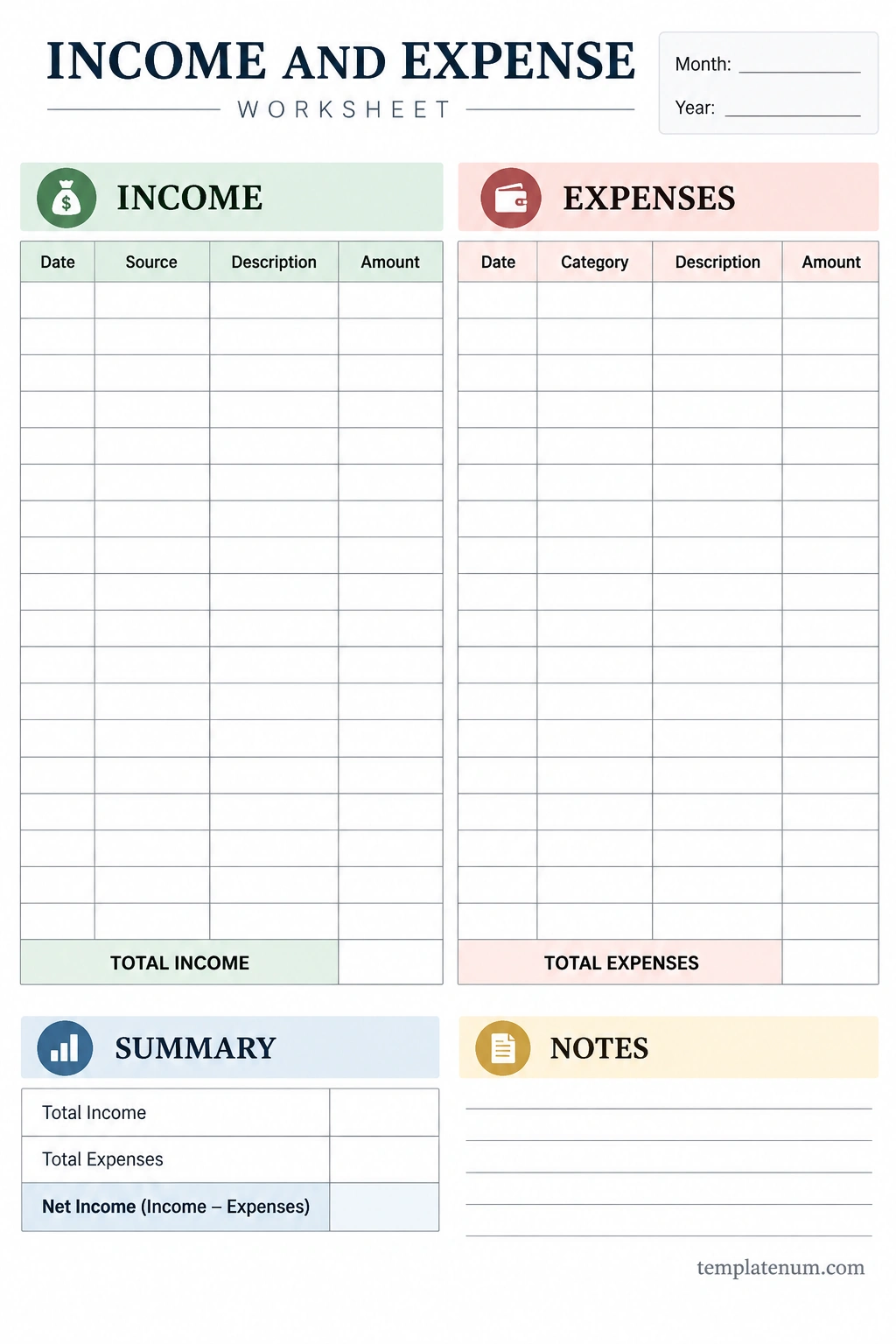
What Is an Income and Expense Worksheet?
An income and expense worksheet is a document used to record and organize money received and money spent during a specific period. It may be completed daily, weekly, monthly, or annually, depending on your financial goals.
The worksheet usually separates income from expenses and includes a summary showing the difference between the two. This makes it easier to see whether your income covers your spending and how much money remains after expenses.
Individuals can use an income and expense worksheet to manage household budgets, while freelancers and small business owners can use similar worksheets to monitor cash flow. However, a basic personal budgeting worksheet is not a substitute for formal accounting records or tax documents when those are required.
Why Is Tracking Income and Expenses Important?
Regular financial tracking helps you understand where your money comes from and where it goes. Instead of relying on estimates, you can use recorded transactions to make more informed decisions.
- Understand spending habits: Identify categories that consume a large share of your income.
- Create a realistic budget: Set spending limits based on actual financial activity.
- Plan savings goals: Determine how much money may be available for emergencies or future purchases.
- Prepare for irregular costs: Recognize annual bills, maintenance expenses, and seasonal spending.
- Monitor cash flow: Compare income with expenses to identify potential shortfalls.
- Review financial progress: Compare results across months and adjust your budget when necessary.
A worksheet does not automatically improve financial health, but consistent and accurate records give you a stronger foundation for managing money.
What to Include in an Income and Expense Worksheet
A useful worksheet should be easy to complete and provide enough detail to explain your financial activity. The following sections cover the most important information.
1. Income Sources
Record all relevant sources of money received during the selected period. Depending on your situation, income may include:
- Salary and wages.
- Freelance or consulting payments.
- Business revenue.
- Rental income.
- Interest or investment distributions received.
- Other regular or occasional income.
Record each transaction with its date, source, description, and amount. For budgeting purposes, distinguish money actually received from expected payments that have not yet arrived.
2. Expense Categories
Organizing spending into categories helps you understand how money is used. Common personal expense categories include:
- Housing: Rent, mortgage payments, property-related costs, and maintenance.
- Utilities: Electricity, water, heating, internet, and phone bills.
- Food: Groceries, dining out, and other food purchases.
- Transportation: Fuel, public transit, parking, and vehicle maintenance.
- Healthcare: Medical expenses, prescriptions, and eligible health-related costs.
- Debt payments: Required payments on loans and credit accounts.
- Personal spending: Clothing, entertainment, hobbies, and subscriptions.
- Savings: Transfers to savings accounts or designated financial goals.
For personal budgeting, savings transfers are useful to track separately because they represent money allocated toward a goal rather than an ordinary consumption expense. Keep your categories consistent so monthly comparisons remain meaningful.
3. Transaction Dates and Descriptions
Each entry should include enough information to identify the transaction later. A date and short description can help you match worksheet entries with receipts, invoices, bank statements, or other records.
For example, instead of recording only “$75,” write “June 12 — Internet bill — $75.” Specific descriptions make it easier to review unusual expenses and correct mistakes.
4. Total Income and Total Expenses
At the end of the selected period, add all recorded income and expense amounts separately. These totals provide a quick overview of your financial activity.
Check that each transaction has been recorded only once and that the totals cover the same period. Comparing a full month’s income with only part of that month’s expenses can produce a misleading result.
5. Net Income Summary
A basic income and expense worksheet can calculate the amount remaining after expenses by subtracting total expenses from total income.
Net cash remaining = Total income received − Total expenses paid
For a personal cash-flow worksheet, this figure indicates whether more money came in than went out during the selected period. It is not necessarily the same as taxable income, accounting profit, or a business’s formal net income.
How to Use an Income and Expense Worksheet
Following a consistent routine makes your worksheet more accurate and useful. Use these steps to establish a manageable tracking process.
Step 1: Choose Your Tracking Period
Decide whether you want to monitor finances weekly, monthly, or annually. Monthly tracking is a practical starting point because many salaries, rent payments, utility bills, and subscriptions follow a monthly schedule.
Write the month and year at the top of your worksheet so every entry belongs to the correct period.
Step 2: Record Income as It Arrives
Enter income transactions when the money is received. Include the date, source, description, and amount. If you receive several payments from different sources, record each one separately.
Consistent recording reduces the chance of forgetting irregular earnings or counting the same payment twice.
Step 3: Track Expenses Regularly
Record purchases and bills as soon as practical. Keep receipts or transaction records for reference, especially when you need to distinguish between similar purchases.
Review recurring payments and subscriptions to make sure the worksheet reflects the amounts actually paid.
Step 4: Categorize Transactions
Assign each expense to an appropriate category. Use the same categories throughout the month to make it easier to identify spending patterns.
If a category becomes too broad, divide it into smaller groups. For example, you might separate groceries from restaurant spending to understand each more clearly.
Step 5: Calculate the Totals
Add the income entries and expense entries for the selected period. Then subtract total expenses from total income to calculate the remaining cash flow.
Double-check the figures against your transaction records. Accurate totals are essential when using the worksheet to make budgeting decisions.
Step 6: Review and Adjust Your Budget
At the end of the month, review the results and compare actual spending with your budget. Look for categories where expenses exceeded expectations and decide whether adjustments are necessary.
Use the notes section to record unusual costs, upcoming bills, or changes that could affect next month’s budget.
Income and Expense Example
The following fictional example shows how a monthly worksheet can summarize household cash flow. All figures are illustrative and use US dollars.
- Monthly salary received: $3,500
- Freelance income received: $400
- Total income: $3,900
- Housing: $1,200
- Utilities and internet: $200
- Food: $500
- Transportation: $300
- Healthcare and insurance: $250
- Personal spending: $250
- Total expenses: $2,700
- Net cash remaining: $1,200
In this example, total income is $3,900 and total expenses are $2,700. Subtracting expenses from income leaves $1,200 for other priorities, such as savings, additional debt payments, or upcoming financial needs.
The remaining amount should not automatically be treated as disposable spending money. You may still need to account for irregular bills, financial obligations, and goals that are not included in the example.
Tips for Managing Income and Expenses More Effectively
Once you start tracking financial activity, a few practical habits can make the process more useful.
- Keep records up to date: Enter transactions regularly instead of trying to reconstruct an entire month from memory.
- Separate needs from wants: Identify essential costs and discretionary purchases to understand where adjustments are possible.
- Plan for irregular expenses: Set aside money for annual insurance, repairs, gifts, and other predictable costs.
- Review subscriptions: Check whether recurring services still provide value.
- Set realistic limits: Base spending targets on actual income and obligations.
- Build an emergency reserve: When possible, allocate some available cash toward unexpected expenses.
- Compare monthly results: Look for meaningful changes instead of judging your finances based on one unusual month.
- Protect financial information: Store worksheets and supporting documents securely, especially when they contain sensitive details.
Printable Income and Expense Worksheet vs. Spreadsheet
A printable income and expense worksheet and a digital spreadsheet can both help organize personal finances. The best choice depends on your preferences and the complexity of your records.
- Printable worksheet: Useful for handwriting transactions, quick monthly reviews, and people who prefer working on paper.
- Digital spreadsheet: Useful for automatic calculations, sorting transactions, creating charts, and comparing several periods.
- Budgeting software: May provide additional features such as transaction imports, recurring bill reminders, and category reports.
A printable worksheet is often sufficient for a simple household budget. If you manage many transactions or need detailed reporting, a spreadsheet or dedicated accounting system may be more efficient.
Frequently Asked Questions About Income and Expense Worksheets
What is an income and expense worksheet used for?
An income and expense worksheet is used to record money received and money spent during a specific period. It helps individuals and businesses review financial activity, identify spending patterns, and support budgeting decisions.
What is the difference between income and expenses?
Income is money received from sources such as wages, business activities, or other payments. Expenses are costs paid for goods, services, bills, and other obligations. Comparing the two helps show whether income covers spending.
How often should I update my income and expense worksheet?
Update the worksheet whenever practical, ideally as transactions occur or on a regular daily or weekly schedule. Review the completed worksheet at the end of each month to confirm totals and evaluate your budget.
Can I use an income and expense worksheet for a small business?
Yes. A worksheet can help a small business monitor incoming payments and outgoing costs. However, businesses may need more detailed accounting records to track accounts receivable, inventory, taxes, assets, liabilities, and formal financial statements.
Is a printable income and expense worksheet better than a spreadsheet?
Neither option is universally better. A printable worksheet is simple and convenient for manual tracking, while a spreadsheet can automate calculations and make it easier to analyze large amounts of data.
How do I calculate net income on an income and expense worksheet?
For a basic cash-flow worksheet, subtract total expenses paid from total income received during the same period. The result shows the cash remaining before accounting for any items not included in the worksheet.
Should savings be listed as an expense?
For personal budgeting, it is often useful to record savings transfers in a separate category. This makes it easier to track how much money you allocate to financial goals without confusing savings with ordinary spending.
Can an income and expense worksheet help me save money?
Yes. Tracking income and expenses can reveal recurring costs, unnecessary purchases, and opportunities to adjust spending. The worksheet supports better decisions, although actual savings depend on your income, obligations, and financial habits.
Conclusion
An income and expense worksheet is a practical tool for understanding cash flow, organizing financial records, and making more informed budgeting decisions. By recording income sources, categorizing expenses, and reviewing monthly totals, you can identify spending patterns and plan for future needs.
Start with a simple worksheet, record transactions consistently, and review the results at the end of each period. As your financial needs become more complex, you can expand your categories or move to a digital spreadsheet with automatic calculations.
Whether you are managing household finances or monitoring small business cash flow, consistent income and expense tracking can provide a clearer picture of your financial position and help you work toward your goals.
Download: Income And Expense Template
