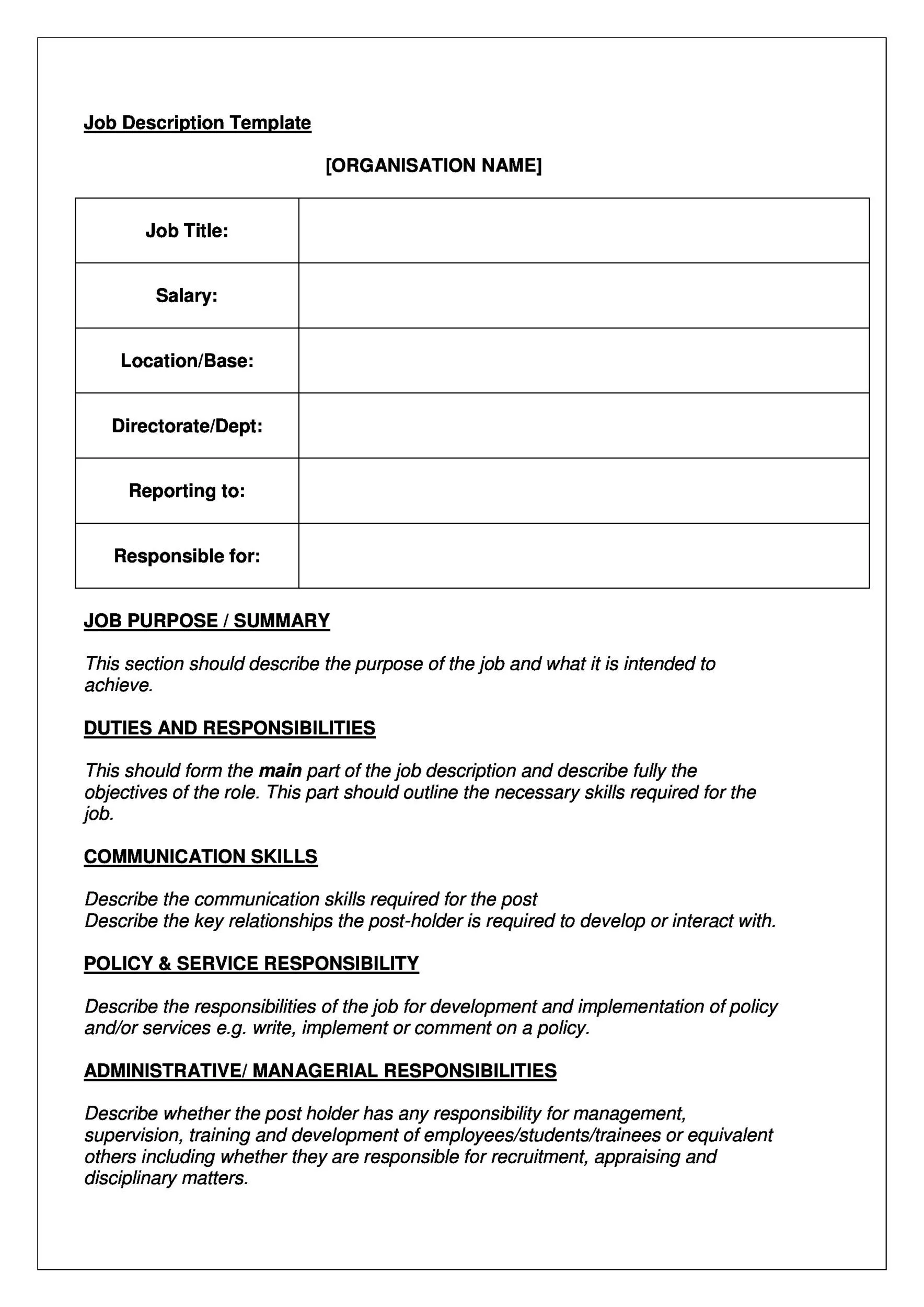
What is a Job Description Form?
Job descriptions are essential documents that outline the specific duties, responsibilities, and requirements of a particular job. They provide employees with a clear understanding of what is expected of them and help employers communicate their expectations.
A job description form is a printable document that details the essential job functions, skills, knowledge, abilities, and other characteristics required for satisfactory job performance.
Components of a Job Description Form
A typical job description form includes several key components, such as:
- Job title: The official title of the position.
- Job summary: A brief overview of the role and its primary objectives.
- Essential functions: Detailed description of the primary duties and responsibilities.
- Qualifications: Requirements for education, experience, and skills.
- Physical requirements: Any physical demands associated with the job.
The Importance of Job Descriptions
Job descriptions play a crucial role in the recruitment and selection process. They help attract qualified candidates by outlining the key responsibilities and requirements of the job. Job descriptions also assist in setting performance expectations, providing a basis for performance evaluations, and facilitating career development planning.
Attracting Top Talent
Well-written job descriptions are essential for attracting top talent to an organization. By clearly outlining the responsibilities, qualifications, and expectations of the job, employers can attract candidates who possess the necessary skills and experience. This can lead to a more efficient recruitment process and a higher likelihood of hiring qualified candidates.
Setting Performance Expectations
Job descriptions help set clear performance expectations for employees. By outlining the specific duties and responsibilities of the job, employees know what is expected of them and can align their performance accordingly. This clarity can lead to improved job satisfaction, productivity, and overall performance within the organization.
Facilitating Career Development
Job descriptions also play a key role in facilitating employees’ career development. By clearly outlining the skills, knowledge, and abilities required for the job, employees can identify areas for growth and development. Employers can use job descriptions as a basis for creating training programs and career advancement opportunities for their employees.
Tips For Writing Better Job Descriptions
Writing effective job descriptions is crucial for attracting top talent and ensuring a good fit between the job and the employee. Here are some tips for creating better job descriptions:
Use Clear and Concise Language
When writing job descriptions, it is important to use clear and concise language that is easy to understand. Avoid using technical jargon or industry-specific terms that may confuse potential candidates. Be straightforward and transparent in your communication, and avoid vague or ambiguous language.
Focus on Essential Functions
One of the key components of a job description is outlining the essential functions of the job. Clearly define the primary duties and responsibilities of the role, focusing on the tasks that are critical to the success of the position. Avoid including non-essential or vague responsibilities that may dilute the clarity of the job description.
Include Specific Requirements
Job descriptions should include specific requirements for the position, such as education, experience, skills, and qualifications. Be specific about the qualifications and experience needed for the job, as well as any certifications or licenses that may be required. This will help attract candidates who meet the necessary criteria and are a good fit for the role.
Highlight the Company Culture
In addition to outlining the responsibilities and requirements of the job, job descriptions should also highlight the company culture and values. Provide insight into the organization’s mission, vision, and work environment, as well as any unique perks or benefits offered to employees. This can help attract candidates who align with the company culture and are likely to thrive in the organization.
Be Honest and Transparent
It is important to be honest and transparent when writing job descriptions. Avoid exaggerating the job or misleading candidates about the position. Clearly outline the responsibilities, requirements, and expectations of the role, and provide accurate information about the job and the organization. This will help set realistic expectations for candidates and ensure a good fit between the employee and the job.
Use a Consistent Format
Organizing the job description in a clear and structured format is essential for readability and comprehension. Use headings, bullet points, and white space to break up the text and make it easier to scan. Ensure that the job description is formatted consistently throughout, with clear sections for job title, summary, responsibilities, qualifications, and other key information. This will help candidates quickly find the information they need and make the job description more user-friendly.
Keep Your Job Descriptions Up-to-Date
Job descriptions should be regularly reviewed and updated to ensure they accurately reflect the current needs of the organization. As roles evolve and new technologies emerge, job duties and requirements may change. It is important to keep job descriptions up-to-date to prevent misunderstandings and ensure employees have a clear understanding of their roles and responsibilities.
Employee Job Description Template – DOWNLOAD
