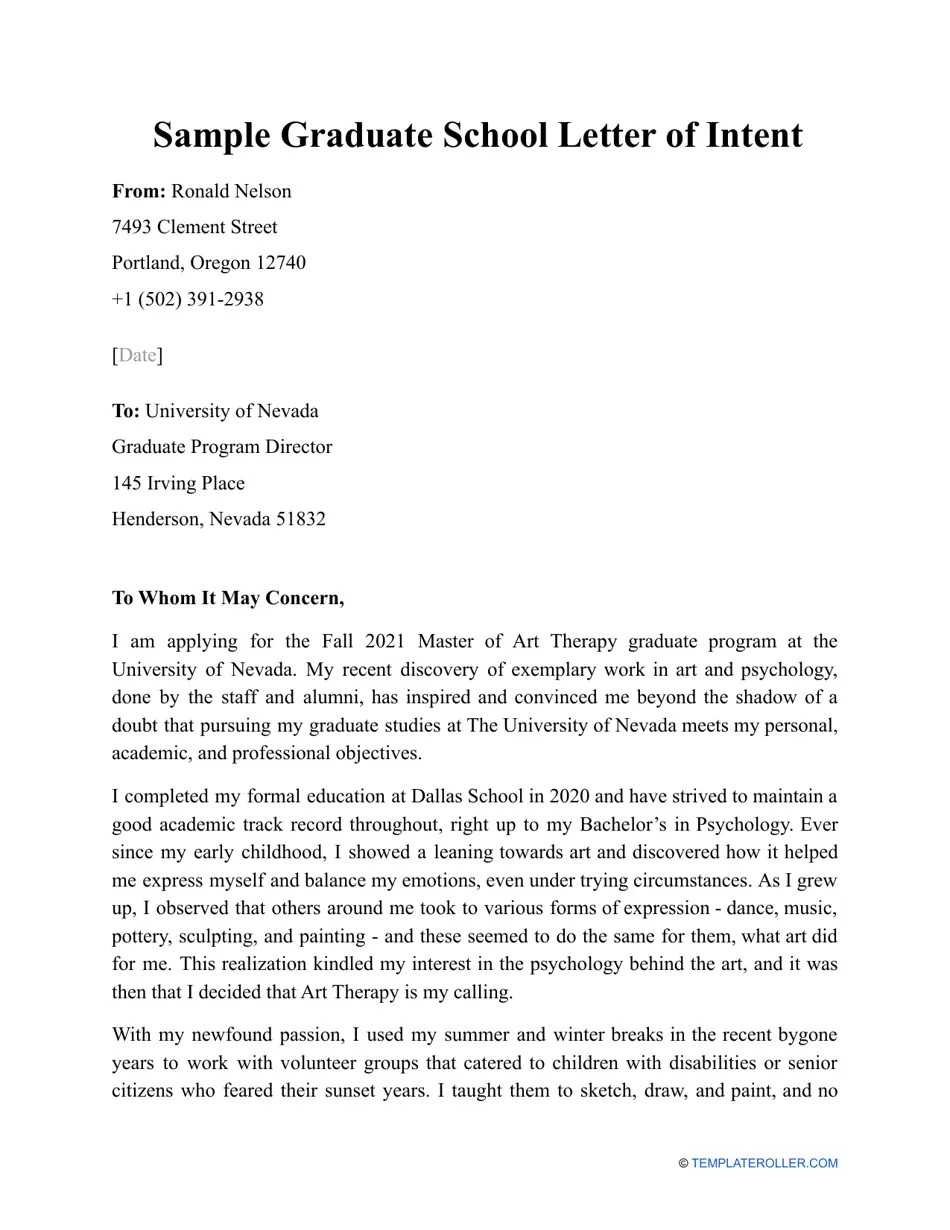
Applying for graduate school can be a daunting process, with numerous requirements to meet and documents to submit. One of the most crucial components of your application is the graduate letter of intent, also known as a statement of purpose or personal statement. This document serves as a key tool for applicants to express their interest, qualifications, and goals for pursuing a graduate degree.
What is a Graduate Letter of Intent?
A graduate letter of intent is a formal document that provides insight into who you are as a candidate and why you are interested in pursuing a specific graduate program. It allows you to showcase your unique strengths, connect your academic and career aspirations with the program you are applying to, and convince the admissions committee that you are a strong candidate.
Ultimately, the letter of intent helps the admissions committee understand your motivations for pursuing a graduate degree and assess your suitability for their program. It is your opportunity to make a compelling case for why you are the ideal candidate for the program.
Why is a Graduate Letter of Intent Important?
The graduate letter of intent is important for several reasons. First and foremost, it allows you to articulate your goals and aspirations to the admissions committee, giving them a better understanding of who you are and what you hope to achieve through the program.
Additionally, the letter of intent helps you stand out from other applicants by highlighting your unique strengths and qualifications. It gives you the chance to showcase your personality, passion, and commitment to your field of study, which can make a lasting impression on the admissions committee.
Furthermore, a well-written letter of intent can demonstrate your writing skills, attention to detail, and ability to communicate effectively – all of which are important qualities for success in graduate school.
Key Elements of a Graduate Letter of Intent
When crafting your graduate letter of intent, there are several key elements that you should include to make it effective and compelling:
1. Introduction:
Your letter should start with a strong opening that grabs the reader’s attention and introduces who you are and why you are applying to the program.
2. Academic Background:
Provide a brief overview of your academic background, including your previous degrees, relevant coursework, research experience, and any academic achievements.
3. Career Goals:
Clearly articulate your career goals and how the program you are applying to will help you achieve them. Explain why you are passionate about your field of study and how this program aligns with your aspirations.
4. Fit with the Program:
Discuss why you are interested in the specific program and how it aligns with your academic and professional interests. Highlight any faculty members, research opportunities, or unique aspects of the program that attract you.
5. Personal Experiences:
Share personal experiences or anecdotes that demonstrate your passion for the field and your qualifications for the program. This can help humanize your application and make you more memorable to the admissions committee.
6. Conclusion:
Wrap up your letter with a strong conclusion that summarizes your main points and reiterates your enthusiasm for the program. Thank the committee for considering your application and express your eagerness to contribute to the program.
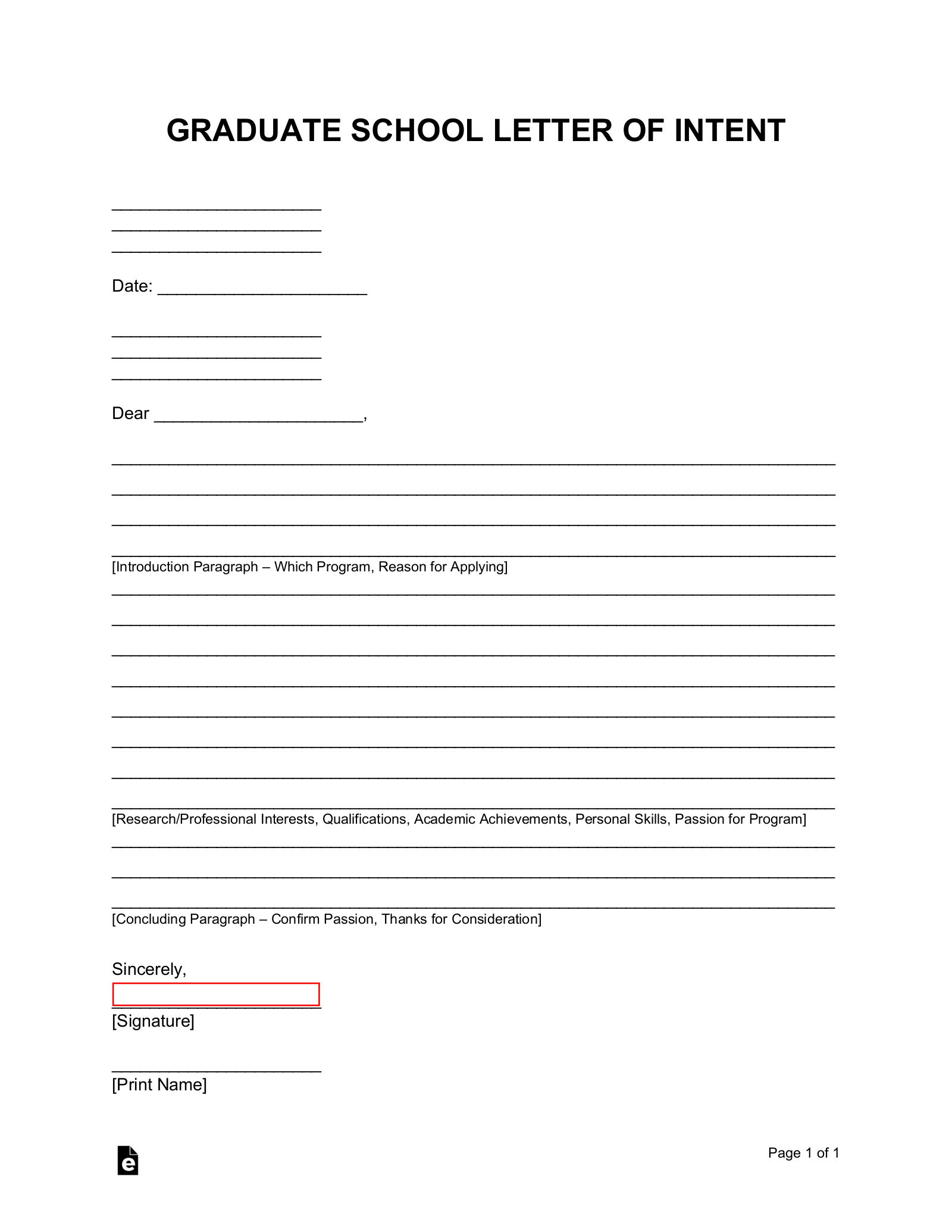
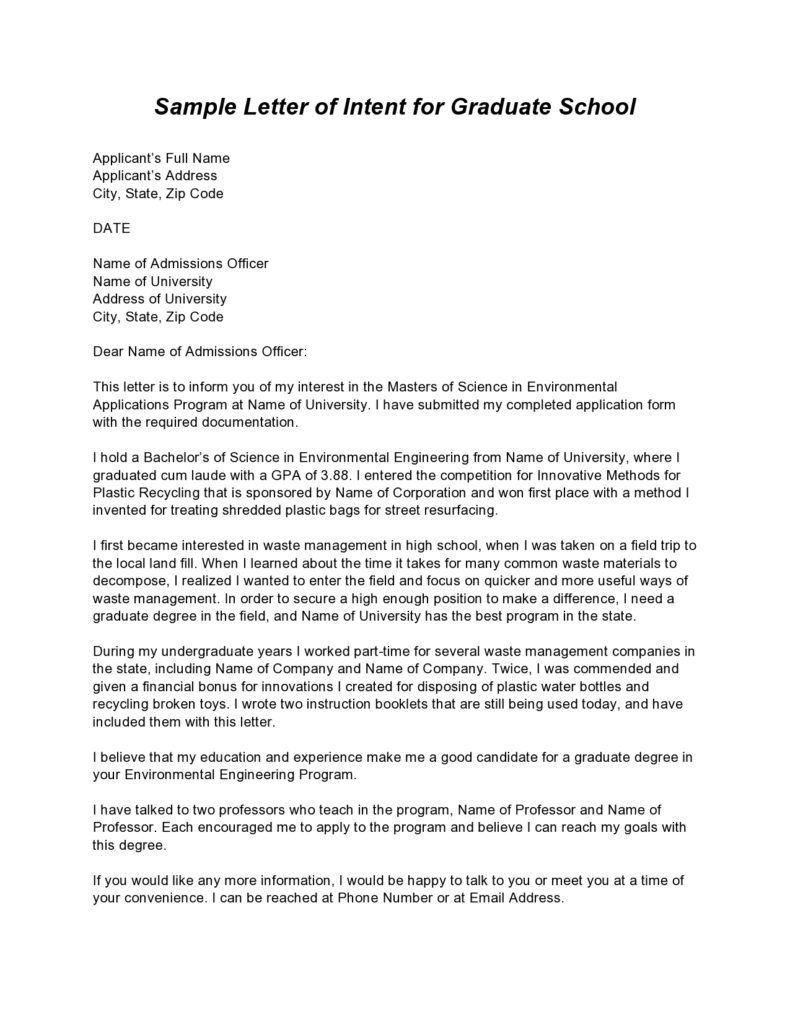
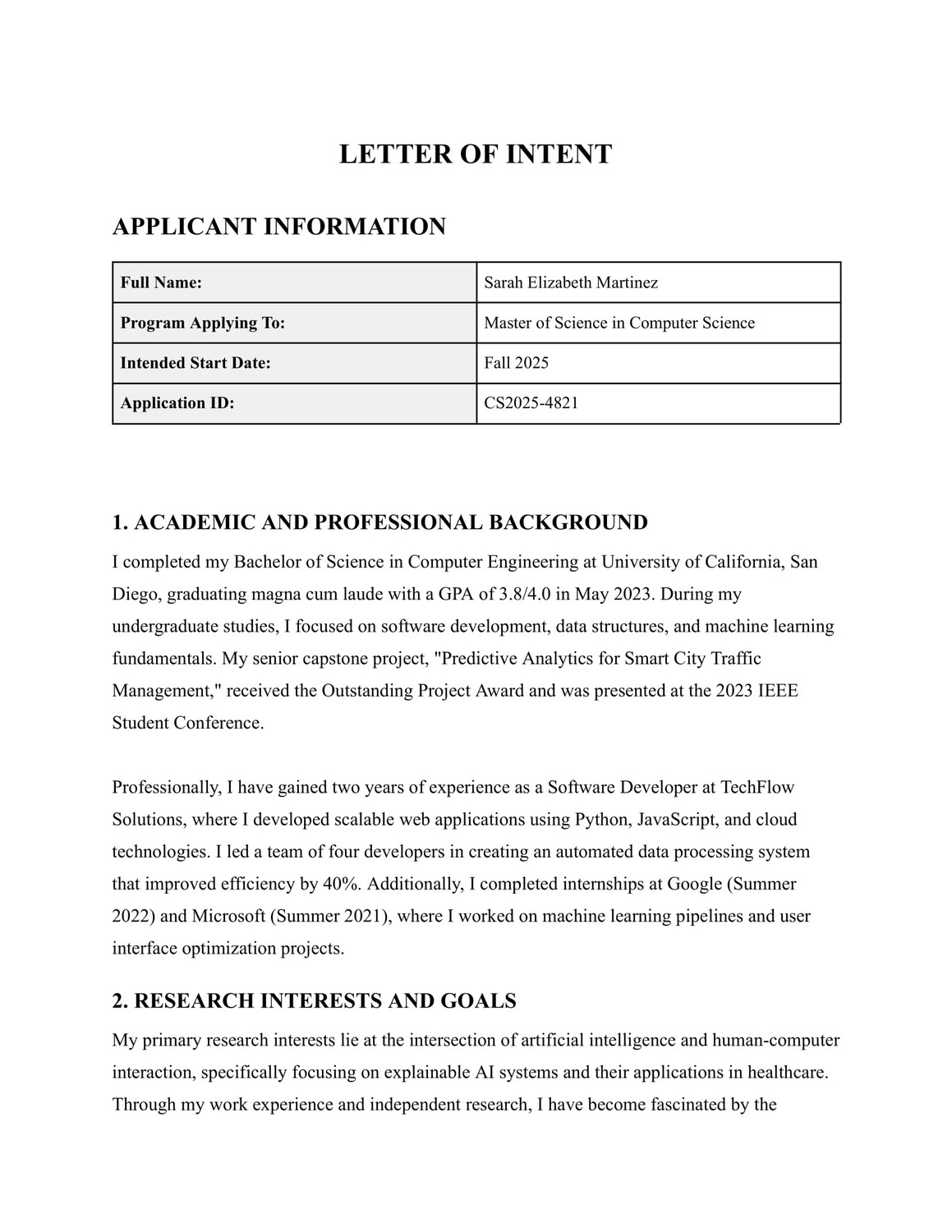
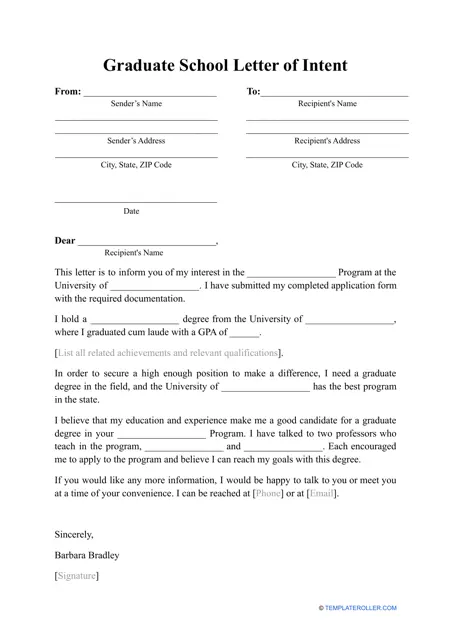
Examples
How to Write a Compelling Graduate Letter of Intent
Writing a compelling graduate letter of intent requires time, effort, and attention to detail. Here are some tips to help you craft a strong and effective letter:
1. Start Early:
Give yourself plenty of time to brainstorm, outline, and draft your letter of intent. Starting early will allow you to revise and polish your writing before the deadline.
2. Research the Program:
Before writing your letter, research the program thoroughly to understand its mission, curriculum, faculty, and research opportunities. Tailor your letter to highlight how the program aligns with your goals and interests.
3. Be Specific:
Provide concrete examples and details to support your claims. Avoid generic statements and instead, showcase your unique experiences, skills, and achievements that make you a strong candidate.
4. Be Authentic:
Write in your own voice and be authentic in your letter. Admissions committees value honesty and sincerity, so avoid exaggerating or embellishing your qualifications.
5. Edit and Proofread:
After drafting your letter, carefully edit and proofread it for grammar, spelling, and punctuation errors. Consider asking a trusted friend, mentor, or advisor to review your letter for feedback.
6. Seek Feedback:
Don’t be afraid to seek feedback from others on your letter of intent. Getting input from different perspectives can help you improve your writing and ensure your letter is clear, concise, and compelling.
7. Follow Instructions:
Make sure to follow the specific instructions provided by the program for the letter of intent. Pay attention to word count limits, formatting requirements, and any other guidelines outlined in the application instructions.
8. Stay Positive:
Stay positive and confident in your writing, highlighting your strengths and qualifications without sounding arrogant. Show enthusiasm for the program and convey your genuine interest in pursuing a graduate degree.
Conclusion
In conclusion, a graduate letter of intent is a crucial tool for applicants to express their interest, qualifications, and goals for pursuing a graduate degree. By highlighting your unique strengths, connecting your academic and career aspirations with the specific program, and convincing the admissions committee that you are a strong candidate, you can make a compelling case for why you are the ideal candidate for the program. Follow the key elements and tips outlined above to craft a strong and effective letter of intent that will help you stand out and impress the admissions committee.
Graduate Letter of Intent Template
