Starting a food truck business can be an exciting and rewarding venture, but without a solid business plan in place, you may find yourself facing a myriad of challenges. A well-thought-out business plan serves as a strategic roadmap, clarifying your vision, defining goals, and securing funding by detailing operations, finances, market analysis, and growth strategies. It acts as an internal compass for decision-making and an external tool for securing loans or investment.
In this guide, we will walk you through the essential elements of creating a comprehensive food truck business plan to help you navigate challenges and attract investors for a profitable, organized mobile food business.
What is a Food Truck Business Plan?
A food truck business plan is a comprehensive document that outlines the key components of your mobile food business, providing a roadmap for success. It encompasses your business concept, target market, operational strategies, financial projections, marketing and sales strategies, and growth plans.
A well-crafted business plan demonstrates your understanding of the industry, market demand, competition, and how you plan to position your food truck business in the market to achieve profitability and growth.
Why You Need a Food Truck Business Plan
A food truck business plan is essential for several reasons.
The Importance of Setting Clear Goals
Setting clear goals is a fundamental aspect of creating a successful food truck business plan. Your goals should be specific, measurable, achievable, relevant, and time-bound (SMART), allowing you to track your progress and measure your success. By defining your goals in your business plan, you can create a roadmap for achieving them, outlining the steps you need to take and the resources required to reach your objectives. Clear goals also help you stay focused and motivated, guiding your decision-making and keeping you on track towards building a profitable and sustainable food truck business.
The Role of Market Analysis in a Business Plan
Market analysis is a critical component of a food truck business plan, providing valuable insights into your target market, customer preferences, industry trends, and competitive landscape. By conducting thorough market research, you can identify opportunities and challenges in the market, understand consumer behavior, and tailor your offerings to meet the specific needs of your target audience. Market analysis also helps you identify gaps in the market, assess the demand for your products or services, and position your food truck business strategically to capitalize on market trends and opportunities.
Financial Projections and Viability
Financial projections are a key part of any business plan, including a food truck business plan. By estimating your startup costs, revenue projections, and profitability analysis, you can demonstrate the financial viability of your food truck business to investors or lenders. Financial projections help you assess the feasibility of your business idea, determine the resources needed to launch and operate your food truck, and set realistic financial goals for growth and sustainability. By outlining your financial projections in your business plan, you can show potential investors that you have a solid plan for generating revenue and achieving profitability.
What to Include in Your Food Truck Business Plan
When creating a food truck business plan, there are several key components that you need to include to ensure its effectiveness. These components provide a comprehensive overview of your business concept, target market, operational strategies, financial projections, marketing and sales strategies, and growth plans. By including these essential elements in your business plan, you can demonstrate to investors and stakeholders that you have a clear vision for your food truck business and a solid strategy for achieving success.
Essential Sections of a Food Truck Business Plan
1. Executive Summary: The executive summary is a concise overview of your food truck business plan, highlighting key points such as your mission, goals, target market, and financial projections. It provides a snapshot of your business concept and the strategies you plan to implement to achieve success.
2. Business Description: The business description section outlines your food truck concept, target market, and unique selling proposition that sets you apart from competitors. It provides an in-depth look at your business model and how you plan to attract and retain customers in a competitive market.
3. Market Analysis: Market analysis is a crucial part of your food truck business plan, providing insights into your target market, customer preferences, industry trends, and competitive landscape. By conducting thorough market research, you can identify opportunities and challenges in the market and tailor your offerings to meet the specific needs of your target audience.
4. Marketing and Sales Strategy: The marketing and sales strategy section outlines how you plan to promote your food truck, attract customers, and generate sales. It includes strategies for building brand awareness, reaching your target audience, and driving customer engagement to increase sales and profitability.
5. Operations Plan: The operations plan details the day-to-day operations of your food truck, including location selection, menu planning, staffing requirements, and logistics. It provides a roadmap for managing your operations efficiently and effectively to deliver high-quality products and services to your customers.
6. Financial Projections: Financial projections are critical for demonstrating the financial viability of your food truck business. This section includes startup costs, revenue forecasts, profit margins, and cash flow projections to show potential investors or lenders that your business is financially sustainable and has the potential for growth and profitability.
7. Management Team: Introducing the key members of your management team is essential for showcasing the skills and expertise of your leadership team. This section highlights the experience, qualifications, and roles of each team member in driving the success of your food truck business.
8. Implementation Plan: The implementation plan outlines the timeline for launching your food truck business and key milestones to achieve along the way. It includes actionable steps, deadlines, and responsibilities to ensure that your business is launched successfully and operates efficiently from day one.
9. Risk Management: Risk management is an important aspect of any business plan, highlighting potential risks and challenges that may impact your food truck business. By identifying and addressing risks proactively, you can develop strategies to mitigate them and protect your business from unforeseen obstacles that may arise.
10. Appendix: The appendix section includes any additional information, such as resumes, permits, licenses, legal documents, or supplementary data relevant to your food truck business. It provides supporting documentation and resources that add credibility to your business plan and reinforce your qualifications as a business owner.
Examples
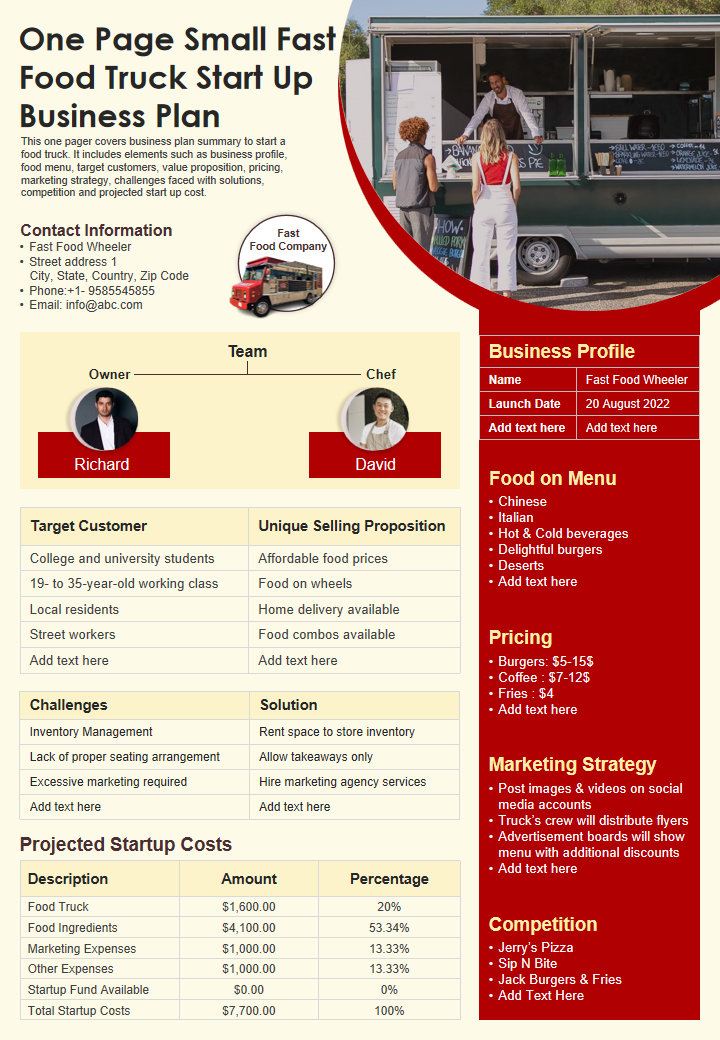
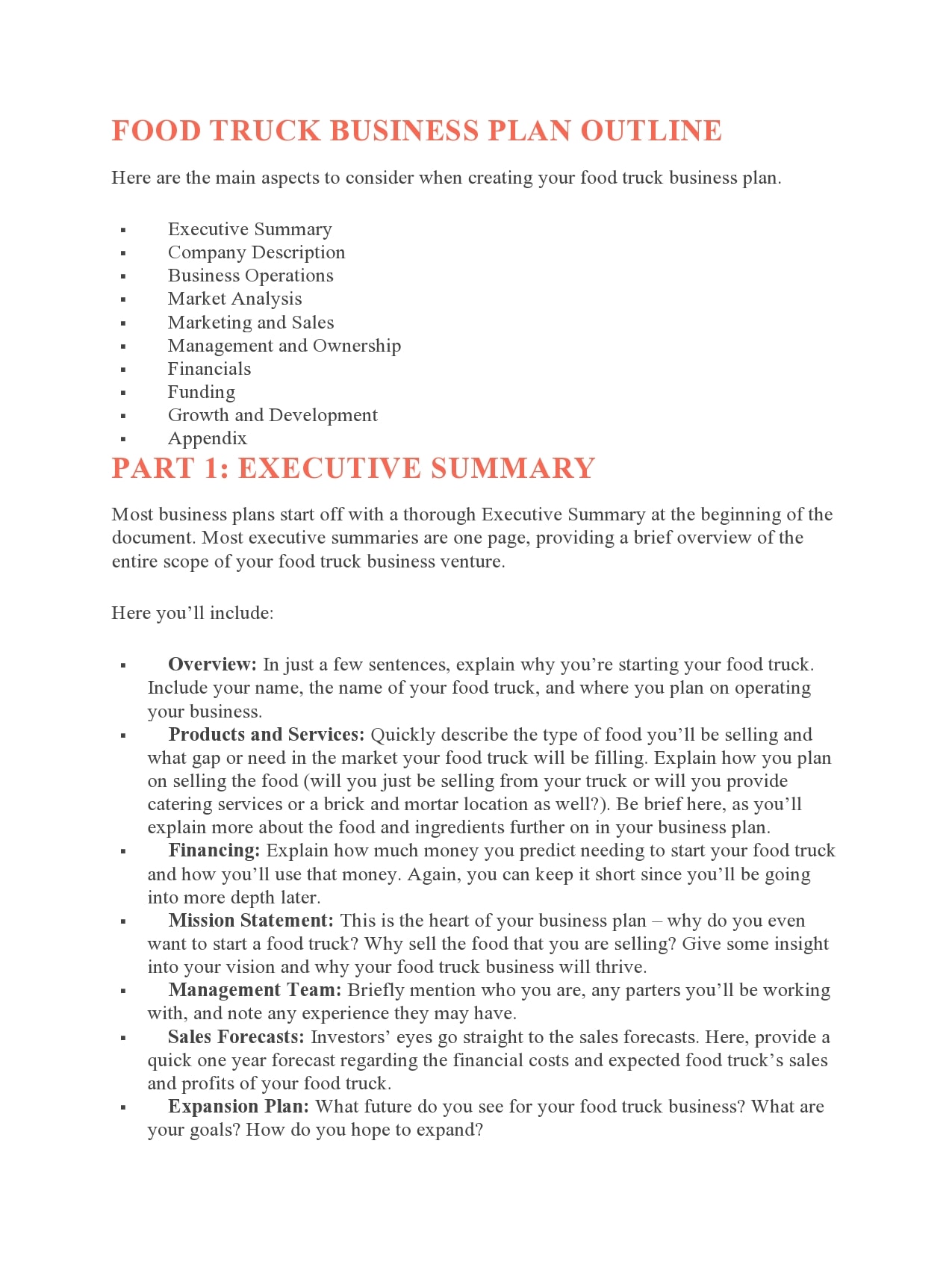
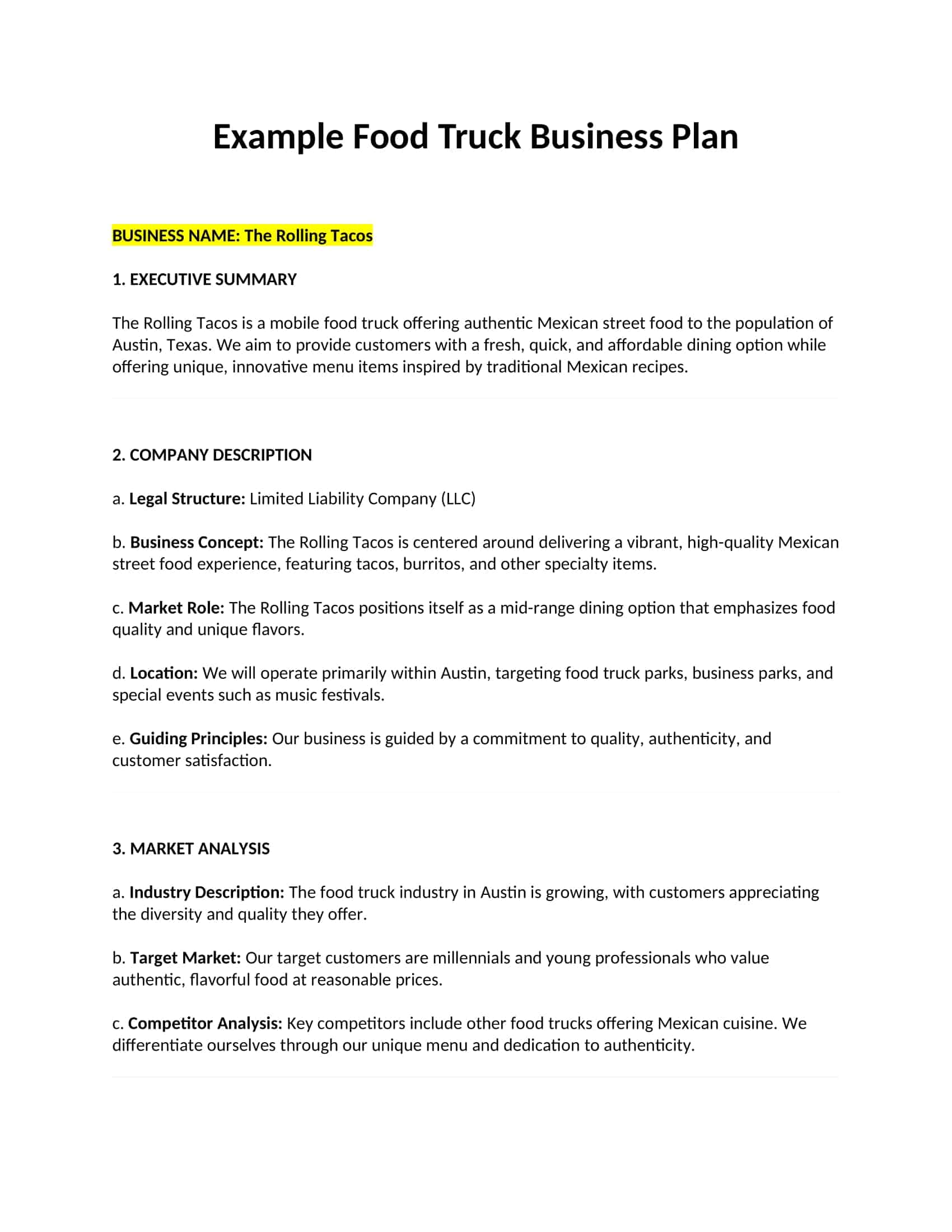
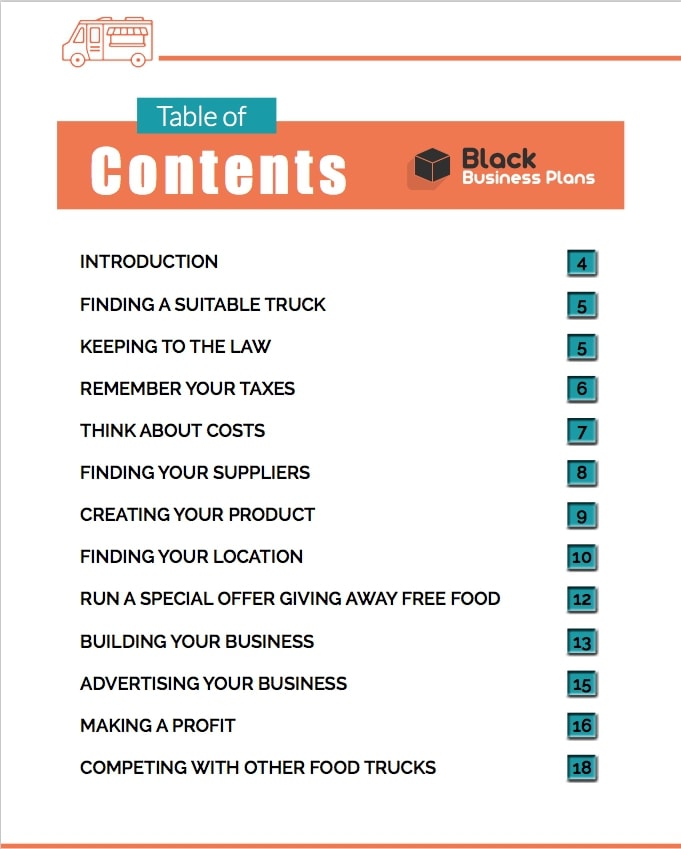
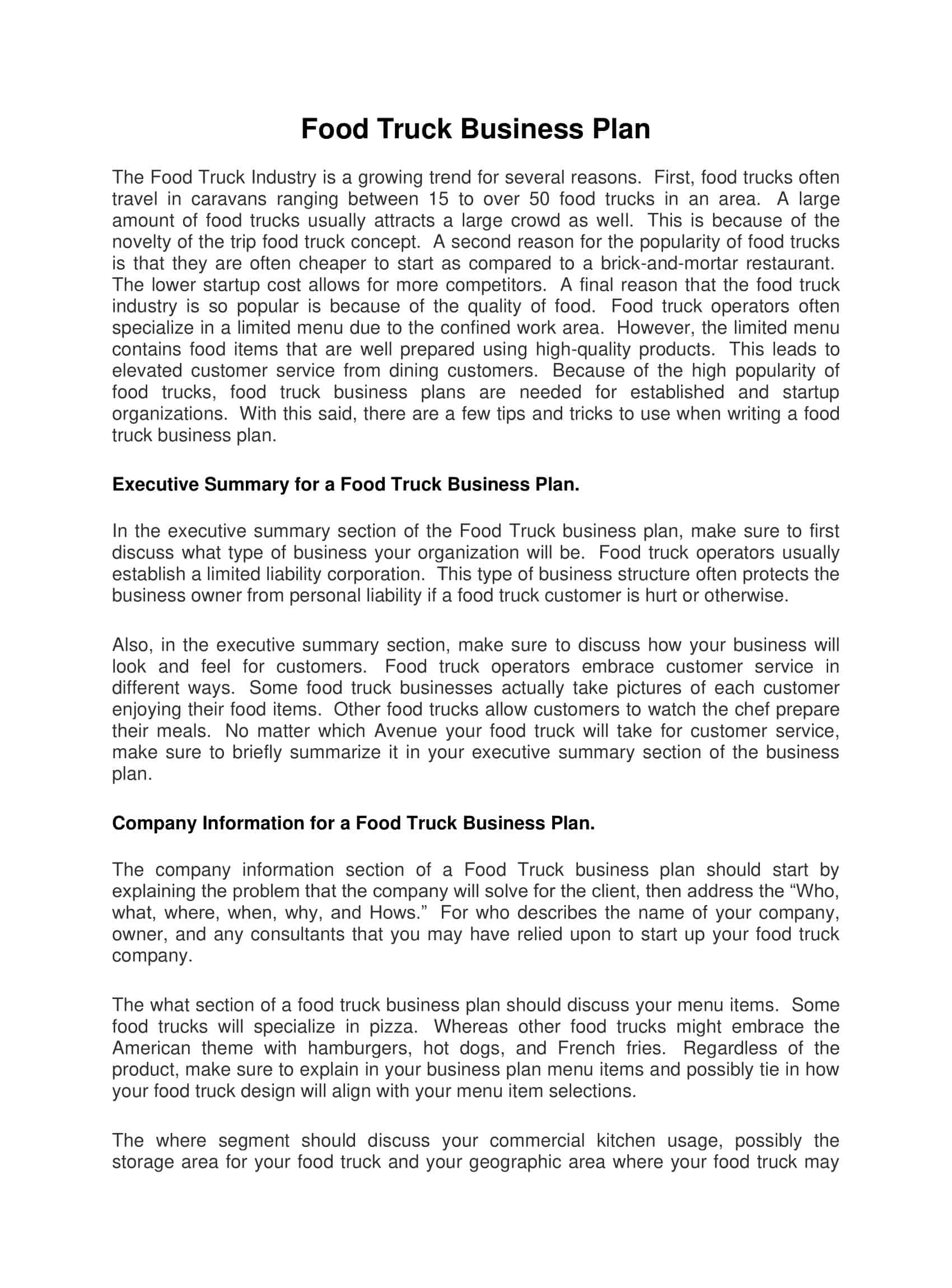
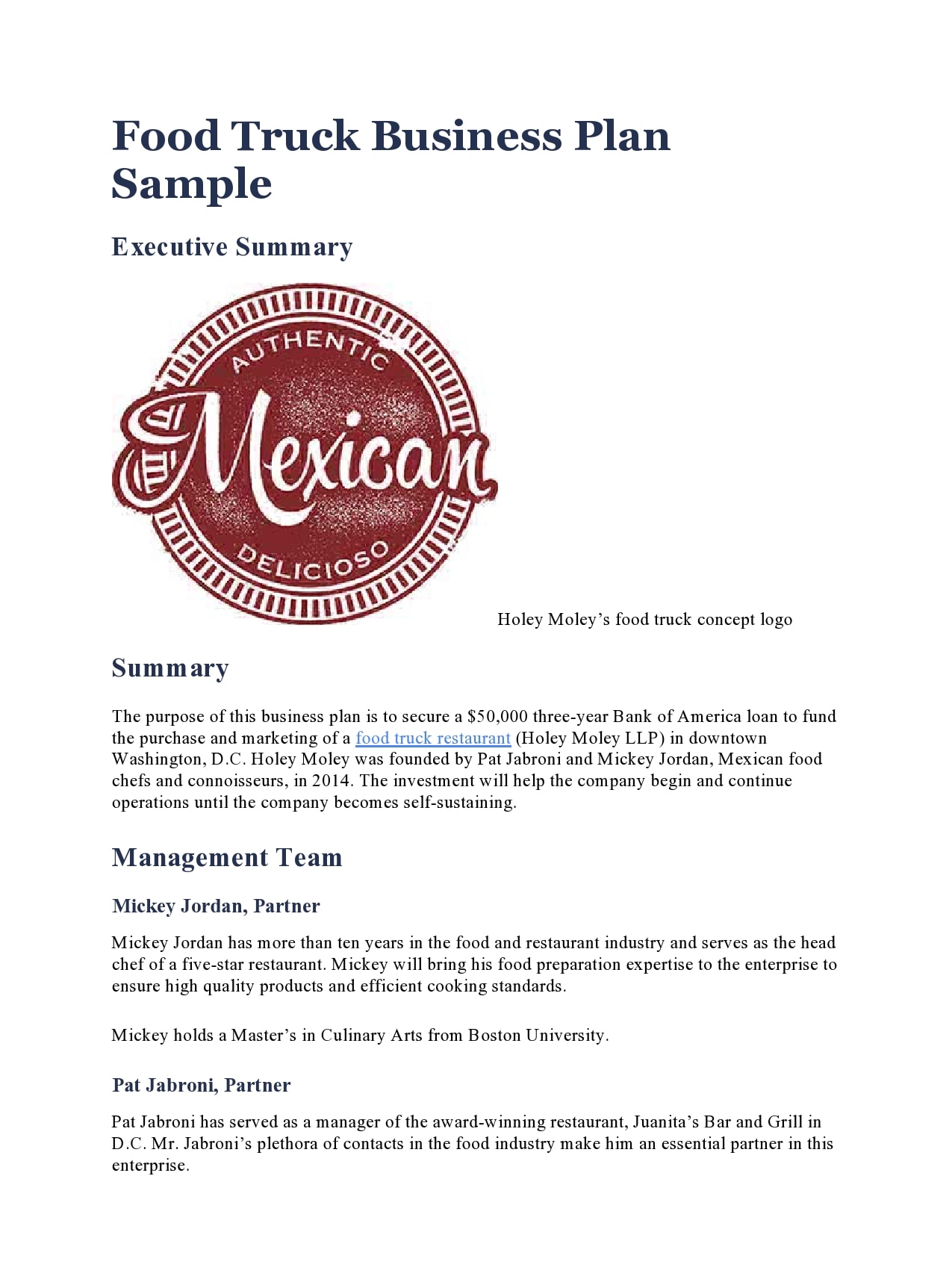
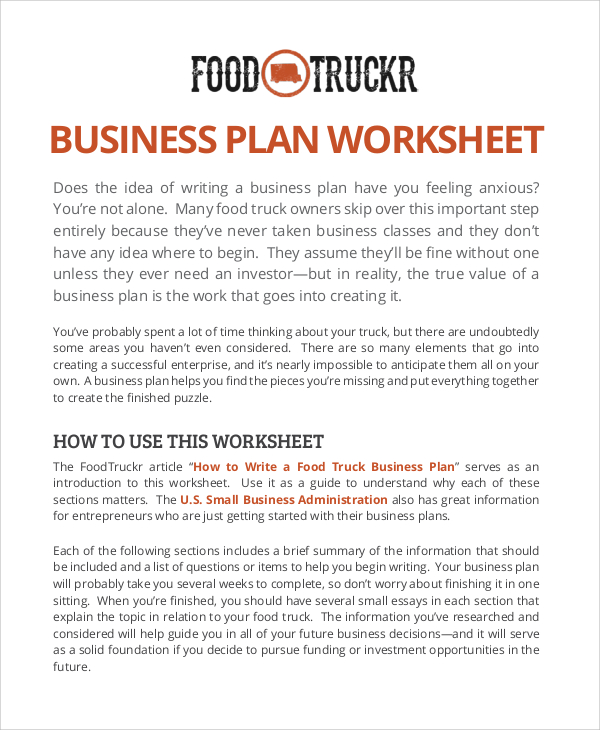
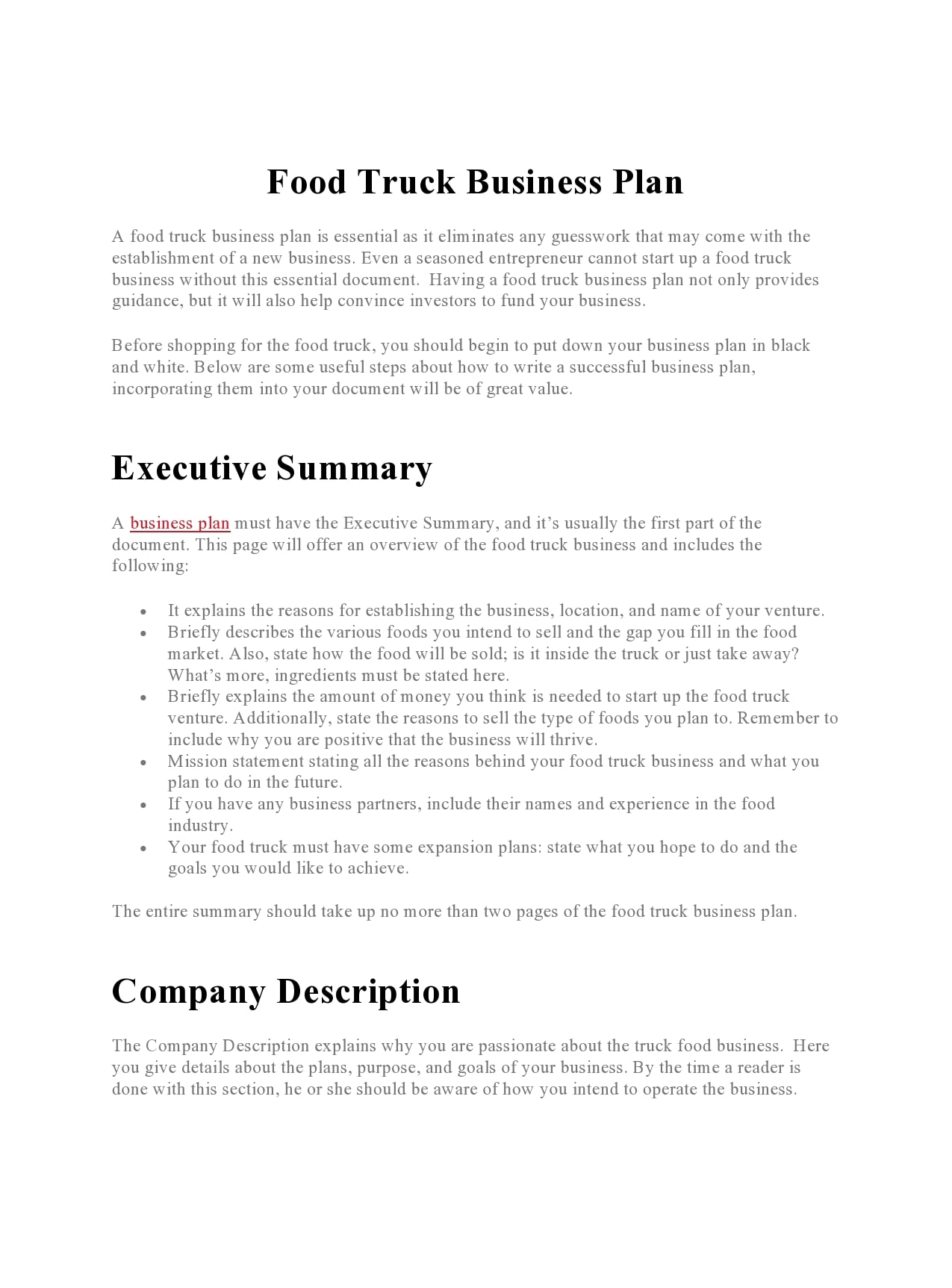
How to Write a Food Truck Business Plan
Writing a food truck business plan may seem like a daunting task, but with careful planning and research, you can create a comprehensive document that will guide your business to success. Follow these steps to help you write a successful food truck business plan that outlines your vision, goals, operations, finances, market analysis, and growth strategies:
Step 1: Start with an Executive Summary
The executive summary is the first section of your food truck business plan and serves as a snapshot of your entire document. Summarize the key points of your plan, including your mission, goals, target market, financial projections, and strategies for success. The executive summary should be concise yet compelling, providing a compelling overview of your food truck business concept and the value it brings to the market.
Step 2: Describe your Business Concept
Describe your food truck concept in detail, including your menu offerings, target market, unique selling proposition, and competitive advantage. Explain what sets your food truck apart from others in the market and how you plan to attract and retain customers. Your business
Step 3: Conduct Market Analysis
Conduct thorough market research to identify your target market, understand consumer preferences, analyze market trends, and assess your competitors. Gather data on the size of the market, demographics of your target customers, buying behavior, and potential demand for your products or services. Use this information to tailor your offerings, pricing strategy, and marketing efforts to meet the needs of your target audience and stand out in a competitive market.
Step 4: Develop a Marketing and Sales Strategy
Outline your marketing and sales strategy to promote your food truck, attract customers, and generate revenue. Define your branding strategy, promotional tactics, social media marketing plan, and customer engagement strategies to build brand awareness and drive sales. Identify your target audience, distribution channels, pricing strategy, and sales goals to create a comprehensive marketing and sales plan that aligns with your business objectives.
Step 5: Detail your Operations Plan
Detail the day-to-day operations of your food truck, including the location selection, menu planning, staffing requirements, equipment needs, and logistical considerations. Define your operating hours, food preparation processes, quality control measures, customer service standards, and health and safety protocols to ensure the efficient and effective operation of your food truck. Develop contingency plans for unforeseen events and emergencies to minimize disruptions to your business operations.
Step 6: Create Financial Projections
Estimate your startup costs, revenue projections, profit margins, and cash flow forecasts to demonstrate the financial viability of your food truck business. Calculate your operating expenses, cost of goods sold, pricing strategy, and break-even analysis to assess the profitability of your business model. Use financial projections to set realistic financial goals, secure funding from investors or lenders, and make informed decisions about pricing, expenses, and revenue generation.
Step 7: Introduce your Management Team
Introduce the key members of your management team, including their qualifications, experience, roles, and responsibilities in the food truck business. Highlight the skills and expertise of your team members that are essential for driving the success of your business. Showcase the unique contributions each team member brings to the table and how their collective efforts will lead to the growth and profitability of your food truck business.
Step 8: Outline an Implementation Plan
Create a detailed implementation plan that outlines the timeline for launching your food truck business and achieving key milestones along the way. Define specific action steps, deadlines, and responsibilities for each task to ensure the successful execution of your business plan. Set measurable goals and track progress against milestones to stay on track and make adjustments as needed to achieve your objectives.
Step 9: Identify Potential Risks
Assess potential risks and challenges that may impact your food truck business and develop strategies to mitigate them. Identify external risks such as market competition, changing consumer preferences, regulatory changes, and economic fluctuations, as well as internal risks such as operational inefficiencies, staffing issues, and supplier disruptions. Develop contingency plans and risk mitigation strategies to minimize the impact of potential risks on your business operations and financial performance.
Step 10: Review and Revise
Once you have completed your food truck business plan, review it carefully to ensure all information is accurate, up-to-date, and aligned with your business goals. Seek feedback from mentors, advisors, or industry experts to gain insights and suggestions for improvement. Make any necessary revisions based on feedback and changes in market conditions to ensure that your business plan is comprehensive, realistic, and reflective of your vision for a successful food truck business.
Tips for Creating a Successful Food Truck Business Plan
Creating a successful food truck business plan requires careful planning, research, and attention to detail. Follow these tips to create a comprehensive and effective business plan for your mobile food business:
Research the Market
Conduct thorough market research to understand your target market, identify customer preferences, analyze market trends, and assess your competitors. Gather data on consumer behavior, market demand, pricing dynamics, and opportunities for differentiation to position your food truck business strategically in the market.
Define your Unique Selling Proposition
Clearly define what sets your food truck apart from competitors and how you plan to attract and retain customers. Identify your unique selling proposition, such as your menu offerings, customer experience, pricing strategy, or branding, and communicate it effectively to differentiate your food truck from others in the market.
Set Realistic Financial Projections
Estimate your startup costs, revenue projections, profit margins, and cash flow forecasts based on market research, industry benchmarks, and financial analysis. Set realistic financial goals and targets to demonstrate the financial viability of your food truck business and attract potential investors or lenders.
Focus on Operations
Detail the day-to-day operations of your food truck, including location selection, menu planning, staffing requirements, equipment needs, and logistical considerations. Develop standard operating procedures, quality control measures, and customer service standards to ensure the efficient and effective operation of your food truck business.
Seek Feedback
Share your business plan with mentors, advisors, or industry experts to get feedback and insights for improvement. Incorporate feedback from experienced professionals to strengthen your business plan, address blind spots, and enhance the overall quality and effectiveness of your plan.
Stay Flexible
Be open to making changes to your business plan as needed based on market feedback, industry trends, or unforeseen challenges. Stay agile and adaptable in response to changing market conditions, customer feedback, and competitive pressures to ensure the long-term success and sustainability of your food truck business.
Monitor Progress
Regularly review and update your business plan to track progress, identify areas for improvement, and adjust strategies as needed. Set key performance indicators (KPIs) to measure the success of your business plan and make data-driven decisions based on performance metrics and market trends.
Stay Committed
Building a successful food truck business takes time, dedication, and hard work. Stay committed to your goals, persist through challenges, and maintain a positive attitude to overcome obstacles and achieve success. Be resilient and tenacious in pursuing your vision for a profitable and sustainable food truck business.
Creating a food truck business plan is an essential step in starting and growing a successful mobile food business. By outlining your vision, goals, operations, finances, market analysis, and growth strategies in a comprehensive document, you can navigate challenges, attract investors, and position your food truck for profitability and success. Follow the guidelines and tips in this guide to create a detailed and effective business plan that will serve as a roadmap for your food truck business journey.
Food Truck Business Plan Template – Download
