A horse bill of sale is a written document used to record the sale and transfer of ownership of a horse from a seller to a buyer. It provides a written record of the transaction and identifies the horse, the parties involved, the purchase price, and the terms agreed upon by both sides.
Buying or selling a horse can involve more than simply exchanging payment and taking possession of the animal. A written bill of sale can help both parties document what was agreed upon and preserve important information about the horse and the transaction.
A well-organized horse bill of sale typically includes seller and buyer information, detailed horse identification, sale information, representations or conditions, and signatures. Depending on the transaction and local requirements, additional documentation may also be appropriate.
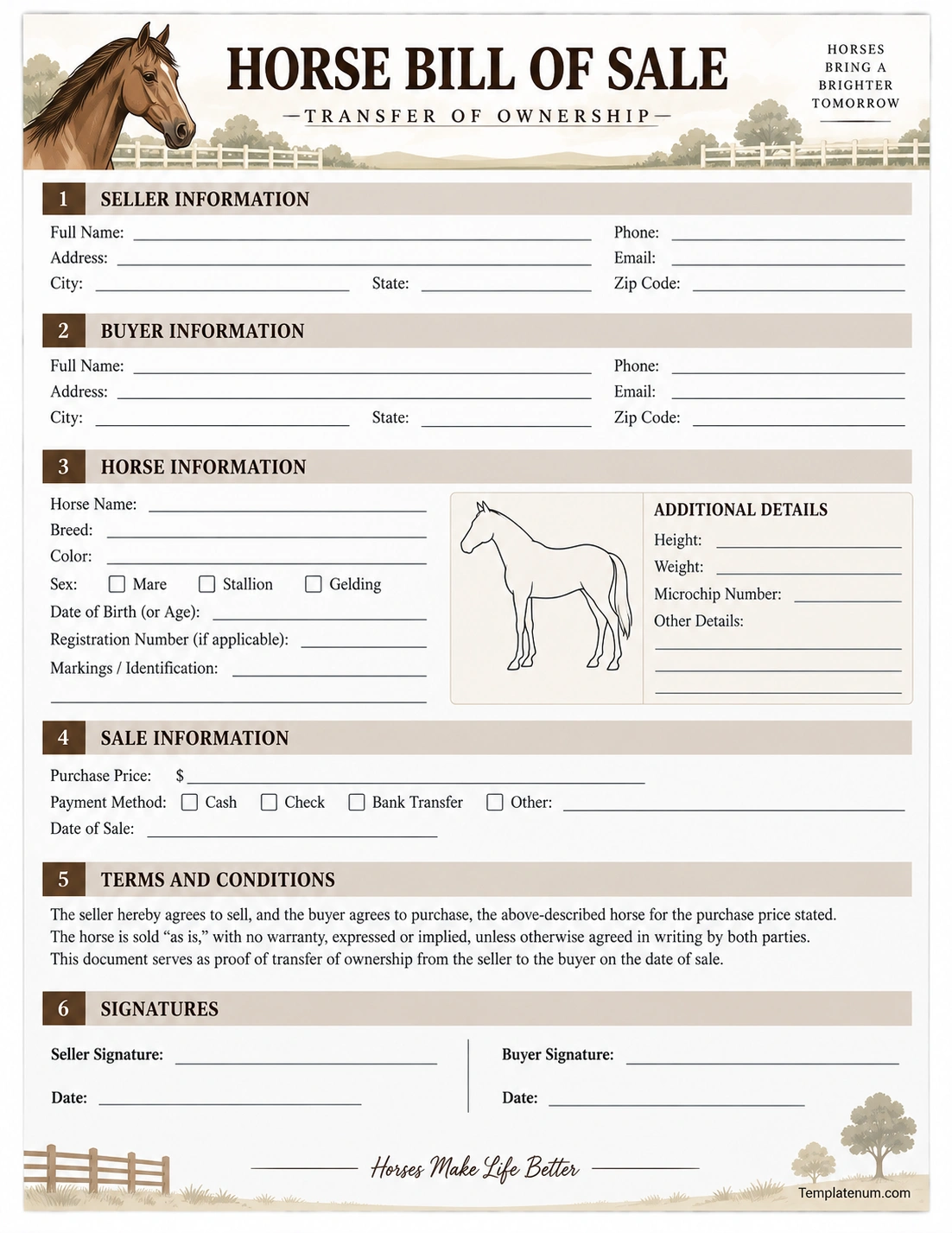
What Is a Horse Bill of Sale?
A horse bill of sale is a written agreement that documents the transfer of a horse from one owner to another. It can serve as evidence that a transaction took place and can provide a record of the conditions agreed upon at the time of sale.
The document usually identifies the horse using information such as its name, breed, color, sex, age or date of birth, registration number, markings, and other distinguishing characteristics.
It can also document the purchase price, date of sale, payment method, and any additional terms agreed upon by the seller and buyer.
The exact legal requirements for a bill of sale can vary by jurisdiction and transaction. For an important or high-value horse sale, the parties may want to have the agreement reviewed by an appropriate legal professional.
Why Use a Horse Bill of Sale?
A written horse bill of sale creates a record that can be useful after the transaction has been completed. Verbal agreements can be difficult to recall or prove later, particularly when a transaction involves multiple terms.
A bill of sale can help document:
- The identity of the seller and buyer.
- The identity and description of the horse.
- The date of the transaction.
- The agreed purchase price.
- The payment method.
- Specific terms and conditions.
- Representations made about the horse.
- The signatures of the parties.
- The date ownership was transferred.
Keeping a signed copy can give both parties a convenient record of the transaction for their files.
What Should a Horse Bill of Sale Include?
A complete horse bill of sale should contain enough information to clearly identify the transaction and the horse involved.
Seller Information
Start with the seller’s full name and contact information. Depending on the circumstances, this may include a mailing address, phone number, and email address.
If the horse is being sold by a business, stable, partnership, or other organization, the document may need to identify the appropriate legal entity and authorized representative.
Buyer Information
The buyer section should contain the full name and relevant contact information of the person or entity purchasing the horse.
Accurate information is important because the bill of sale is intended to document the parties to the transaction.
Horse Identification
Horse identification is one of the most important sections of the document. The description should be detailed enough to distinguish the horse from other animals.
Common identifying information includes:
- Horse name.
- Breed.
- Color.
- Sex.
- Date of birth or approximate age.
- Registration number, if applicable.
- Microchip number, if applicable.
- Distinctive markings.
- Brand or tattoo information, if applicable.
- Other identifying characteristics.
For registered horses, information should be checked against the relevant registration records.
Purchase Price
The bill of sale should state the agreed purchase price clearly. If the price is being paid in installments or includes additional arrangements, those terms should be described accurately.
Date of Sale
Include the date on which the transaction takes place or the date specified by the parties as the effective date of the sale.
Terms and Conditions
The terms section can describe additional agreements between the buyer and seller. This may include warranties, disclosures, conditions of sale, payment arrangements, or other provisions relevant to the transaction.
Because the legal effect of specific wording can vary, parties should consider professional legal advice when the transaction involves significant value or complicated conditions.
Signatures
Both parties should sign and date the completed document. Signature requirements can vary depending on local law and the circumstances of the transaction.
How to Create a Horse Bill of Sale
Creating a horse bill of sale is primarily a matter of collecting accurate information and putting the agreed terms into writing.
1. Gather the Horse’s Information
Collect the horse’s identifying details before preparing the document. Check registration papers, veterinary records, microchip information, and other relevant records where applicable.
2. Confirm Seller and Buyer Information
Verify the names and contact information of both parties. Use the names that should appear on the transaction documents and related ownership records.
3. Agree on the Sale Terms
Before signing, make sure both parties understand the purchase price, payment arrangements, date of transfer, and any conditions associated with the transaction.
4. Document Any Representations
If the seller has made specific written representations about the horse, make sure the relevant terms are accurately reflected in the agreement when appropriate.
5. Review the Document
Carefully check the horse description, price, dates, names, and terms. Errors in identifying information can create problems later.
6. Sign and Retain Copies
After both parties agree to the final document, sign and date it as appropriate. Each party should retain a copy of the completed bill of sale along with relevant supporting records.
Horse Bill of Sale and Horse Identification
Accurate identification is particularly important because horses can have similar appearances, names, or characteristics. A detailed description helps establish which specific animal is covered by the transaction.
When available, registration numbers and microchip numbers can provide additional identification. Distinctive facial markings, leg markings, brands, scars, or other characteristics may also be useful.
If photographs are included with the transaction records, they can provide additional documentation, although the appropriate identification documents should still be maintained.
Horse Bill of Sale With a Horse Inspection
Some buyers arrange for a pre-purchase veterinary examination before completing a horse transaction. The results of an examination can be relevant to the buyer’s decision and may be addressed separately from the bill of sale.
If the parties agree that specific veterinary findings or conditions are part of the sale terms, those agreements should be documented clearly rather than relying solely on an informal conversation.
It is important to distinguish the bill of sale from veterinary records. They serve different purposes, and both may be retained as part of the transaction documentation.
Horse Bill of Sale vs. Ownership Papers
A bill of sale documents the transaction between the seller and buyer, while registration papers or other ownership records may serve a different purpose.
For a registered horse, the buyer may need to complete a separate transfer of registration with the relevant breed registry or organization. The bill of sale does not necessarily replace those procedures.
Before completing a purchase, check whether the applicable registry, state, or local authority requires additional documents to record the ownership change.
Tips for Using a Horse Bill of Sale
A few practical steps can make the document more useful and reduce the possibility of misunderstandings.
- Be specific: Describe the horse as accurately as possible.
- Use accurate names: Confirm the legal names of the parties.
- Document the price: Clearly state the agreed purchase amount.
- Write down important terms: Do not rely on verbal promises for significant conditions.
- Keep supporting records: Retain registration documents, veterinary records, and other relevant paperwork.
- Make copies: Both buyer and seller should retain a signed copy.
- Check local requirements: Requirements for ownership transfers can differ by location.
- Consider professional advice: Significant or complicated transactions may benefit from legal review.
Common Horse Bill of Sale Mistakes
Even a simple bill of sale can become problematic when important information is missing or inaccurate.
Common mistakes include:
- Using an incomplete horse description.
- Leaving the purchase price unclear.
- Failing to record the date of sale.
- Using incorrect registration or identification numbers.
- Leaving agreed conditions out of the written document.
- Failing to obtain appropriate signatures.
- Not keeping a copy of the completed agreement.
- Assuming a bill of sale automatically completes every required registration transfer.
Using a Horse Bill of Sale Template
A horse bill of sale template provides a structured starting point for documenting a horse transaction. Instead of creating a form from a blank page, the buyer and seller can enter the relevant information into clearly labeled sections.
A printable template can include seller information, buyer information, horse identification, sale information, terms and conditions, and signature areas. This organization makes it easier to review the transaction before signing.
A template should be treated as a starting point rather than a substitute for checking applicable legal requirements. The parties should modify the document when necessary to accurately reflect their agreement and circumstances.
Horse Bill of Sale Checklist
Before signing a horse bill of sale, review the following checklist:
- Seller’s full name and contact information
- Buyer’s full name and contact information
- Horse’s registered or commonly used name
- Breed and color
- Sex
- Date of birth or age
- Registration number, if applicable
- Microchip number, if applicable
- Distinctive markings or identifying characteristics
- Purchase price
- Payment terms
- Date of sale
- Agreed warranties or conditions
- Seller signature and date
- Buyer signature and date
- Copies retained by both parties
- Separate ownership or registration transfer requirements checked
Final Thoughts
A horse bill of sale provides a practical written record of a horse transaction and can help clearly document the transfer of ownership between a seller and buyer. By including detailed horse identification, accurate party information, purchase terms, conditions, and signatures, the document creates a useful record for both sides.
A printable horse bill of sale template can simplify the process by organizing the information into clearly defined sections. However, every transaction is different, and local requirements may apply. For valuable, complex, or disputed transactions, obtaining appropriate professional advice can help ensure that the agreement and ownership transfer documents meet applicable requirements.
Download: Horse Bill of Sale Template
