An IOU is a simple way to acknowledge that you owe money to another person or party. Whether you borrow money from a friend, receive a short-term loan from a family member, or need to document a small business transaction, an IOU template can help you record the essential details in writing.
IOU stands for “I owe you.” It is commonly used when two parties trust each other and want a straightforward record of a debt without preparing extensive paperwork. However, a clear written record is important because memories can differ over time, especially when repayment dates or amounts are involved.
A printable IOU template provides a convenient starting point. You can fill in the names, amount owed, reason for the debt, repayment date, and signatures. This guide explains what an IOU is, how to use an IOU form, what details to include, and when a more formal agreement may be appropriate.
What Is an IOU?
An IOU is a written acknowledgment that one person owes money or another obligation to someone else. The person who owes the debt is commonly called the debtor or borrower, while the person who is owed the money is called the creditor or lender.
A basic IOU usually identifies both parties and states the amount owed. Depending on the situation, it may also include the date, reason for the debt, repayment deadline, and signatures.
IOUs are often used between friends, family members, and business partners because they are simple to prepare. However, an IOU is not automatically equivalent to a comprehensive loan agreement or a legally enforceable promissory note. Its legal effect depends on the wording, circumstances, and applicable law.
IOU Template: Printable Form
A printable IOU template helps you document a debt in a clear, organized format. The form below is designed to provide space for the basic information both parties should review before signing.
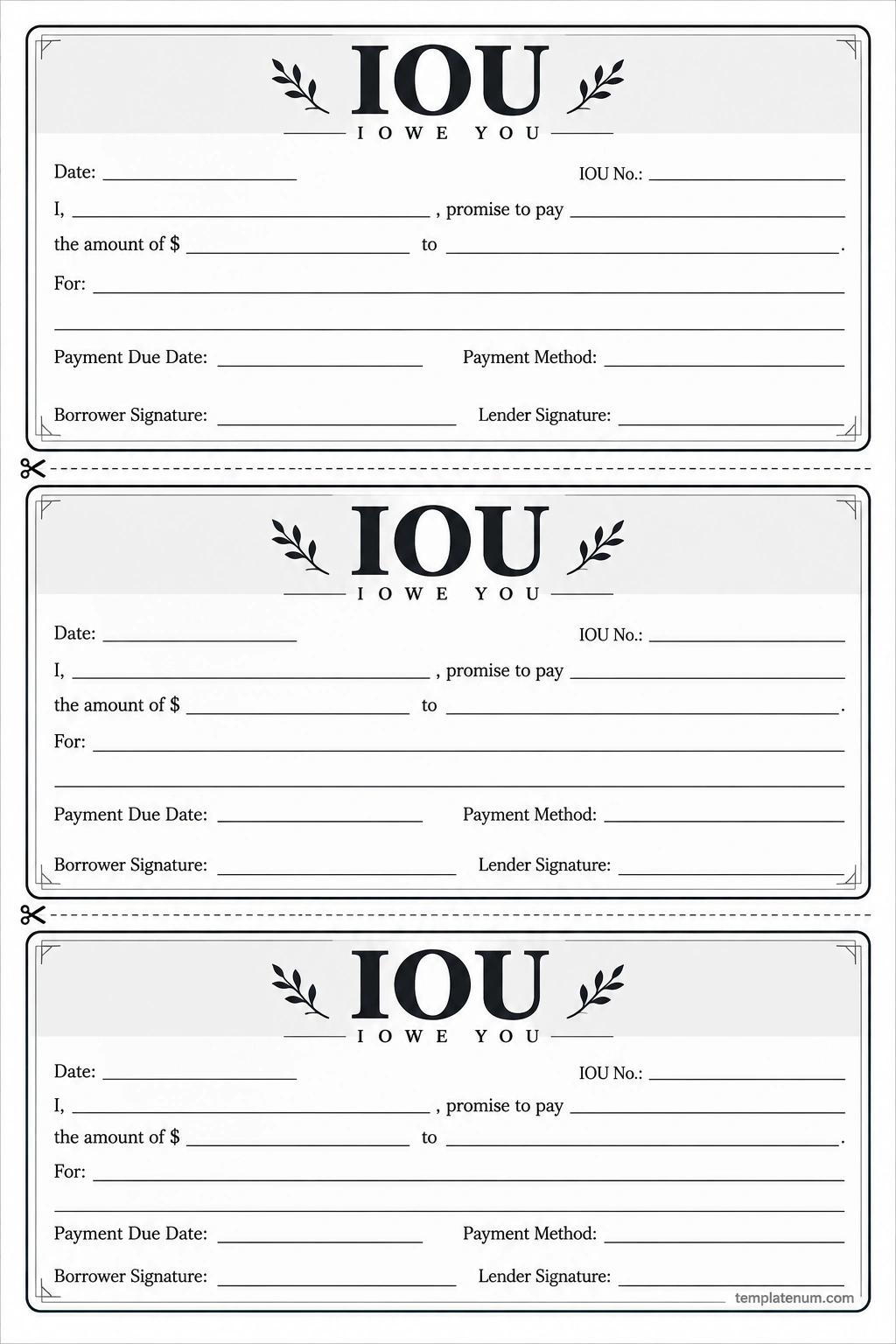
Print the form on standard US Letter paper and complete every relevant field. Review the information with the other party and keep a copy for your records.
What Information Should an IOU Form Include?
A useful IOU form should make the debt easy to understand. The exact information needed depends on the transaction, but the following details provide a practical starting point.
1. Date of the Agreement
Record the date when the IOU is created or signed. This helps both parties identify when the debt was acknowledged and provides a useful reference for their records.
2. Borrower and Lender Information
Write the full names of the person who owes the money and the person who is owed the money. Make sure both parties can be identified clearly. Contact details may also be useful, provided both parties agree to include them.
3. Amount Owed
State the exact amount of the debt and identify the currency. Writing the amount in both numbers and words can reduce confusion. For example, you might write “$500 (five hundred US dollars)” when the transaction is denominated in US dollars.
4. Reason for the Debt
Briefly describe why the money is owed. The reason could be a personal loan, a shared expense, an advance, or another transaction. A clear description helps distinguish the debt from other payments between the same parties.
5. Repayment Terms
Include the agreed repayment date or schedule. If the borrower will repay the amount in installments, describe each installment and its due date. If the parties have agreed to interest or fees, document the terms clearly and check applicable legal requirements.
6. Signatures
Provide space for the relevant parties to sign and date the document. Signatures can help demonstrate that the parties reviewed the written terms, although their legal effect depends on the circumstances and applicable law.
How to Use a Printable IOU Template
Using an IOU template is straightforward, but accuracy matters. Follow these steps to create a clear record of the debt.
Step 1: Download and Print the Form
Save the printable IOU template and open it in an image viewer or document application. Select US Letter paper size and check the print preview before printing. You can also use a digital version if both parties can review and retain it properly.
Step 2: Complete the Basic Details
Enter the date, the names of both parties, the amount owed, and the reason for the debt. Use clear, specific wording rather than vague descriptions.
Step 3: Agree on Repayment
Discuss when and how the debt will be repaid. If there is no single repayment date, record the installment schedule or other agreed arrangement. Do not leave important terms ambiguous if the parties expect a specific repayment obligation.
Step 4: Review and Sign
Both parties should read the completed IOU before signing. Correct errors, clarify any unclear terms, and make sure the written details match the actual agreement.
Step 5: Keep Copies
Give each party a copy of the signed document. Store it in a safe place and retain relevant payment records. When the debt is repaid, keep evidence of payment and consider documenting that the obligation has been satisfied.
IOU vs. Promissory Note vs. Loan Agreement
Although these documents relate to debts, they are not necessarily interchangeable. Choosing the right document depends on the amount, repayment arrangement, risk, and legal requirements.
IOU
An IOU generally acknowledges that a debt exists. A basic form may identify the parties and amount owed, but it may not fully explain how or when repayment must occur.
Promissory Note
A promissory note generally contains a promise to pay a specified amount under stated terms. Depending on the applicable law and document wording, it may include a due date, interest, installment terms, and other repayment provisions.
Loan Agreement
A loan agreement is typically more detailed. It may describe the loan amount, repayment schedule, interest, default provisions, collateral, and the rights and responsibilities of each party.
For a substantial loan, a business transaction, or an arrangement involving interest or collateral, consider using a properly drafted agreement rather than relying only on a basic IOU template.
Tips for Writing a Clear IOU
A well-prepared IOU can reduce misunderstandings and make it easier for both parties to keep accurate records.
- Be specific: State the exact amount, currency, and purpose of the debt.
- Use clear dates: Write the full repayment date instead of relying on vague phrases such as “soon.”
- Document installments: If repayment will occur in stages, list the amount and due date for each payment.
- Record additional terms: Document any agreed interest, fees, or other conditions, subject to applicable law.
- Avoid blank spaces: Complete relevant fields or mark them as not applicable before signing.
- Keep copies: Both parties should retain the same final version.
- Record repayments: Keep receipts, bank transfer records, or written confirmations of payments.
- Protect personal information: Include only the personal details needed to identify the parties and document the transaction.
When Should You Use an IOU?
An IOU may be useful when the parties need a straightforward written acknowledgment of a debt. Common examples include the following situations.
Borrowing Money from Friends or Family
A written IOU can help clarify the amount borrowed and the expected repayment date. Even when the parties trust each other, documenting the arrangement can prevent disagreements later.
Recording Shared Expenses
If one person pays a bill or expense on behalf of another, an IOU can record the amount that needs to be reimbursed. Include the expense details and an agreed repayment date.
Small Business Transactions
Business partners or other parties may use a written acknowledgment to document an outstanding amount. For transactions involving significant sums, commercial terms, or ongoing obligations, a formal agreement and appropriate accounting records may be more suitable.
Frequently Asked Questions About IOUs
What does IOU stand for?
IOU stands for “I owe you.” It is a common expression used to acknowledge that one person owes money or another obligation to someone else.
What is an IOU template used for?
An IOU template provides a structured way to record a debt. It typically includes the names of the parties, amount owed, date, reason for the debt, and any agreed repayment details.
Is an IOU legally binding?
An IOU may serve as evidence of a debt, but whether it is legally enforceable depends on the wording, the circumstances, and applicable law. A basic acknowledgment may not contain all the terms required for a particular transaction. Seek qualified legal advice if enforceability is important.
Does an IOU need to be notarized?
Notarization is not universally required for every IOU. Requirements vary by jurisdiction and transaction type. Check the applicable rules or consult a qualified legal professional if you are unsure.
Should an IOU include a repayment date?
Including a repayment date is generally helpful because it makes the parties’ expectations clearer. If repayment will occur in installments, document the amounts and due dates instead of leaving the schedule uncertain.
Can I use an IOU for a business transaction?
An IOU may be useful for documenting a simple outstanding debt between business parties. However, a formal loan agreement, promissory note, invoice, or other business document may be more appropriate for complex or substantial transactions.
Can an IOU include interest?
An IOU can record agreed interest terms where permitted, but interest rates and disclosure requirements may be regulated by applicable law. State the terms clearly and obtain legal advice when needed.
What should I do after the debt is repaid?
Keep evidence of the repayment, such as receipts or transaction records. Both parties may also retain a written confirmation that the debt has been paid in full.
Conclusion
An IOU is a simple way to acknowledge a debt and document the basic details of an amount owed. A clear IOU template can help record the parties’ names, amount, reason for the debt, repayment terms, and signatures in one convenient place.
Before signing, make sure both parties understand the written terms and keep copies for their records. For larger loans, complex repayment arrangements, or transactions with significant legal consequences, consider a more comprehensive agreement and seek qualified advice when necessary.
Use the printable IOU template as a starting point for clear recordkeeping, and adapt the document to the needs of the transaction and the applicable legal requirements.
Download: IOU Template
