A job employment application is an important document that helps employers collect consistent information from people applying for a position. It provides a structured way to review each candidate’s qualifications, work experience, education, skills, and availability before making a hiring decision.
Whether you are hiring your first employee or managing recruitment for an established business, a well-organized employment application can make the hiring process more efficient. It helps employers compare applicants, identify relevant qualifications, and maintain records throughout recruitment.
In this guide, you will learn what a job employment application includes, how to complete one, and how employers can use an application form responsibly. You can also use a printable job employment application template to organize candidate information in a clear, consistent format.
What Is a Job Employment Application?
A job employment application is a form completed by a job candidate to provide information requested by a prospective employer. It typically includes personal contact details, the position being applied for, education, employment history, relevant skills, references, and a declaration confirming that the information is accurate.
Unlike a resume, which candidates usually prepare in their own format, an employment application follows a standardized structure. This allows employers to request similar information from each applicant and review candidates more consistently.
Employment application forms may be available as printable documents, editable PDFs, online forms, or applications within a company’s recruitment system. The format depends on the employer’s hiring process and recordkeeping requirements.
Why Is an Employment Application Important?
A well-designed job employment application benefits both employers and candidates. It creates a clear starting point for recruitment and helps everyone understand what information is needed.
1. Standardizes Candidate Information
When candidates complete the same application form, employers can review relevant details using a consistent structure. This makes it easier to compare qualifications, work history, and availability without relying entirely on differently formatted resumes.
2. Supports Hiring Decisions
An employment application helps recruiters identify candidates who meet the basic requirements of a position. Employers can use the information to determine which applicants should move forward to interviews, skills assessments, or other appropriate selection stages.
3. Creates an Organized Record
Applications can provide a record of the information submitted during recruitment. When handled appropriately, these records help employers document their hiring process and refer to relevant details later.
4. Improves Recruitment Efficiency
A clear form reduces the need to request basic information repeatedly. Candidates know what to provide, while hiring teams can spend more time evaluating relevant qualifications and discussing job requirements.
What Should a Job Employment Application Include?
The contents of an employment application should reflect the position, the employer’s needs, and applicable laws. A simple form may include the following sections.
Personal Information
Collect only the contact details needed to communicate with the applicant. These may include:
- Full name
- Phone number
- Email address
- Mailing address, when necessary
- Date of application
Employers should avoid requesting sensitive personal information unless it is genuinely necessary, legally permitted, and appropriately protected.
Position Details
This section identifies the job the candidate wants and the basic terms of their availability. It may include:
- Position or job title
- Full-time, part-time, temporary, or seasonal preference
- Earliest available start date
- Availability for scheduled shifts
- Desired salary, when relevant and appropriate
Clear position details help employers determine whether a candidate’s availability and expectations match the role.
Education and Training
Education information may include the name of a school or institution, the qualification or program completed, and relevant completion dates. Employers should request qualifications that are appropriate for the job rather than requiring unnecessary educational details.
Professional licenses, certifications, and job-related training can be included when they are relevant to the position.
Employment History
Work history helps employers understand a candidate’s previous responsibilities and experience. A typical section may ask for:
- Previous employer or company name
- Position title
- Employment dates
- Main duties and responsibilities
- Relevant achievements or experience
For entry-level positions, employers can provide space for internships, volunteer work, school projects, or other relevant experience when appropriate.
Skills and Qualifications
This section allows applicants to describe abilities related to the position. Examples include technical skills, communication, customer service, equipment operation, language proficiency, and relevant professional certifications.
Employers should focus on qualifications connected to the actual responsibilities of the job.
References
Some employers request professional references to learn more about a candidate’s work experience and suitability. A reference section may include a person’s name, professional relationship, and contact details.
Applicants should obtain permission before sharing another person’s contact information. Employers should explain how reference information will be used and follow applicable privacy requirements.
Declaration and Signature
An application may include a statement asking candidates to confirm that the information they provide is accurate to the best of their knowledge. A signature and date can document the applicant’s acknowledgment of that statement.
Any declaration should be written clearly and reviewed for compliance with relevant employment laws. An application form should not imply that signing it automatically creates an employment contract.
How to Fill Out a Job Employment Application
Completing an employment application carefully can help candidates present their qualifications clearly and avoid unnecessary delays. Follow these steps before submitting a form.
Step 1: Read the Instructions
Review the entire application before entering information. Check whether the employer requires specific documents, supporting qualifications, or a particular submission method.
Step 2: Enter Accurate Contact Information
Provide a current phone number and professional email address. Check for spelling errors so the employer can contact you about interviews or updates.
Step 3: Identify the Correct Position
Write the job title exactly as it appears in the vacancy announcement when possible. If the employer uses a job reference number, include it in the designated field.
Step 4: Describe Your Work Experience Clearly
List previous positions in the requested order and provide accurate employment dates. Focus on responsibilities, skills, and achievements that relate to the job. If a section does not apply to you, follow the form’s instructions rather than leaving required fields unexplained.
Step 5: Review Before Submitting
Check every section for missing information, incorrect dates, and typing errors. Make sure any requested attachments are included and that your application follows the employer’s submission instructions.
How Employers Can Use an Employment Application Form
Employers can make recruitment more consistent by establishing a clear process for collecting and evaluating applications. A standardized form is most useful when it supports fair, job-related decisions.
Define the Job Requirements First
Identify the essential qualifications, responsibilities, schedule, and experience required for the role. Use these criteria to determine which questions belong on the application.
Ask Relevant and Consistent Questions
Use the same core application questions for candidates applying for the same position. Questions should relate to job requirements and avoid unnecessary personal details that could introduce bias or create legal risks.
Evaluate Applicants Using Clear Criteria
Establish a consistent review process based on relevant qualifications. For example, recruiters may evaluate required certifications, related experience, demonstrated skills, and availability when these factors are genuinely necessary for the position.
Use the application as one source of information rather than the only basis for a hiring decision. Interviews, skills assessments, and appropriate reference checks may provide additional evidence.
Protect Candidate Information
Employment applications contain personal information that should be handled responsibly. Restrict access to authorized personnel, use appropriate storage and security measures, and establish retention and deletion practices that follow applicable laws.
Employers should also provide required privacy notices and obtain any necessary permissions before conducting background checks or other screening activities.
Common Job Employment Application Mistakes to Avoid
Avoiding common mistakes helps candidates submit stronger applications and helps employers maintain a reliable recruitment process.
- Providing incomplete information: Review required fields and follow the instructions for any section that does not apply.
- Entering inaccurate dates: Check employment and education dates against reliable records before submitting.
- Using unclear descriptions: Explain relevant duties and skills in concise, specific language.
- Requesting unnecessary sensitive details: Employers should collect only information that is appropriate for the hiring purpose and permitted by law.
- Applying inconsistent screening criteria: Use documented, job-related requirements to evaluate candidates fairly.
- Neglecting information security: Store completed forms securely and limit access to people who need the information.
Printable Job Employment Application Template
A printable job employment application template provides a convenient starting point for organizing candidate information. Instead of designing a form from scratch, employers can use a structured layout with clearly labeled sections and sufficient space for written responses.
The template below is designed to organize personal contact details, position preferences, availability, education, work experience, skills, references, and applicant certification. Employers can adapt the layout to suit their recruitment needs, provided the questions remain appropriate and comply with applicable laws.
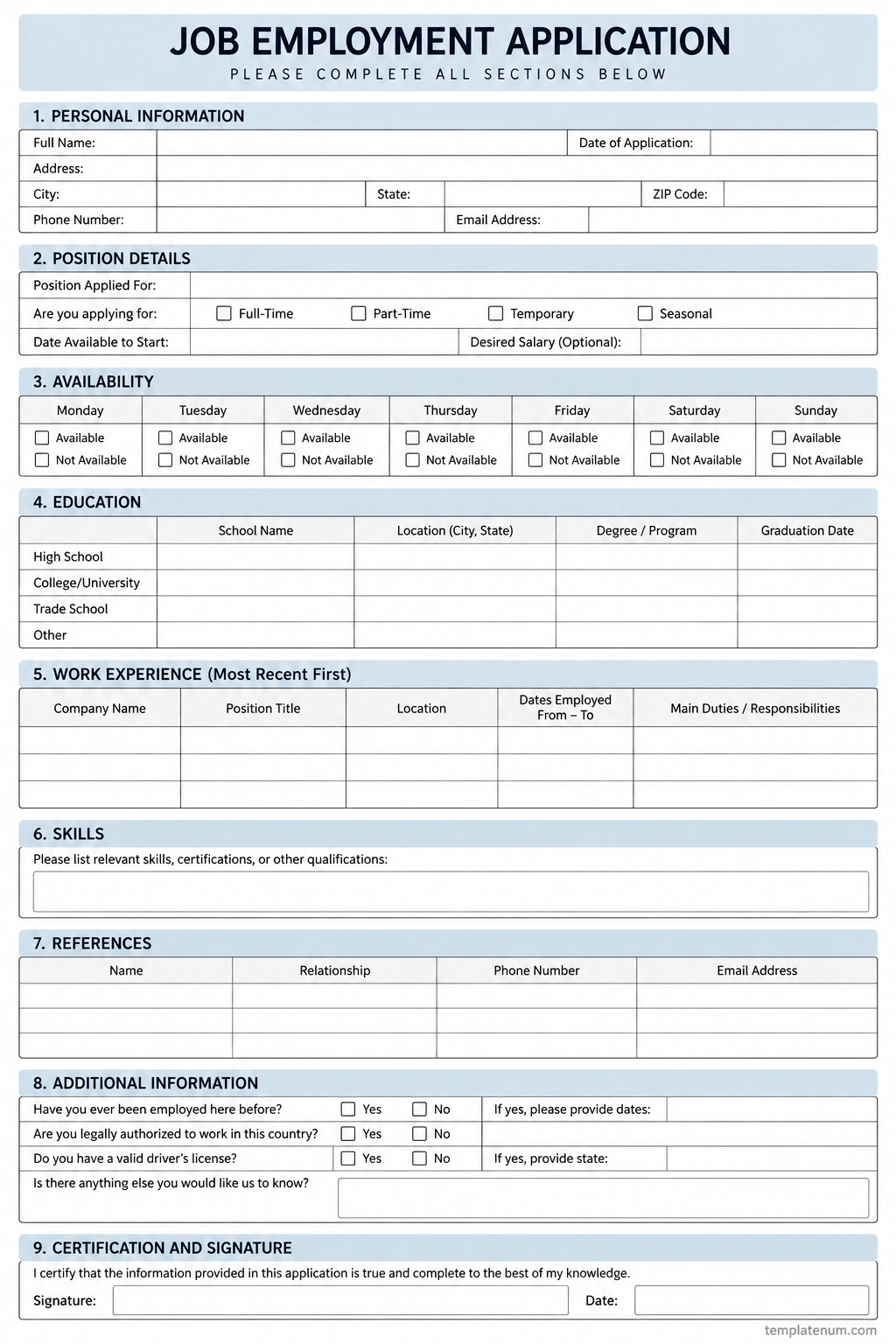
Before distributing the form, review each field to ensure that it is necessary, clearly worded, and appropriate for the position. Add your company name and contact information if needed, and provide instructions explaining how applicants should complete and return the document.
For ongoing recruitment, consider using an editable digital form or applicant tracking system if it better supports secure storage, accessibility, and efficient application management.
Frequently Asked Questions
What is the purpose of a job employment application?
The purpose of a job employment application is to collect standardized information about candidates, including their qualifications, work history, skills, and availability. Employers use this information to support candidate screening, hiring decisions, and recruitment recordkeeping.
What is the difference between an employment application and a resume?
A resume summarizes a candidate’s experience, skills, and achievements in a format they choose. An employment application follows an employer-defined structure and requests consistent information from applicants. Employers may use both documents during recruitment.
Can I use a printable employment application template?
Yes. A printable employment application template can be used as a starting point for collecting candidate information. Customize it for the position, include only appropriate questions, and review it for compliance before using it in an actual hiring process.
Should an employment application include references?
It can include a reference section when professional references are relevant to the recruitment process. Employers should explain their reference-checking process, handle contact details responsibly, and follow applicable laws and consent requirements.
What information should not be requested on a job application?
Employers should avoid unnecessary sensitive personal information and questions unrelated to the job. Certain questions or requests concerning protected characteristics, family circumstances, medical information, or other sensitive matters may be restricted by law. Requirements vary by jurisdiction, so employers should obtain appropriate legal guidance when designing application forms.
Does completing a job application guarantee employment?
No. Completing an application does not guarantee an interview, job offer, or employment. It allows the employer to review the candidate’s information as part of the recruitment process.
How can employers make the application process fairer?
Employers can improve fairness by asking consistent, job-related questions, defining selection criteria in advance, applying those criteria consistently, providing accessible application methods, and protecting candidate information.
Conclusion
A job employment application is a useful tool for collecting candidate information in a consistent and organized format. It helps employers review qualifications, compare relevant experience, and maintain appropriate recruitment records while giving applicants a clear structure for presenting their information.
By using a well-designed application form, asking relevant questions, and protecting personal information, employers can create a more organized and responsible hiring process. A printable job employment application template offers a practical starting point that can be customized to suit different positions and recruitment needs.
Before putting any form into use, review its questions, privacy practices, and legal requirements. A clear, relevant, and carefully managed application process benefits both employers and job candidates.
Download: Job Employment Application Template
