Buying or renting an older home involves more than checking its condition, location, and price. If a residential property was built before 1978, prospective buyers and tenants should also understand the potential risks associated with lead-based paint. A lead-based paint disclosure form helps communicate known lead paint information and documents that the required disclosures have been provided.
In the United States, federal law requires sellers and landlords of most pre-1978 residential properties to disclose known information about lead-based paint and lead-based paint hazards. This requirement helps prospective occupants make informed decisions about their health and safety, particularly when young children or pregnant women may be exposed.
Whether you are a homeowner preparing to sell, a landlord preparing a rental agreement, or a prospective buyer reviewing property documents, understanding this disclosure process is important. This guide explains what a lead-based paint disclosure form includes, when it is required, and how to use a printable template as part of your property transaction.
What Is a Lead-Based Paint Disclosure Form?
A lead-based paint disclosure form is a document used during certain residential property sales and rental transactions to communicate information about known lead-based paint and related hazards. It records what the seller or landlord knows about the property and confirms that the required information has been provided to the prospective buyer or tenant.
The federal disclosure requirements generally apply to residential properties built before 1978. This is because the United States banned consumer use of lead-containing paint in residential housing in 1978. Older homes may still contain lead-based paint, particularly on original painted surfaces.
The disclosure process is intended to improve transparency. It does not automatically mean that a property contains lead-based paint, nor does completing a disclosure form prove that a property is free from lead hazards.
Depending on the transaction, the disclosure documentation may identify:
- Whether the seller or landlord knows of any lead-based paint in the property.
- Whether known lead-based paint hazards are present.
- The location and condition of known affected surfaces.
- Available inspection reports, risk assessments, and other related records.
- Whether the buyer or tenant received the required lead hazard information pamphlet.
- Whether the buyer received an opportunity to conduct a lead inspection or risk assessment.
Why Is Lead-Based Paint Disclosure Important?
Lead exposure can cause serious health problems, especially in young children and developing babies. Lead can enter the body through swallowing contaminated dust or paint chips and through other exposure pathways.
Older paint that is deteriorating, peeling, or disturbed during renovation can create lead-contaminated dust. This is why prospective buyers and tenants should receive relevant information before committing to a property transaction.
Protecting Children and Pregnant Women
Young children are particularly vulnerable to lead exposure because their brains and nervous systems are still developing. Exposure can contribute to learning difficulties, behavioral problems, and other developmental effects.
Pregnant women also need to be aware of potential exposure because lead can affect pregnancy and fetal development. Understanding the property’s history and any known lead hazards helps families make more informed housing decisions.
Providing Transparency During Property Transactions
A completed disclosure helps buyers and tenants understand what the property owner knows about lead-based paint. It also gives them access to available records and reports that may help them evaluate potential risks.
For sellers and landlords, proper disclosure helps document compliance with applicable federal requirements. It is an important part of responsible property management and transaction preparation.
When Is a Lead-Based Paint Disclosure Form Required?
Under the federal Lead-Based Paint Disclosure Rule, sellers and landlords must generally provide the required information before prospective buyers or tenants become obligated under a contract for covered residential housing built before 1978.
For Residential Property Sales
When selling covered pre-1978 housing, the seller must disclose known lead-based paint and lead-based paint hazards. The seller must also provide available related records and reports and give the buyer the required EPA-approved lead hazard information pamphlet.
The purchase contract must include the required Lead Warning Statement and signed acknowledgments. Buyers must generally receive a 10-day opportunity to conduct a lead inspection or risk assessment unless the parties mutually agree in writing to a different period or the buyer waives the opportunity in writing.
For Residential Rental Properties
Landlords of covered pre-1978 rental properties must disclose known lead-based paint information and provide available records and reports to prospective tenants. They must also provide the required lead hazard information pamphlet and include the appropriate Lead Warning Statement and acknowledgment in the lease documentation.
The federal 10-day inspection opportunity applies to property purchases, not automatically to rental transactions. However, prospective tenants and landlords may negotiate an inspection arrangement before the lease begins.
Some properties and transactions are exempt from the federal rule. Examples include certain zero-bedroom dwellings, housing built after 1977, and certain housing for elderly or disabled persons when no child under six resides or is expected to reside there. Specific exemptions and conditions should be checked before deciding that a disclosure is unnecessary.
Free Printable Lead-Based Paint Disclosure Form Template
A printable lead-based paint disclosure form template can help organize property information, known hazards, available inspection records, and acknowledgment details. It provides a convenient starting point for documenting important information during a property sale or rental process.
The following template is designed for residential properties built before 1978. It uses a simple black-and-white layout with clearly separated sections for property details, seller or landlord disclosures, acknowledgment of receipt, and signatures.
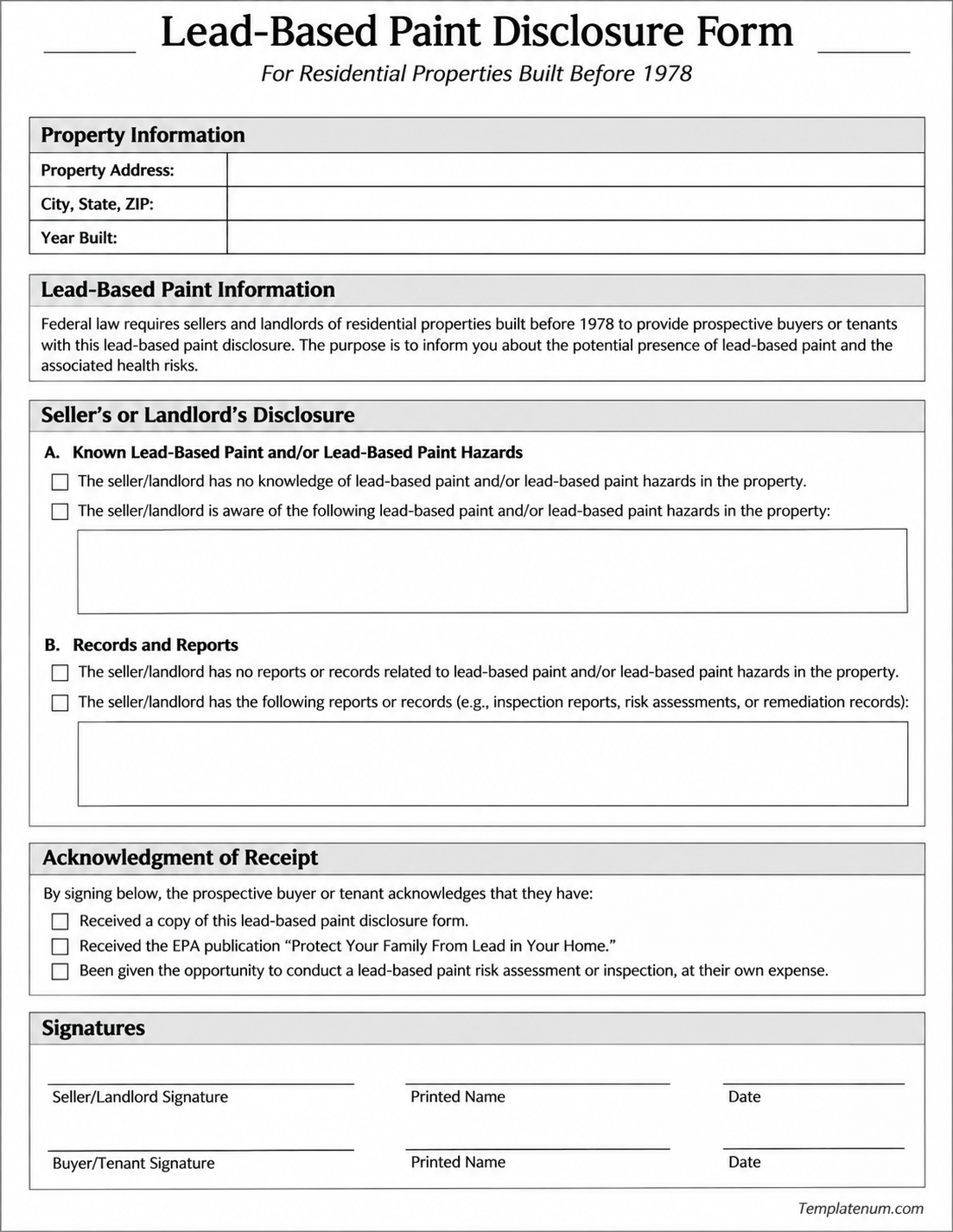
Important: This printable is an illustrative organizational template, not an official EPA or HUD form. It does not reproduce every required federal warning, certification, and acknowledgment. Use the applicable official disclosure language and transaction documents when completing a legally required disclosure.
What Information Should a Lead-Based Paint Disclosure Form Include?
A complete disclosure package should contain the information and acknowledgments required for the particular sale or rental transaction. The following sections explain the main details that should be addressed.
1. Property Information
Start with the basic identification details of the residential property. This makes it clear which home or rental unit the disclosure concerns.
- Property street address.
- City, state, and ZIP code.
- Year the property was built, if known.
- Property or unit identification, when applicable.
2. Known Lead-Based Paint Information
The seller or landlord should indicate whether they have knowledge of lead-based paint or lead-based paint hazards in the property. If known hazards exist, provide the available details, including their locations and the condition of the affected surfaces.
Do not assume that an absence of known information means the property has been tested and confirmed to be lead-free. The disclosure should accurately reflect what the property owner knows.
3. Records and Inspection Reports
Available documentation should be identified and provided as required. Relevant materials may include:
- Lead-based paint inspection reports.
- Lead risk assessment reports.
- Lead hazard evaluation documents.
- Previous lead hazard reduction or remediation records.
- Other available reports concerning lead-based paint conditions.
For applicable multifamily properties, relevant records may also include information about common areas and other residential units as part of a building-wide evaluation.
4. Lead Warning Statement and Information Pamphlet
Covered transactions require a specific Lead Warning Statement in the applicable contract or lease documentation. Buyers and tenants must also receive the EPA-approved lead hazard information pamphlet, commonly titled Protect Your Family From Lead in Your Home.
Simply adding a general warning to a homemade form is not necessarily sufficient. Use the required federal wording in the language of the contract or lease, as applicable.
5. Buyer or Tenant Acknowledgment
The acknowledgment section documents that the prospective buyer or tenant received the required information. Depending on the transaction, it should address receipt of the disclosure, available records, and the EPA pamphlet.
For a purchase, the buyer must also acknowledge receiving the opportunity to conduct a lead inspection or risk assessment or indicate a written waiver of that opportunity.
6. Signatures and Dates
The appropriate parties must sign and date the required disclosure documentation. Seller, buyer, landlord, tenant, and agent certifications should be included where applicable.
Signatures help establish that the required disclosures and acknowledgments were completed. They should reflect accurate information and should not be used to certify facts that the signer cannot verify.
Responsibilities of Sellers, Landlords, Buyers, and Tenants
Understanding each party’s responsibilities helps prevent incomplete disclosures and misunderstandings during a property transaction.
Seller Responsibilities
- Disclose known lead-based paint and lead-based paint hazards.
- Provide available relevant inspection reports and records.
- Give the buyer the required EPA-approved information pamphlet.
- Include the required Lead Warning Statement and acknowledgment documentation.
- Provide the required opportunity for a lead inspection or risk assessment before the buyer becomes obligated under the purchase contract, subject to applicable written agreements or waiver.
Landlord Responsibilities
- Disclose known lead-based paint and lead hazards.
- Provide available inspection reports and related records.
- Give prospective tenants the required EPA-approved information pamphlet.
- Include the required warning statement and acknowledgment in the lease documentation.
- Ensure the required disclosure activities are completed before the tenant becomes obligated under the lease.
Buyer and Tenant Responsibilities
- Read the disclosure information carefully.
- Review available inspection reports and other records.
- Ask questions about known lead hazards or unclear information.
- Consider obtaining a qualified lead inspection or risk assessment when appropriate.
- Keep a copy of the completed transaction documents.
Tips for Completing a Lead-Based Paint Disclosure Form
Completing disclosure paperwork carefully can make the transaction easier for everyone involved. Consider these practical tips before signing or providing the documents.
- Confirm the property’s construction year: Verify whether the home was built before 1978 and determine whether an exemption applies.
- Be accurate and transparent: Disclose known information rather than making assumptions about the property’s condition.
- Gather available records: Collect inspection reports, risk assessments, and relevant hazard reduction documents before preparing the disclosure.
- Use the correct warning language: Include the applicable federal Lead Warning Statement rather than relying on a shortened description.
- Provide the official pamphlet: Make sure the buyer or tenant receives the required EPA-approved lead hazard information pamphlet.
- Understand inspection rights: Remember that the federal 10-day inspection opportunity applies to sales and may be modified by written agreement or waived in writing.
- Keep signed records: Maintain the required documentation according to applicable federal, state, and local retention rules.
Common Mistakes to Avoid
Even a simple disclosure process can become problematic when important information is overlooked. Avoid these common mistakes:
- Assuming every older property automatically contains lead-based paint.
- Failing to disclose known lead hazards.
- Ignoring available inspection reports or risk assessments.
- Providing a homemade form without the required federal warning language.
- Forgetting to provide the EPA-approved information pamphlet.
- Confusing the buyer’s inspection opportunity with the requirements for rental properties.
- Assuming that disclosure automatically requires the property owner to remove all lead-based paint.
- Failing to obtain the necessary signatures and acknowledgments.
Federal disclosure rules generally do not require a seller or landlord to conduct a new lead inspection or remove lead-based paint solely because a property is being sold or rented. However, other federal, state, and local requirements may apply to particular properties or situations.
Frequently Asked Questions About Lead-Based Paint Disclosure Forms
What is a lead-based paint disclosure form used for?
A lead-based paint disclosure form is used to communicate known information about lead-based paint and lead hazards in covered residential properties. It also helps document that required information, reports, pamphlets, and acknowledgments have been provided during a property sale or rental transaction.
Which homes require a lead-based paint disclosure?
The federal rule generally applies to most residential properties built before 1978. However, certain housing types and transactions are exempt. Property owners should review the applicable federal regulations and any additional state or local requirements.
Is a lead-based paint disclosure required when selling a house?
Yes. Sellers of covered pre-1978 residential properties generally must disclose known lead-based paint and lead hazards, provide available records, give buyers the required information pamphlet, and include the required warning and acknowledgment documentation in the purchase contract.
Do landlords need to provide a lead-based paint disclosure?
Yes. Landlords of covered pre-1978 rental properties generally must disclose known lead-based paint hazards, provide available records and the required EPA pamphlet, and include the appropriate warning and acknowledgment in the lease documentation.
Can a buyer waive the lead paint inspection?
Yes. A buyer may waive the federal inspection or risk assessment opportunity by indicating the waiver in writing. The parties may also mutually agree in writing to a different inspection period instead of the standard 10 days.
Does a landlord have to provide a 10-day inspection period?
No. The federal 10-day inspection opportunity applies to covered property sales, not automatically to rental transactions. However, a prospective tenant and landlord may negotiate an inspection opportunity before entering into a lease.
Does a lead-based paint disclosure mean the house contains lead?
No. The disclosure process communicates known information about the property. A disclosure stating that the owner has no knowledge of lead-based paint does not necessarily mean the property has been inspected or confirmed to be free of lead.
Does a seller have to remove lead-based paint before selling?
Generally, the federal disclosure rule does not require sellers to remove lead-based paint or lead hazards simply because they are selling a covered property. However, other applicable laws, agreements, or property-specific requirements may impose additional obligations.
Where can I get the official lead safety pamphlet?
You can obtain the EPA publication Protect Your Family From Lead in Your Home from the official Environmental Protection Agency website. Sellers and landlords should provide the applicable EPA-approved pamphlet as required by federal law.
Conclusion
A lead-based paint disclosure form is an important part of many residential property transactions involving homes built before 1978. It helps buyers and tenants understand known lead paint information, review available reports, and make informed decisions about potential health risks.
For sellers and landlords, completing the disclosure process accurately is an important responsibility under federal law. Providing the required warning statement, EPA information pamphlet, available records, and appropriate acknowledgments helps ensure that prospective occupants receive the information they need.
A printable lead-based paint disclosure template can be a useful starting point for organizing property details and disclosure information. However, always use the official federal language and required transaction documents, and check applicable state and local requirements before relying on a form for a real estate sale or rental agreement.
Download: Lead-Based Paint Disclosure Form
