Leaving a job is an important career decision, and communicating that decision professionally matters. A resignation letter to employer provides a formal way to announce your departure, confirm your last working day, and express appreciation for the opportunity to work with the company.
Whether you are accepting a new position, pursuing personal goals, relocating, or changing career paths, writing a professional resignation letter helps maintain a positive relationship with your employer. It also creates a written record of your decision and gives your company time to prepare for the transition.
If you are unsure what to include, you do not need to write a complicated letter. A clear resignation message should explain your intention to leave, provide your expected last working day, and offer reasonable assistance during the transition. This guide explains how to write one and provides a practical resignation letter sample you can customize.
What Is a Resignation Letter to Employer?
A resignation letter to employer is a formal written notice informing a company or manager that an employee intends to leave their current position. It communicates the decision to resign and usually identifies the employee’s final working day.
Employees typically submit this letter to their direct supervisor, human resources department, or another designated company representative. Depending on workplace policies, it may be delivered through email or as a printed document.
Unlike an informal conversation, a written resignation provides a clear record of the employee’s decision and the date the notice was submitted. It also helps the employer organize responsibilities, arrange a replacement, and prepare for the employee’s departure.
Why Should You Write a Formal Resignation Letter?
Even if you have already discussed your departure with your manager, submitting a formal resignation letter is an important professional step. It helps ensure that your decision is communicated clearly and documented properly.
1. Provides Official Notice
A resignation letter formally communicates your intention to leave the company. It helps your employer understand that your decision is final and allows the appropriate departments to begin the necessary procedures.
2. Confirms Your Last Working Day
Including your intended final working day helps avoid confusion about your departure date. It also gives your employer a clear timeline for managing schedules, responsibilities, and staffing arrangements.
3. Maintains Professional Relationships
A respectful resignation letter shows appreciation for your employment experience. Even if you are leaving because of a difficult situation, professional communication can help preserve your relationship with former colleagues and managers.
4. Supports a Smooth Transition
Offering reasonable assistance with unfinished tasks, documentation, and handover responsibilities demonstrates professionalism. It also helps your team continue its work after your departure.
What to Include in a Resignation Letter
A professional resignation letter should be simple, direct, and easy to understand. You do not need to explain every detail of your decision. Focus on the information your employer needs to process your resignation.
1. Date of Submission
Start with the date you are submitting the letter. This helps establish when your formal resignation notice was provided.
2. Employer or Manager Information
Include the recipient’s name, job title, and company name when preparing a printed letter. Addressing your manager or HR representative directly makes the document more professional.
3. A Clear Resignation Statement
State your intention to resign in the opening paragraph. Use straightforward language, such as “I am writing to formally resign from my position as…” Avoid vague statements that could make your decision unclear.
4. Your Position and Last Working Day
Identify your current job title and specify your intended final working day. Make sure the date is consistent with your employment agreement, company policies, and applicable notice requirements.
5. A Brief Expression of Appreciation
Consider thanking your employer for the experience, guidance, or opportunities you received during your employment. A short and sincere statement is usually sufficient.
6. An Offer to Assist With the Transition
Show your willingness to help with the handover process. You may offer to organize documents, complete outstanding assignments, or share relevant information with the person taking over your responsibilities.
7. A Professional Closing
Finish with a polite closing, such as “Sincerely” or “Best regards.” Include your full name and signature if you are submitting a printed letter.
How to Write a Resignation Letter to Your Employer
Writing a resignation letter becomes easier when you follow a simple structure. The goal is to communicate your decision respectfully without including unnecessary details.
Step 1: Start With a Formal Greeting
Address your letter to your direct manager, supervisor, or HR representative. Use a professional greeting such as “Dear Mr. Smith” or “Dear Ms. Johnson.”
Step 2: Clearly State Your Decision
Begin with a direct statement explaining that you are resigning. Mention your current position and company name so the purpose of the letter is immediately clear.
Step 3: Specify Your Final Working Day
Provide the exact date you expect to leave. Check your employment agreement and applicable notice requirements before selecting the date.
Step 4: Express Your Appreciation
Include a brief thank-you message acknowledging the opportunities and professional experience you gained. You can keep this section positive without providing an overly detailed explanation.
Step 5: Offer Transition Assistance
Let your employer know that you are willing to help make the transition easier. Keep your offer realistic and consistent with your remaining time at the company.
Step 6: Review and Submit Your Letter
Before sending your resignation, check the recipient’s information, spelling, dates, and overall tone. Keep a copy of the submitted letter for your personal records.
Resignation Letter to Employer Sample
If you need an example, the following resignation letter demonstrates how to communicate your decision in a professional and respectful way. It includes a formal notice, a final working date, an appreciation statement, and an offer to assist with the transition.
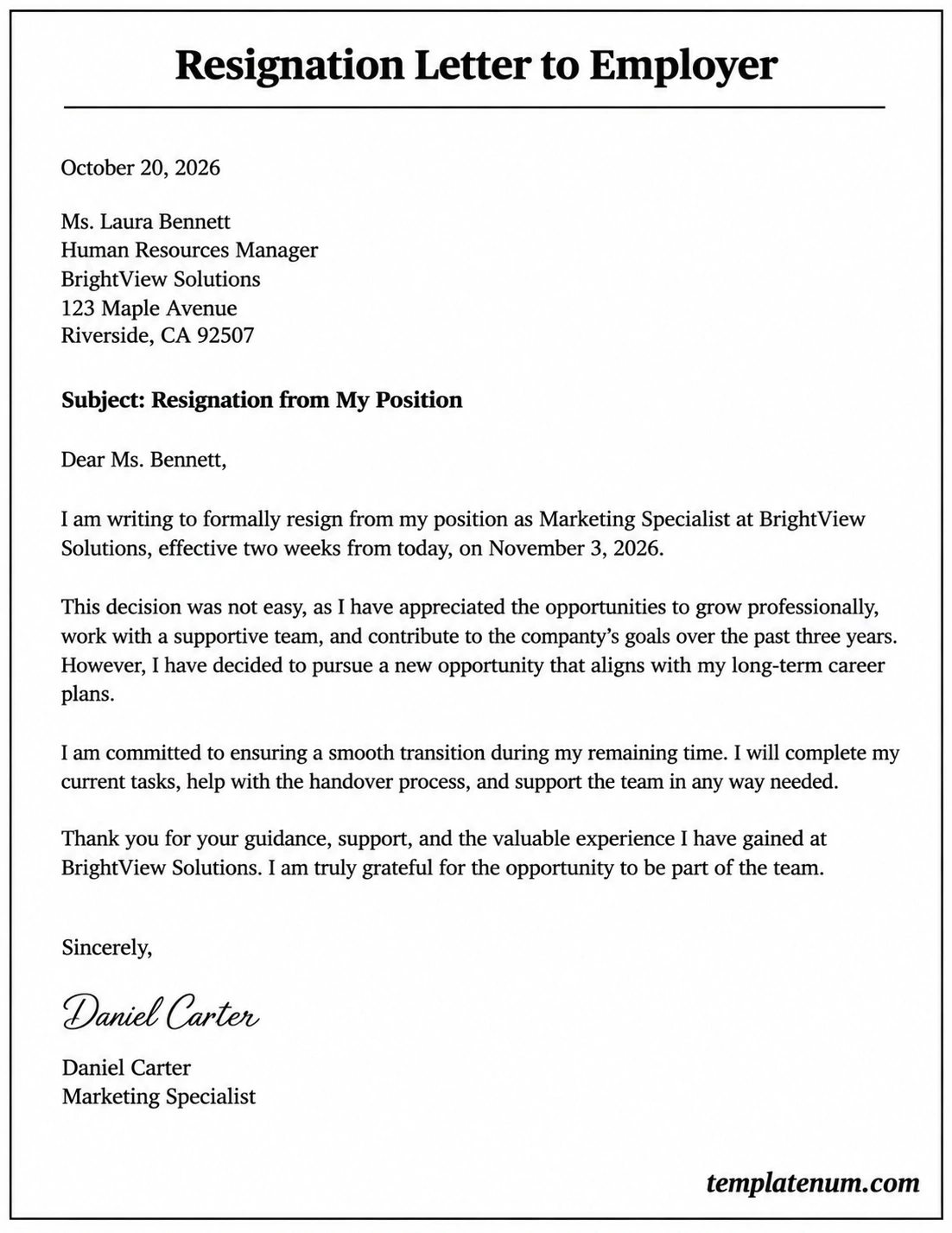
The sample can be used as a reference when preparing your own resignation letter. Replace the example names, company information, job title, and dates with your actual details. You can also adjust the wording to reflect your employment situation.
Tips for Writing a Professional Resignation Letter
A good resignation letter does not need to be lengthy. The most important thing is to communicate your decision clearly while maintaining a respectful tone.
- Keep it concise: Aim for a letter that fits on one page and focuses on essential information.
- Use professional language: Avoid emotional statements, personal criticism, or negative comments about the company.
- Be clear about dates: Make sure your resignation date and final working day are accurate.
- Follow notice requirements: Review your employment agreement and company policies before submitting your letter.
- Express genuine appreciation: Thank your employer for relevant opportunities and professional experiences.
- Proofread carefully: Check grammar, spelling, names, and contact information before sending the document.
- Keep a personal copy: Save the final letter and any written confirmation of its receipt.
Common Mistakes to Avoid When Resigning
How you communicate your resignation can influence your final impression at work. Avoid these common mistakes when preparing your letter.
Providing Too Much Personal Information
You are generally not required to explain every personal detail behind your decision. A brief and professional statement is enough unless your employer requests additional information for a specific administrative purpose.
Using Negative or Emotional Language
A resignation letter is not the right place to express frustration or criticize coworkers. If you have concerns about your workplace, consider addressing them through an appropriate HR process.
Forgetting to Include the Last Working Day
Leaving out your final working date can create unnecessary confusion. Always include a specific date and make sure it aligns with your applicable notice requirements.
Sending the Letter Without Reviewing It
Spelling mistakes, incorrect dates, and missing information can make your letter appear unprofessional. Review the entire document before submitting it.
Failing to Follow Company Procedures
Some employers require employees to notify a direct supervisor before submitting formal paperwork to HR. Follow the appropriate internal process to ensure your resignation is properly recorded.
Frequently Asked Questions
How do I write a resignation letter to my employer?
Start with a formal greeting and clearly state your intention to resign. Include your job title, final working day, a brief thank-you message, and an offer to assist with the transition. Finish with a professional closing and your name.
How much notice should I give my employer?
The appropriate notice period depends on your employment agreement, company policies, and applicable labor laws. Two weeks is a common practice in some US workplaces, but it is not a universal legal requirement. Always check the rules that apply to your situation.
Can I send my resignation letter by email?
Yes. Many companies accept resignation letters through email. Use a clear subject line, address your manager professionally, include the essential resignation details, and keep a copy of the sent message.
Should I explain why I am leaving?
You do not usually need to provide a detailed explanation. You may mention a general reason, such as accepting another opportunity or pursuing personal goals, but keeping the explanation brief is perfectly acceptable.
Can I resign without giving two weeks’ notice?
In some situations, employees may resign with shorter notice or immediately. However, the consequences depend on their employment agreement, workplace policies, and applicable laws. Review your obligations before deciding on an early departure.
Who should receive my resignation letter?
Most employees submit their resignation letter to their direct supervisor or manager. Some companies also require a copy to be sent to the human resources department. Follow your employer’s established procedures.
Should I thank my employer in my resignation letter?
Yes. Expressing appreciation is a professional way to end your employment relationship. You can thank your employer for the experience, support, training, or opportunities you received during your time with the company.
Does a resignation letter need to be signed?
A printed resignation letter should generally include your handwritten signature. For an email resignation, typing your full name at the end is commonly acceptable, subject to your employer’s requirements.
Conclusion
Writing a resignation letter to employer is an important step when leaving a job. A professional letter clearly communicates your decision, confirms your last working day, and helps your employer prepare for the transition.
Keep your message simple, respectful, and focused on essential information. Include a formal resignation statement, an accurate departure date, and a brief expression of appreciation. Before submitting the letter, review your employment requirements and follow your company’s resignation procedures.
With a clear and well-written resignation letter, you can leave your current position professionally while maintaining positive working relationships for the future.
Download: Resignation Letter Template to Employer
