Buying an existing business is a significant decision that requires careful planning, research, and negotiation. Before signing a formal purchase agreement, buyers and sellers often use a letter of intent to purchase a business to outline the proposed transaction and establish a clear framework for moving forward.
A business purchase letter of intent (LOI) summarizes important preliminary terms, including the proposed purchase price, payment structure, assets involved, due diligence requirements, and expected closing date. It helps both parties understand the basic expectations before investing additional time and resources in the acquisition process.
Whether you are purchasing a small business, acquiring an established company, or negotiating a business sale, a well-prepared letter of intent can make the process more organized and transparent. In this guide, you will learn what to include, how to structure the document, and how to use a sample letter of intent for your transaction.
What Is a Letter of Intent to Purchase a Business?
A letter of intent to purchase a business is a preliminary document that outlines a prospective buyer’s interest in acquiring a company and summarizes the proposed terms of the transaction. It is typically prepared during the early stages of business acquisition negotiations.
The document allows both parties to review the major business terms before drafting a comprehensive and legally binding purchase agreement. It also provides a written reference for discussions, helping reduce confusion and misunderstandings throughout the negotiation process.
Although many business purchase letters of intent are generally non-binding, certain provisions may create legally enforceable obligations. Confidentiality, exclusivity, governing law, and other specific clauses should therefore be reviewed carefully by a qualified attorney.
Why Is a Business Purchase Letter of Intent Important?
A letter of intent plays an important role in organizing a business acquisition. Instead of immediately preparing a lengthy purchase contract, the buyer and seller can first agree on the principal terms of the proposed transaction.
Here are several reasons why using a business acquisition LOI can be beneficial:
- Clarifies transaction terms: It identifies the proposed purchase price, payment arrangements, assets, and other important conditions.
- Establishes mutual expectations: Both parties have a written understanding of the proposed transaction.
- Supports due diligence: It outlines the buyer’s intention to review financial records, contracts, liabilities, and business operations.
- Provides a negotiation framework: It creates a starting point for preparing the definitive purchase agreement.
- Protects confidential information: It can establish confidentiality obligations or refer to a separate nondisclosure agreement.
- Defines the acquisition timeline: It helps establish target dates for due diligence, negotiations, and closing.
What Should Be Included in a Letter of Intent to Purchase a Business?
A professional letter of intent should be clear, specific, and easy to understand. Although the exact contents depend on the transaction, several important sections are commonly included.
1. Buyer and Seller Information
Begin with the full legal names and contact information of the prospective buyer and business owner. Include the company’s legal name, business address, and the names of authorized representatives when applicable.
Accurate identification helps establish which parties are involved in the proposed acquisition.
2. Description of the Proposed Transaction
Explain the buyer’s intention to acquire the business. Identify the target company and clarify whether the proposed transaction involves purchasing business assets, company shares, membership interests, or another ownership structure.
This distinction is important because an asset purchase and an equity purchase can involve different legal, financial, and tax consequences.
3. Proposed Purchase Price and Payment Terms
State the proposed purchase price and explain how the buyer expects to pay for the business. Depending on the arrangement, the payment structure may include:
- A lump-sum payment at closing.
- An initial deposit followed by the remaining balance.
- Seller financing with scheduled installment payments.
- An earn-out based on agreed business performance targets.
- Adjustments for inventory, working capital, debt, or other agreed items.
Clearly indicate whether the proposed price is subject to satisfactory due diligence, financing approval, or further negotiation.
4. Assets and Liabilities Included
Identify the assets expected to be transferred as part of the acquisition. These may include equipment, inventory, furniture, intellectual property, customer lists, business names, and contractual rights.
The letter should also clarify which liabilities the buyer may assume and which obligations will remain with the seller. Avoid relying on general language when the allocation of liabilities could materially affect the transaction.
5. Due Diligence Requirements
Due diligence allows the buyer to investigate the financial condition, legal standing, and operational performance of the business before completing the acquisition.
A letter of intent may outline the buyer’s expected access to documents such as:
- Financial statements and tax returns.
- Bank statements and accounting records.
- Customer and supplier agreements.
- Commercial leases and property documents.
- Employee records and benefit obligations.
- Licenses, permits, and regulatory documents.
- Outstanding debts, litigation, and other liabilities.
It is also helpful to establish a reasonable due diligence period and explain what happens if the findings are unsatisfactory.
6. Confidentiality and Exclusivity
Confidentiality provisions help protect sensitive business information shared during negotiations. Both parties may agree not to disclose financial records, customer information, trade secrets, or other nonpublic details.
An exclusivity clause, sometimes called a no-shop provision, may restrict the seller from negotiating with other potential buyers for an agreed period. Because these provisions can create binding obligations, their wording and duration should be carefully reviewed.
7. Closing Date and Conditions
Include an estimated closing date and identify the conditions that must be satisfied before the transaction can be completed.
Common closing conditions include satisfactory due diligence, financing approval, regulatory consent, third-party approvals, and execution of the definitive purchase agreement.
8. Non-Binding Provisions and Signatures
Clearly explain which parts of the letter are intended to be non-binding and identify any provisions intended to be legally binding.
Finish with the names, titles, signatures, and dates of the authorized representatives. A signature alone does not automatically determine whether every provision is binding; the actual wording and applicable law matter.
Sample Letter of Intent to Purchase a Business
Below is an example of how a professional business purchase letter of intent can be structured. You can use this sample as a starting point and customize the details according to your proposed acquisition.
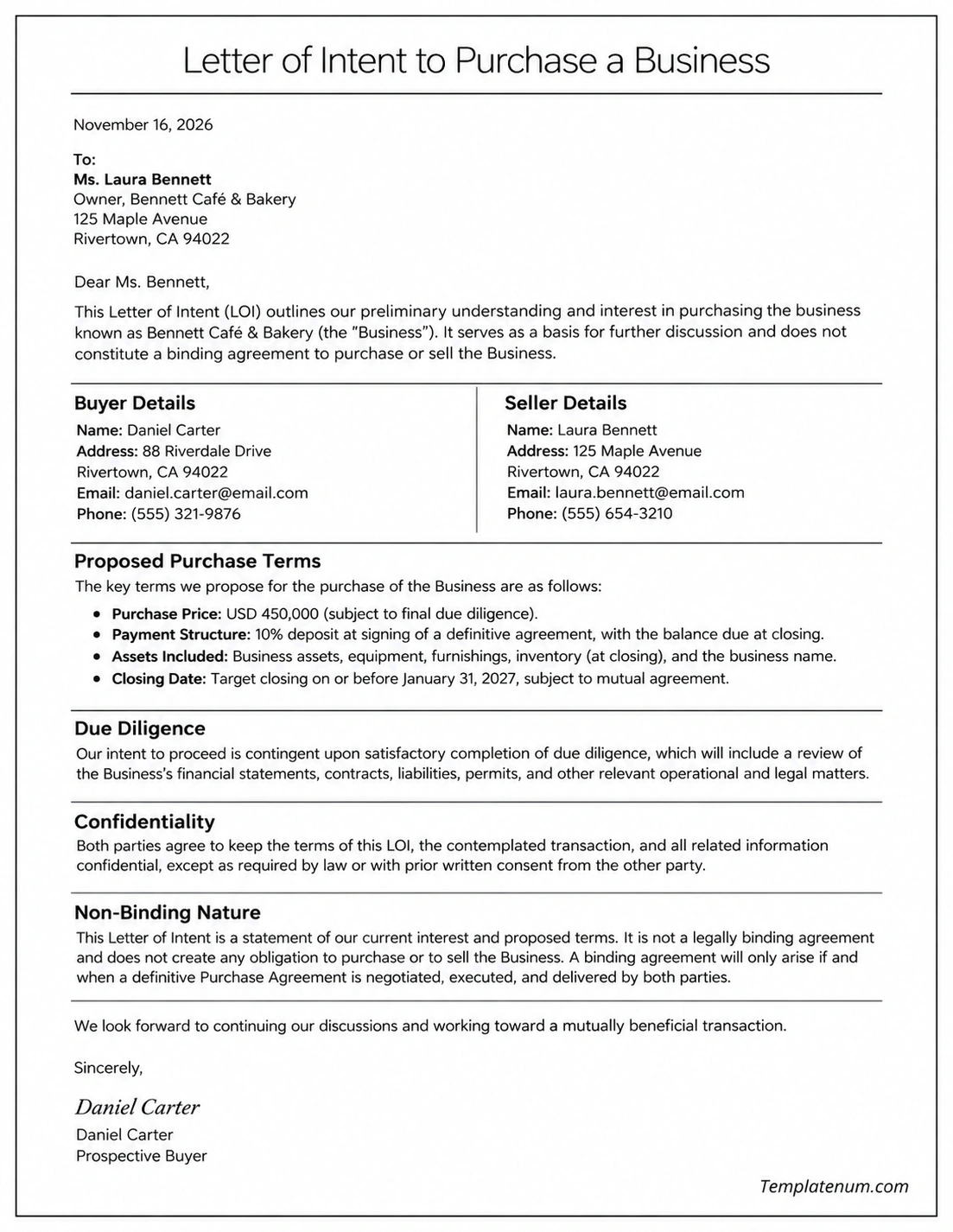
Example Letter
LETTER OF INTENT TO PURCHASE A BUSINESS
Date: [Date]
To:
[Seller’s Full Name]
[Business Name]
[Business Address]Subject: Letter of Intent to Purchase [Business Name]
Dear [Seller’s Name],
This letter expresses my interest in purchasing [Business Name] and outlines the preliminary terms under which I propose to proceed with the transaction. This letter is intended to provide a framework for further discussions, due diligence, and the preparation of a definitive purchase agreement.
1. Proposed Purchase Price
The proposed purchase price for the business is [Purchase Price], subject to satisfactory due diligence and mutual agreement on the final transaction terms.
2. Transaction Structure
The proposed acquisition will involve the purchase of [business assets or ownership interests], including the assets and rights specifically identified in the definitive purchase agreement.
3. Due Diligence
The buyer will have a period of [Number of Days] days to review the financial records, contracts, assets, liabilities, licenses, and other relevant business information.
4. Confidentiality
Both parties agree to protect confidential information exchanged during the negotiation and evaluation process, subject to the terms of any applicable confidentiality agreement.
5. Proposed Closing Date
The parties intend to complete the transaction on or before [Proposed Closing Date], subject to satisfactory completion of due diligence and fulfillment of agreed closing conditions.
6. Non-Binding Nature
This letter represents a preliminary expression of interest and does not create an obligation to complete the purchase or sale of the business. Any binding purchase obligation will arise only through a definitive agreement properly negotiated and executed by the parties. Any provisions expressly identified as binding will be governed by their terms and applicable law.
Thank you for considering this proposal. I look forward to continuing our discussions and working toward a mutually acceptable transaction.
Sincerely,
[Buyer’s Full Name]
[Buyer’s Signature]
[Date]
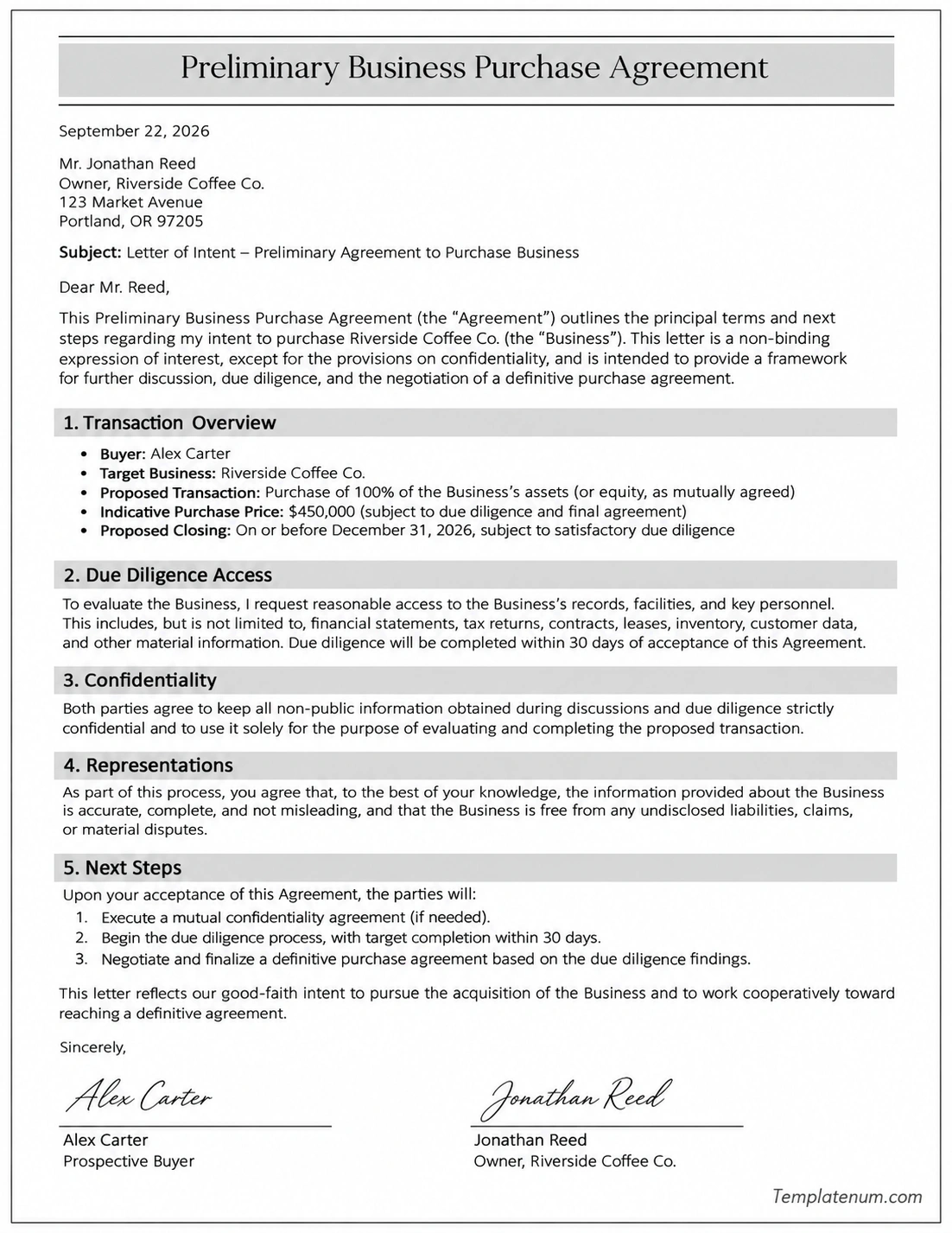
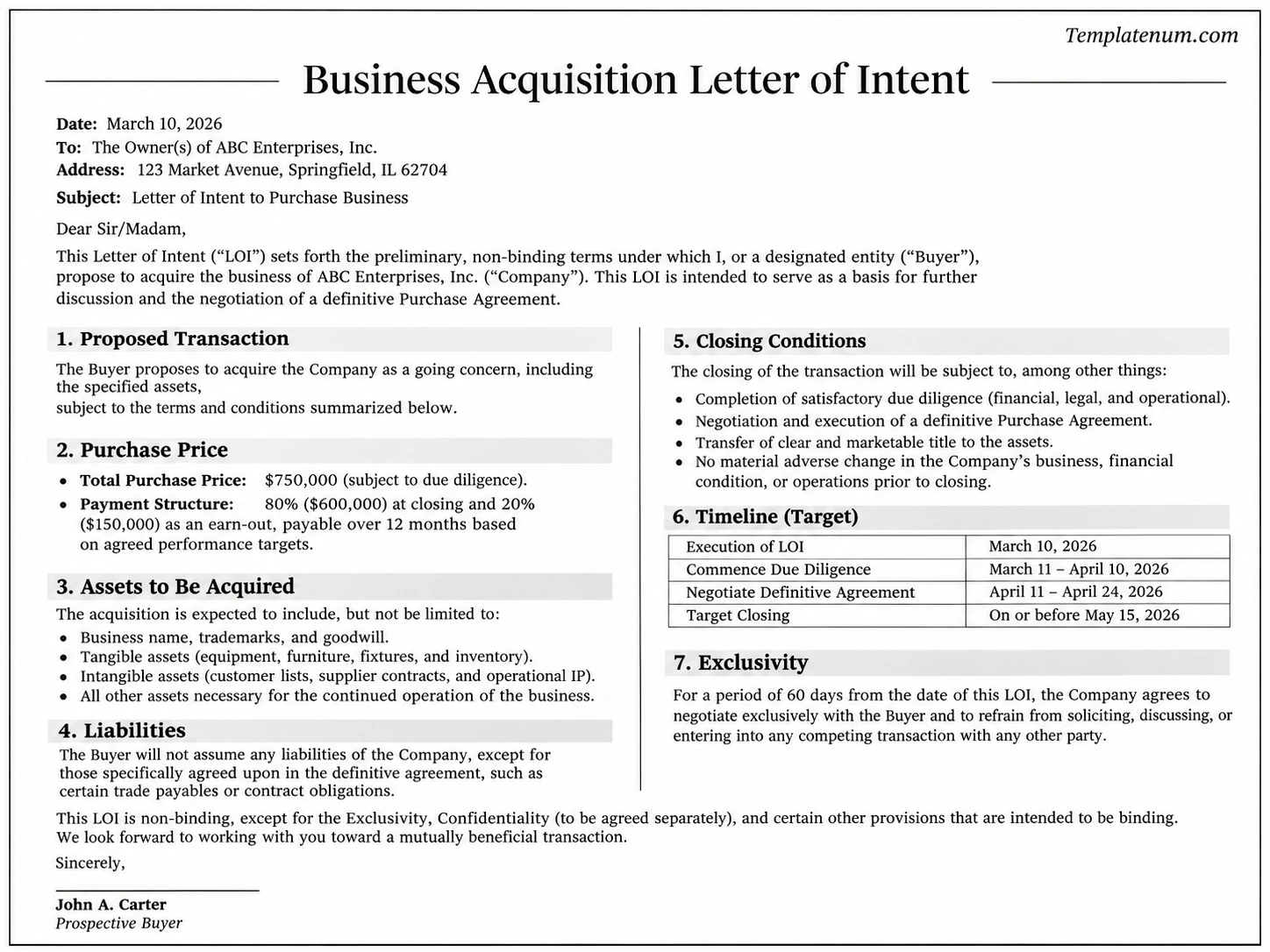
Additional Business Acquisition Letter of Intent Examples
Different business acquisitions require different approaches. The following document previews illustrate alternative ways to organize preliminary purchase terms and transaction details.
How to Write a Letter of Intent to Purchase a Business
Writing a business purchase LOI does not have to be complicated. Following a logical process can help you create a professional document that communicates your intentions clearly.
Step 1: Research the Business
Before making an offer, evaluate the company’s financial performance, market position, assets, liabilities, and overall business operations. This preliminary research helps you develop a reasonable purchase proposal.
Step 2: Determine Your Proposed Terms
Decide on the proposed purchase price, payment structure, transaction type, and expected closing timeline. Consider which terms may require further negotiation or additional investigation.
Step 3: Prepare the Letter
Organize the information into clear sections. Use professional language, short paragraphs, and specific descriptions. Avoid making promises or commitments that you are not prepared to fulfill.
Step 4: Review the Legal Provisions
Have a qualified business attorney review the document, particularly provisions concerning confidentiality, exclusivity, deposits, expenses, governing law, and binding obligations.
Step 5: Send the Letter and Continue Negotiations
Send the completed letter to the business owner or authorized representative. Allow the seller to review the proposed terms, ask questions, and suggest revisions before both parties proceed to the next stage.
Common Mistakes to Avoid When Preparing a Business Purchase LOI
Even a preliminary acquisition document can create misunderstandings if important details are overlooked. Avoid these common mistakes:
- Using vague purchase terms: Specify the proposed price and explain what the transaction includes.
- Ignoring existing liabilities: Identify how debts, taxes, contractual obligations, and other liabilities will be addressed.
- Skipping due diligence: Never assume that the seller’s initial financial information tells the complete story.
- Overlooking binding clauses: Clearly distinguish non-binding proposals from enforceable provisions.
- Setting unrealistic deadlines: Allow sufficient time for document reviews, financing, approvals, and negotiations.
- Using an unsuitable template: Customize the document to reflect the actual transaction structure and applicable legal requirements.
Frequently Asked Questions
Is a letter of intent to purchase a business legally binding?
Generally, a letter of intent is intended to be non-binding regarding the proposed purchase itself. However, specific provisions, such as confidentiality, exclusivity, or expense allocation, may be legally binding if properly drafted. The wording and applicable law determine the legal effect.
Does a business purchase letter of intent need to be signed?
Signing the letter is generally recommended because it documents the parties’ acknowledgment of the preliminary terms. However, whether a signature creates legal obligations depends on the document’s language and applicable law.
What is the difference between a letter of intent and a purchase agreement?
A letter of intent outlines the preliminary terms and intentions of a proposed transaction. A definitive purchase agreement is the formal contract that establishes the detailed rights, obligations, representations, warranties, and conditions governing the completed transaction.
Who prepares the letter of intent when buying a business?
The prospective buyer commonly prepares the initial letter of intent and sends it to the seller. However, either party or their legal representatives may prepare or revise the document during negotiations.
Can a seller reject a letter of intent?
Yes. A seller can reject the proposed terms, request changes, or submit a counterproposal. The letter is generally a starting point for negotiation rather than a requirement to complete the transaction.
How long should a letter of intent to purchase a business be?
There is no universal length requirement. A straightforward transaction may need only a few pages, while a more complex acquisition may require additional sections covering financing, assets, liabilities, exclusivity, and closing conditions. The document should be detailed enough to communicate the essential terms without becoming unnecessarily complicated.
Can I use a letter of intent template to buy a small business?
Yes. A business purchase LOI template can provide a useful starting structure for acquiring a small business. However, customize the purchase terms, due diligence provisions, asset descriptions, and legal clauses to reflect the specific transaction.
Conclusion
A letter of intent to purchase a business is a valuable starting point for buyers and sellers preparing for a potential business acquisition. It establishes a preliminary understanding of the transaction, outlines important purchase terms, and provides a framework for due diligence and further negotiations.
By including clear information about the purchase price, transaction structure, assets, liabilities, confidentiality, and closing conditions, both parties can approach the acquisition process with greater clarity and confidence.
Before signing or relying on any letter of intent, consider having a qualified attorney review its provisions. A carefully prepared document can help reduce misunderstandings and create a smoother transition toward a definitive business purchase agreement.
Download: Letter of Intent to Purchase a Business Template
