A Letter of Medical Necessity (LMN) is an official document written by a licensed healthcare provider explaining why a particular medical treatment, service, medication, or product is necessary for a patient’s health. It connects a diagnosed medical condition with a recommended treatment and explains why that treatment is clinically appropriate.
Patients may need a Letter of Medical Necessity when requesting insurance coverage, seeking reimbursement through a Health Savings Account (HSA) or Flexible Spending Account (FSA), or applying for certain healthcare and workplace benefits. Without proper documentation, an insurance provider or benefits administrator may reject a request because the medical purpose is unclear.
Understanding how a medical necessity letter works can help patients prepare the necessary information and communicate more effectively with their healthcare providers. This guide explains what an LMN includes, when it is required, how to request one, and what a professional sample letter should look like.
What Is a Letter of Medical Necessity?
A Letter of Medical Necessity is a formal statement from a qualified healthcare professional confirming that a specific treatment, product, service, or medical device is needed to diagnose, treat, or manage a patient’s medical condition.
The letter provides a clinical explanation rather than simply stating that a patient wants or prefers a particular product. It identifies the patient’s condition, describes the recommended treatment, and explains how the requested item supports the patient’s healthcare needs.
For example, a healthcare provider might write an LMN to support a request for physical therapy, specialized medical equipment, therapeutic massage, or a prescribed exercise program. The provider explains how the recommended service relates to the patient’s diagnosis and treatment plan.
A medical necessity letter may also be called a medical necessity statement, letter of necessity, or certificate of medical necessity. Although these terms are sometimes used interchangeably, specific organizations and insurance programs may have their own documentation requirements.
When Is a Letter of Medical Necessity Required?
A Letter of Medical Necessity is commonly requested when an organization needs clinical evidence explaining why a particular healthcare expense or service is appropriate. The exact requirements depend on the benefit program, insurance policy, or organization reviewing the request.
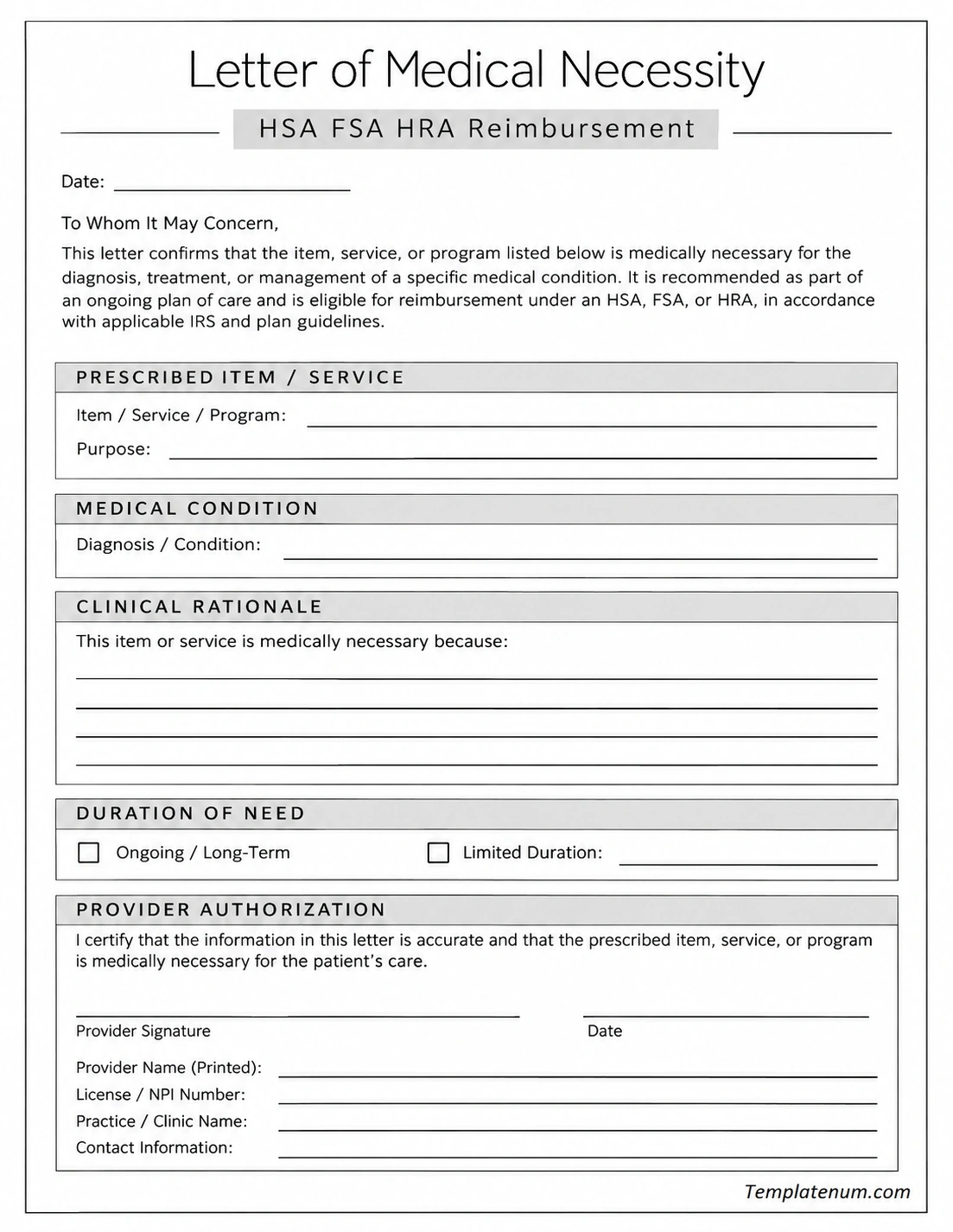
1. HSA, FSA, and HRA Reimbursement
Health Savings Accounts, Flexible Spending Accounts, and Health Reimbursement Arrangements can cover certain eligible medical expenses. However, some products and services have both medical and general wellness purposes.
A medical necessity letter can help explain why a dual-purpose expense is being used to treat a diagnosed medical condition rather than for general health or recreational purposes.
Examples may include:
- Gym memberships prescribed as part of a treatment plan for a specific medical condition.
- Specialized fitness equipment recommended for rehabilitation.
- Therapeutic massage used to address a documented medical problem.
- Individualized nutritional programs prescribed to manage a medical condition.
- Other health-related services that require additional documentation of medical necessity.
However, having an LMN does not automatically make every expense eligible for reimbursement. Patients should confirm the applicable tax rules and administrator requirements before purchasing an item or submitting a claim.
2. Insurance Coverage and Appeals
Insurance companies may request a medical necessity letter before approving certain treatments, specialized equipment, medications, or healthcare services.
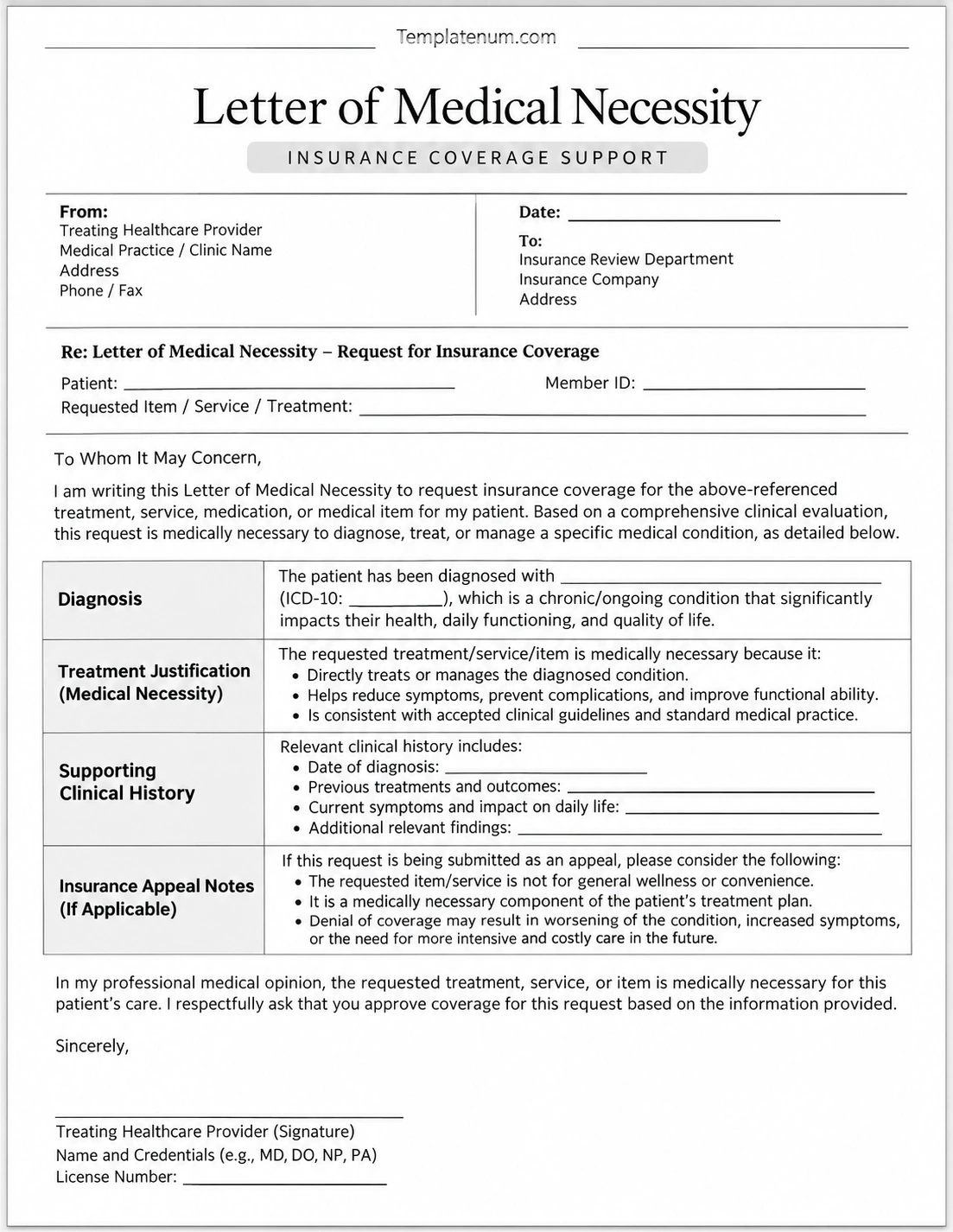
A provider may also prepare an LMN when a patient appeals a denied insurance claim. In this situation, the letter should explain the diagnosis, previous treatments, clinical findings, and reasons the requested service is appropriate.
Depending on the insurance policy, supporting documentation may include medical records, diagnostic results, treatment history, or relevant clinical notes.
3. Workplace and Benefit Accommodations
Some workplace benefit programs and accommodation processes require medical documentation to establish a connection between an employee’s health condition and a requested adjustment.
A healthcare provider may explain why a particular medical device, treatment arrangement, or other accommodation is necessary. The information requested and the appropriate documentation, depend on the applicable workplace policy and legal requirements.
What Should a Letter of Medical Necessity Include?
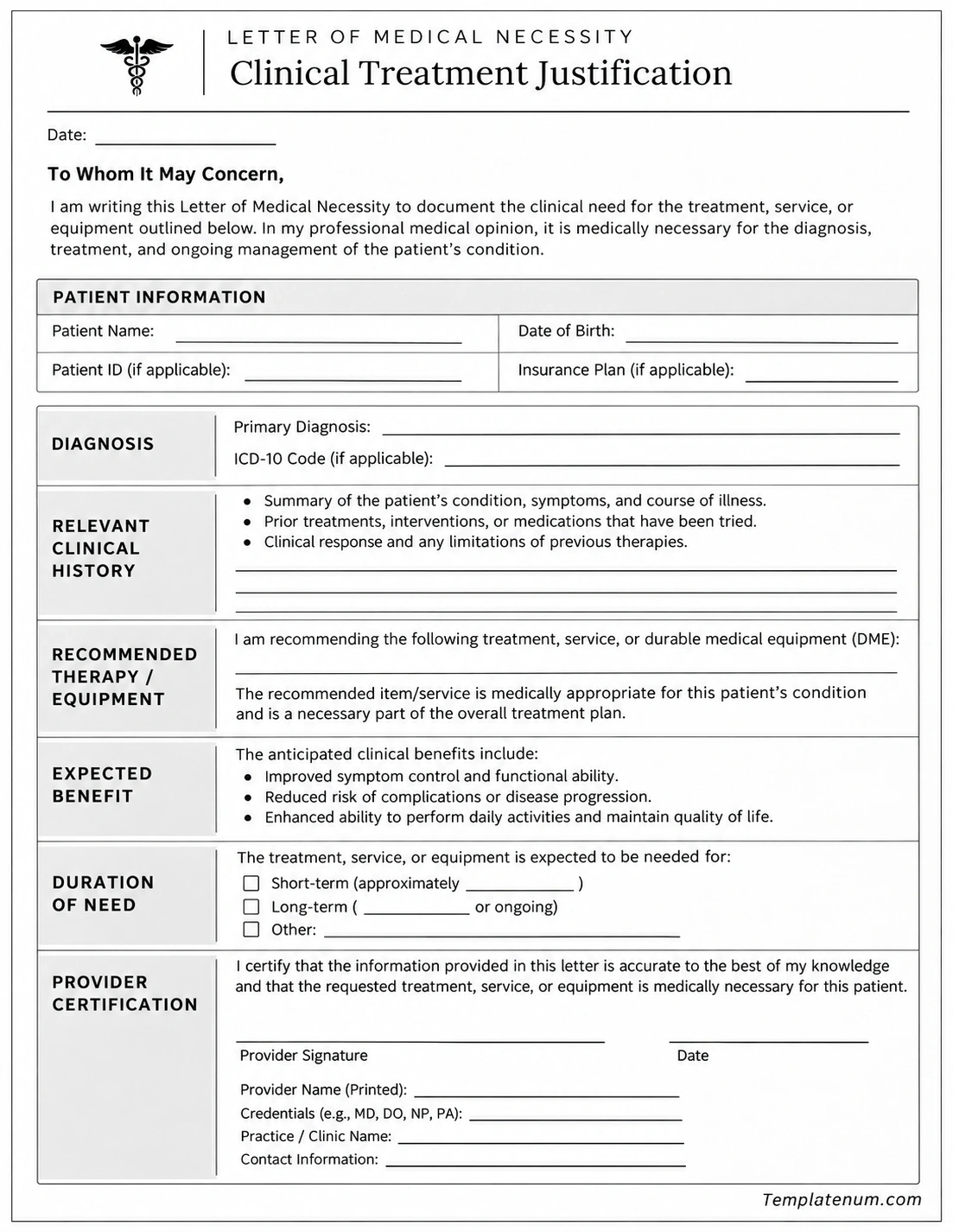
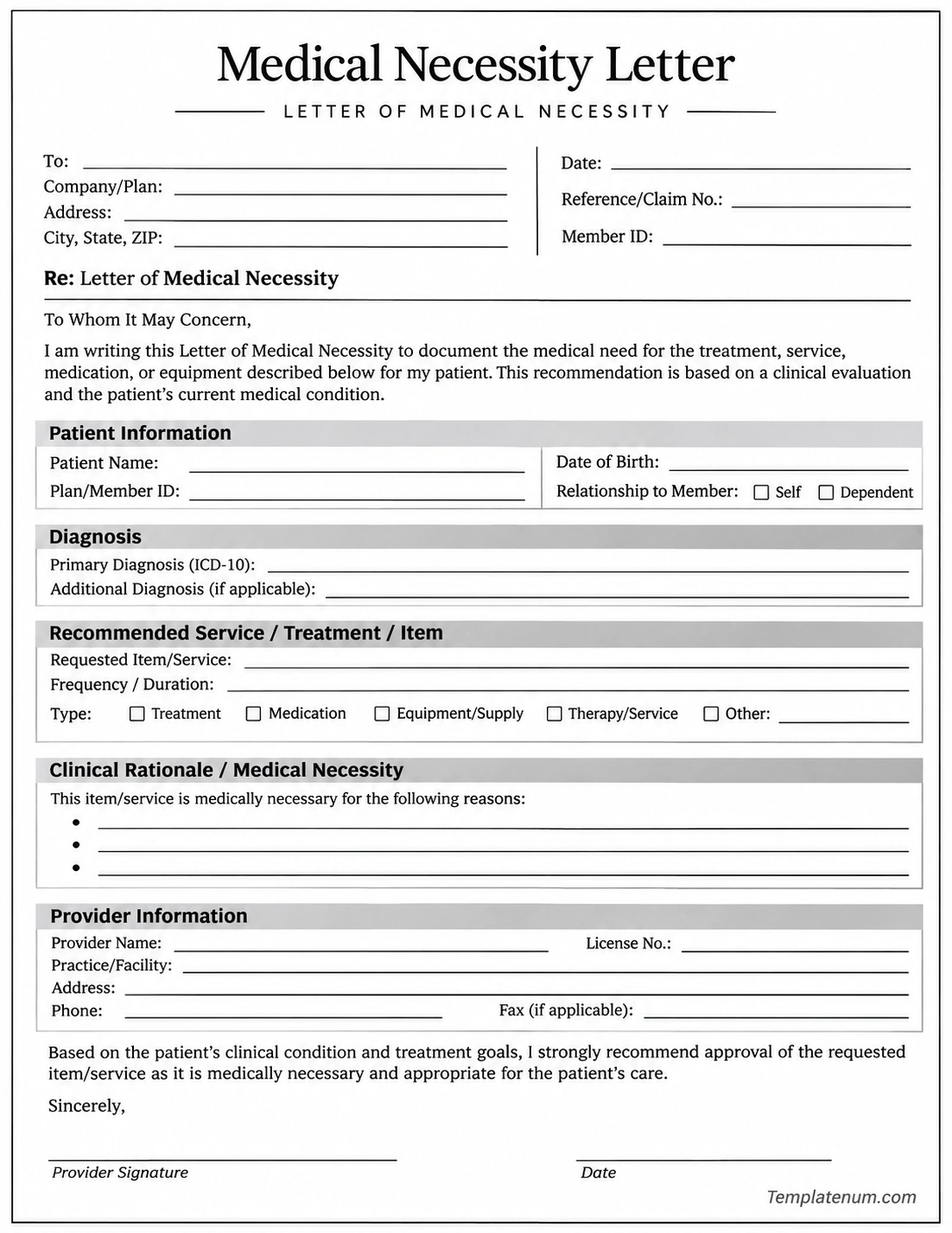
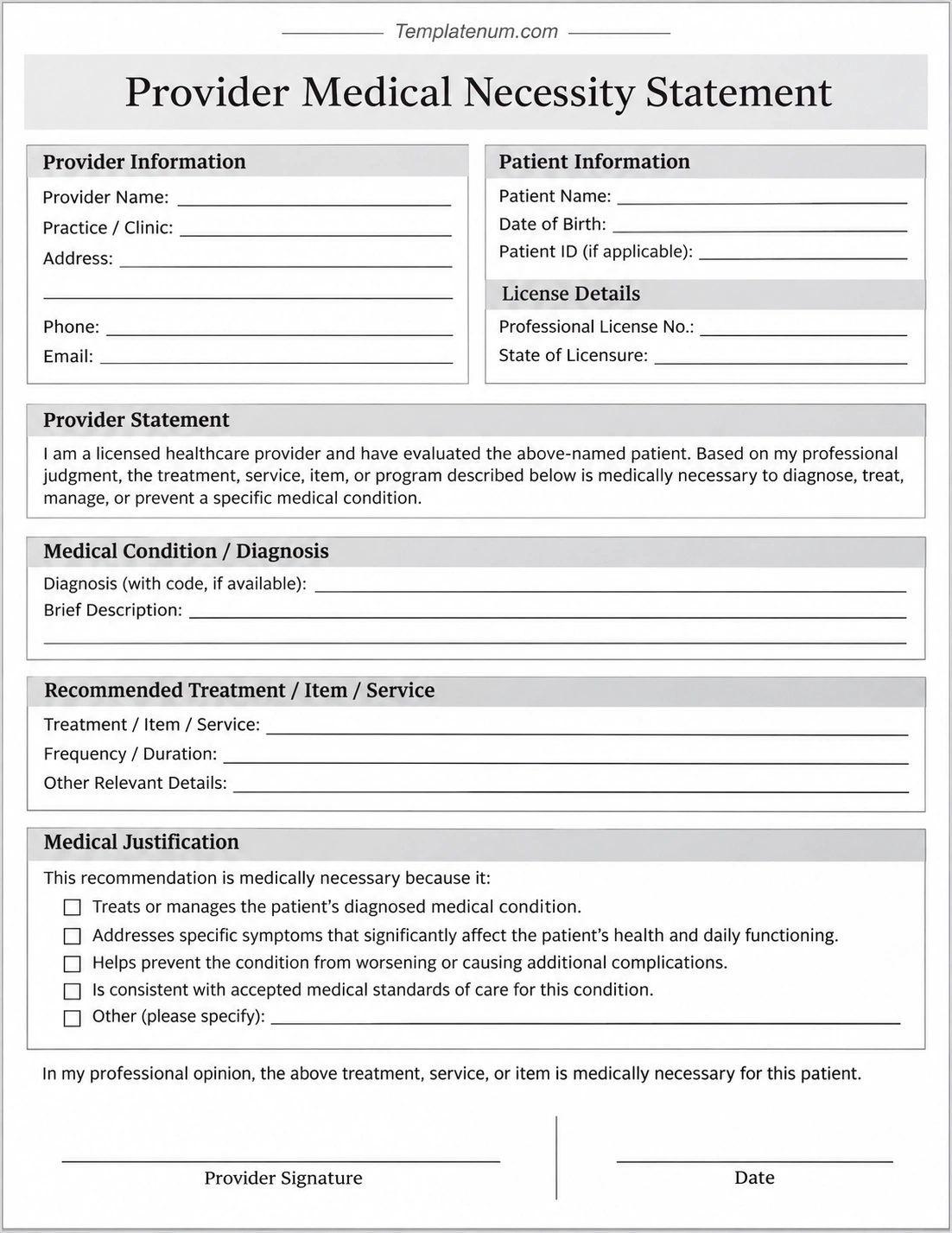
A professional Letter of Medical Necessity should be clear, specific, and supported by relevant clinical information. Although the exact format may vary, most letters contain several essential sections.
1. Patient Information
The letter should identify the patient receiving the recommended treatment or service. Common details include:
- Patient’s full legal name.
- Date of birth.
- Patient identification or insurance member number, when required.
- Relevant policy or account information.
2. Medical Diagnosis
The healthcare provider should identify the medical condition that makes the requested treatment necessary. The diagnosis should be specific and consistent with the patient’s medical records.
When appropriate, the provider may include an ICD-10 diagnosis code and a brief description of the patient’s symptoms, medical history, or functional limitations.
3. Recommended Treatment, Product, or Service
This section identifies exactly what the provider is recommending. Avoid vague descriptions such as medical equipment or therapeutic services when a more specific explanation is available.
For example, the provider might identify a particular type of mobility device, physical therapy program, prescribed exercise equipment, or specialized treatment service.
4. Clinical Justification
The clinical rationale is one of the most important parts of a medical necessity letter. It explains why the recommended item or service is needed and how it addresses the patient’s diagnosed condition.
A strong explanation may describe:
- How the patient’s medical condition affects daily activities or physical functioning.
- Why the recommended treatment is appropriate for the diagnosis.
- How the treatment may improve symptoms or prevent complications.
- Why alternative treatments may be unsuitable or insufficient.
- How the recommendation supports the patient’s overall treatment plan.
5. Duration of Medical Necessity
The letter should explain how long the treatment, product, or service is expected to be necessary. Depending on the circumstances, the provider may recommend a specific period, ongoing treatment, or periodic reassessment.
Some benefit administrators require an expiration date or updated documentation. A one-year validity period is sometimes used, but it is not a universal rule.
6. Healthcare Provider Credentials and Signature
The letter should identify the professional responsible for the medical recommendation. Include the provider’s:
- Full name and professional title.
- Medical specialty, when relevant.
- Practice or facility name.
- Professional license number or NPI, when applicable.
- Contact information.
- Signature and date.
The provider should be appropriately licensed or otherwise qualified under the applicable program’s requirements.
How to Write a Letter of Medical Necessity
Writing a medical necessity letter requires accurate patient information and a clear clinical explanation. Although healthcare providers generally prepare and sign the document, patients can help by organizing the information needed for the letter.
Follow these steps to prepare a professional LMN.
Step 1: Identify the Purpose of the Letter
Determine why the document is needed. Is it for HSA or FSA reimbursement, insurance approval, an insurance appeal, or a workplace benefit request?
Identifying the purpose helps the healthcare provider address the correct requirements and include relevant information.
Step 2: Gather Relevant Medical Information
Collect the patient’s diagnosis, medical history, treatment records, and any other documentation that supports the request.
Providing accurate information helps the healthcare provider explain the patient’s clinical needs without relying on incomplete details.
Step 3: Describe the Requested Item or Service
Clearly identify the treatment, medication, equipment, or service being recommended. Include relevant specifications, frequency, or treatment details when necessary.
The description should make it easy for the reviewing organization to understand exactly what is being requested.
Step 4: Explain Why It Is Medically Necessary
The provider should connect the requested treatment directly to the patient’s medical condition. Explain how the recommendation addresses symptoms, supports recovery, improves functioning, or helps manage the condition.
Whenever possible, the explanation should reference relevant clinical findings and previous treatment outcomes.
Step 5: Include the Duration and Expected Benefits
State how long the treatment or service is expected to be needed. Explain the anticipated medical benefits and whether the treatment plan requires ongoing evaluation.
Step 6: Review and Sign the Letter
Before submission, check that the patient information, diagnosis, treatment recommendation, and provider credentials are accurate.
The healthcare provider should review and sign the completed letter. The patient can then submit it according to the instructions provided by the insurance company, employer, or benefits administrator.
Sample Letter of Medical Necessity
The following example demonstrates how a professional medical necessity letter can be written. It uses fictional patient and provider details for illustration. The clinical explanation should always be adjusted to reflect the actual patient’s condition and the healthcare provider’s professional judgment.
Sample Letter:
Dr. Emily Carter, MD
Riverdale Medical Clinic
245 Wellness Avenue
Riverdale, CA 90210
Phone: (555) 321-9876Date: November 26, 2026
To: HSA/FSA Benefits Administrator
Subject: Letter of Medical Necessity for Prescribed Exercise Program
Dear Benefits Administrator,
I am writing on behalf of my patient, Jordan Miller, to document the medical necessity of a structured exercise program as part of the patient’s treatment plan.
The patient has been evaluated and diagnosed with chronic lower back pain. This condition has affected the patient’s mobility, physical comfort, and ability to perform certain daily activities.
I recommend participation in a structured fitness program that includes appropriate strength training, mobility exercises, and supervised physical conditioning. The program is intended to support the patient’s treatment goals by improving core strength, physical function, and mobility.
This recommendation is based on the patient’s clinical condition and individual treatment needs. The prescribed program is intended to address the diagnosed medical condition rather than provide general health or recreational benefits.
The recommended treatment period is 12 months, subject to reassessment based on the patient’s progress and ongoing clinical needs.
Please consider this letter as supporting documentation for the requested benefit or reimbursement review. Additional medical documentation can be provided if required and authorized by the patient.
Sincerely,
Dr. Emily Carter, MD
Primary Care Physician
Medical License: MD-784351
Riverdale Medical Clinic
Phone: (555) 321-9876This sample is for educational purposes only. It does not establish medical eligibility, guarantee reimbursement, or replace an individualized letter prepared and signed by the patient’s healthcare provider.
Tips for Getting a Letter of Medical Necessity Approved
A well-written letter can make a medical or reimbursement request easier to evaluate. However, approval depends on the applicable policy, eligibility rules, and supporting evidence.
Consider these practical tips before submitting an LMN:
- Check the administrator’s requirements. Ask whether a specific medical necessity letter format or supporting document is required.
- Use a specific diagnosis. Avoid vague descriptions that do not clearly identify the patient’s medical condition.
- Explain the clinical connection. Show how the recommended treatment addresses the diagnosed condition.
- Include supporting documentation. Attach relevant medical records or treatment notes when requested.
- Verify provider credentials. Make sure the letter is prepared and signed by a professional who meets the applicable requirements.
- Check the validity period. Confirm whether the reviewing organization requires a recent letter or periodic renewal.
- Keep a copy. Retain the signed letter and supporting documents for future reference.
For insurance appeals, it may also be helpful to review the original denial notice and address the specific reasons given for rejecting the claim.
Common Mistakes to Avoid
Even when a letter contains the basic information, certain mistakes can make it difficult for an organization to evaluate the request.
- Using a generic explanation: The clinical justification should address the patient’s actual diagnosis and treatment needs.
- Leaving out important details: Missing patient information, treatment descriptions, or provider credentials may delay processing.
- Not explaining medical necessity: Simply stating that a product is recommended does not adequately explain why it is needed.
- Providing inconsistent information: The diagnosis and treatment recommendation should match the relevant medical records.
- Ignoring submission requirements: Some organizations require their own forms, additional records, or specific documentation.
- Assuming approval is guaranteed: A signed LMN supports a request but does not automatically guarantee insurance coverage or tax reimbursement eligibility.
Frequently Asked Questions About Letters of Medical Necessity
What is the purpose of a Letter of Medical Necessity?
The purpose of a Letter of Medical Necessity is to explain why a particular treatment, service, medication, or medical item is needed for a patient’s diagnosed condition. It provides clinical justification for insurance coverage, benefit reimbursement, or other healthcare-related requests.
Who can write a Letter of Medical Necessity?
A Letter of Medical Necessity is generally prepared by a licensed healthcare provider who is qualified to evaluate the patient’s condition and recommend the treatment. Depending on the program, this may include a physician, specialist, or another eligible healthcare professional.
Does a Letter of Medical Necessity guarantee insurance approval?
No. An LMN provides supporting clinical information, but the insurance company still evaluates the request according to its coverage policy, medical criteria, and other applicable requirements.
Can I write my own Letter of Medical Necessity?
You can prepare a draft or organize the information needed for the document. However, an official medical necessity letter generally needs to be reviewed and signed by an appropriately qualified healthcare provider. A personal statement alone may not satisfy the reviewing organization’s requirements.
How long is a Letter of Medical Necessity valid?
There is no universal validity period. Some benefit administrators accept letters for a specified period, such as 12 months, while others require updated documentation more frequently or when the patient’s medical condition changes. Always check the applicable program requirements.
Is a Letter of Medical Necessity required for FSA or HSA reimbursement?
Not for every eligible medical expense. However, certain dual-purpose products and services may require an LMN or additional documentation to demonstrate that they are being used to treat a specific medical condition.
What is the difference between a Letter of Medical Necessity and a Certificate of Medical Necessity?
Both documents provide information supporting the medical need for a treatment or item. However, a Certificate of Medical Necessity may refer to a specific standardized document used in certain insurance or medical billing processes. The exact terminology and requirements depend on the organization or program.
Can a Letter of Medical Necessity be used for gym memberships?
In certain circumstances, a healthcare provider may document why a gym membership or structured fitness program is recommended to treat a diagnosed medical condition. However, reimbursement eligibility depends on applicable tax rules and benefit plan requirements. General fitness memberships are not automatically eligible.
What should I do if my Letter of Medical Necessity is rejected?
First, review the rejection notice and identify the missing information or reason for denial. You may need to request a more detailed clinical explanation, provide additional medical records, obtain an updated provider signature, or follow the organization’s appeal procedure.
Conclusion
A Letter of Medical Necessity is an important document that explains why a particular treatment, service, medication, or product is clinically necessary for a patient’s medical condition. It helps insurance companies, benefits administrators, and other organizations understand the medical reasons behind a request.
A strong LMN should include accurate patient information, a specific diagnosis, a clearly identified treatment recommendation, detailed clinical justification, the expected duration of need, and the healthcare provider’s credentials and signature.
Whether you need documentation for HSA or FSA reimbursement, insurance coverage, an appeal, or a workplace benefit request, using a clear and professional sample letter can make the preparation process easier. Always have the final document reviewed by an appropriately qualified healthcare provider and confirm the submission requirements with the organization receiving it.
Letter of Medical Necessity Template – Download
