A new school year is an exciting opportunity to build meaningful relationships with students and their families. One of the best ways to start on a positive note is by sending a letter of introduction for teacher to parents, guardians, and students. This simple message helps families become familiar with their child’s teacher before the classroom routine begins.
A well-written teacher introduction letter does more than share a name and contact information. It introduces your personality, explains your teaching philosophy, communicates classroom goals, and encourages parents to become active partners in their child’s education. It also helps ease first-day concerns by showing families that their child’s learning and well-being are important to you.
Whether you are an elementary school teacher, middle school educator, high school instructor, or a first-year teacher, a thoughtful introduction letter can establish trust and set clear expectations for the months ahead. In this guide, you will find helpful writing tips, essential information to include, and practical examples you can adapt to your classroom.
What Is a Letter of Introduction for Teacher?
A letter of introduction for teacher is a welcoming message sent to students and their families at the beginning of a school year or before a new class begins. It allows teachers to introduce themselves, share relevant professional and personal information, and explain what families can expect throughout the academic year.
Teachers commonly send this letter through email, school communication platforms, printed classroom packets, or welcome folders. Some educators also share it during back-to-school events or parent orientation meetings.
The main purpose is to create an open and friendly relationship between home and school. When parents understand their child’s teacher, classroom expectations, and communication methods, they may feel more comfortable asking questions and participating in school activities.
Why Is a Teacher Introduction Letter Important?
Building a positive relationship with families is an important part of effective teaching. A teacher introduction letter provides an early opportunity to establish that relationship and communicate a shared commitment to student success.
1. Builds Trust with Parents and Guardians
Parents want to know who will guide their children throughout the school year. Introducing yourself, sharing your teaching experience, and explaining your approach helps families feel more confident and comfortable.
2. Creates a Welcoming Classroom Environment
A friendly introduction makes students and families feel recognized and valued. It communicates that the classroom will be a place where students can ask questions, explore new ideas, and learn from mistakes.
3. Encourages Parent Involvement
Children benefit when teachers and families work together. An introduction letter invites parents to participate in their child’s education, share important information, and support classroom activities whenever possible.
4. Establishes Communication Expectations
Providing your preferred contact information and communication hours helps parents understand how to reach you. It also creates clear expectations about response times, classroom updates, and important announcements.
What to Include in a Letter of Introduction for Teacher
A strong teacher introduction letter should be warm, informative, and easy to read. You do not need to share every detail about yourself. Focus on information that helps families understand your personality, teaching approach, and expectations.
1. A Warm Greeting
Begin with a friendly greeting addressed to students, parents, or families. A welcoming opening immediately creates a positive impression.
Examples include:
- Dear Students and Families,
- Dear Parents and Guardians,
- Hello, Families!
- Welcome to Our Classroom!
2. Your Name and Professional Background
Introduce yourself by sharing your full name, grade level, subject, and relevant teaching experience. You may also mention your educational background or professional interests if they help families understand your qualifications.
For example, explain how long you have been teaching or what inspired you to become an educator.
3. A Little About Your Personality
Families appreciate learning about the person behind the classroom. Share a few appropriate personal details, such as your interests, favorite books, hobbies, or enthusiasm for a particular subject.
Keep this section brief and relevant. The goal is to make your introduction feel genuine and approachable.
4. Your Teaching Philosophy
Explain what you believe makes an effective learning environment. You might emphasize creativity, curiosity, kindness, independence, collaboration, or individual student growth.
For example, you could explain that you believe every student learns differently and deserves encouragement, patience, and opportunities to succeed.
5. Classroom Goals and Expectations
Give parents an overview of your priorities for the school year. These may include academic development, positive behavior, classroom participation, problem-solving, and social-emotional growth.
You can also mention expectations for attendance, homework, classroom respect, and student responsibility when relevant.
6. Communication and Contact Information
Make it easy for parents and guardians to contact you. Include the communication methods approved by your school.
- School email address
- Classroom communication platform
- School phone number or extension
- Class website or online learning portal
- Preferred communication hours
If you have specific response-time expectations, explain them politely so families know when to expect a reply.
7. A Positive Closing Message
End your letter by expressing enthusiasm for the upcoming school year. Thank families for their support and let them know that you look forward to working together.
A sincere closing helps reinforce the message that education is a shared effort between teachers, students, and families.
Sample Letter of Introduction for Teacher to Parents
The following example is a friendly and professional introduction letter that elementary, middle school, and high school teachers can adapt. Replace the sample details with your own information before sending it to families.
Subject: Welcome to a New School Year!
Dear Parents and Guardians,
My name is Sarah Johnson, and I am excited to introduce myself as your child’s teacher for the upcoming school year. I am looking forward to meeting each student and creating a welcoming classroom where everyone feels supported, respected, and encouraged to learn.
I have always been passionate about education and helping children discover their strengths. My teaching philosophy focuses on creating meaningful learning experiences, encouraging curiosity, and helping students develop confidence and independence.
This year, my goals are to build a positive classroom community, support each student’s academic progress, and encourage kindness, responsibility, and teamwork. I believe that every child has unique abilities, and I am committed to providing opportunities for all students to grow at their own pace.
I also believe that communication between teachers and families plays an important role in student success. I encourage you to reach out whenever you have questions, concerns, or information that may help me better support your child. You can contact me through my school email at teacher@school.edu or through our classroom communication platform.
Thank you for trusting me to be part of your child’s educational journey. I look forward to building a strong partnership with your family and making this school year a positive and memorable experience.
Warm regards,
Sarah Johnson
Grade 4 Teacher
teacher@school.edu
Note: Sarah Johnson and the contact details above are fictional examples. Replace them with your actual information.
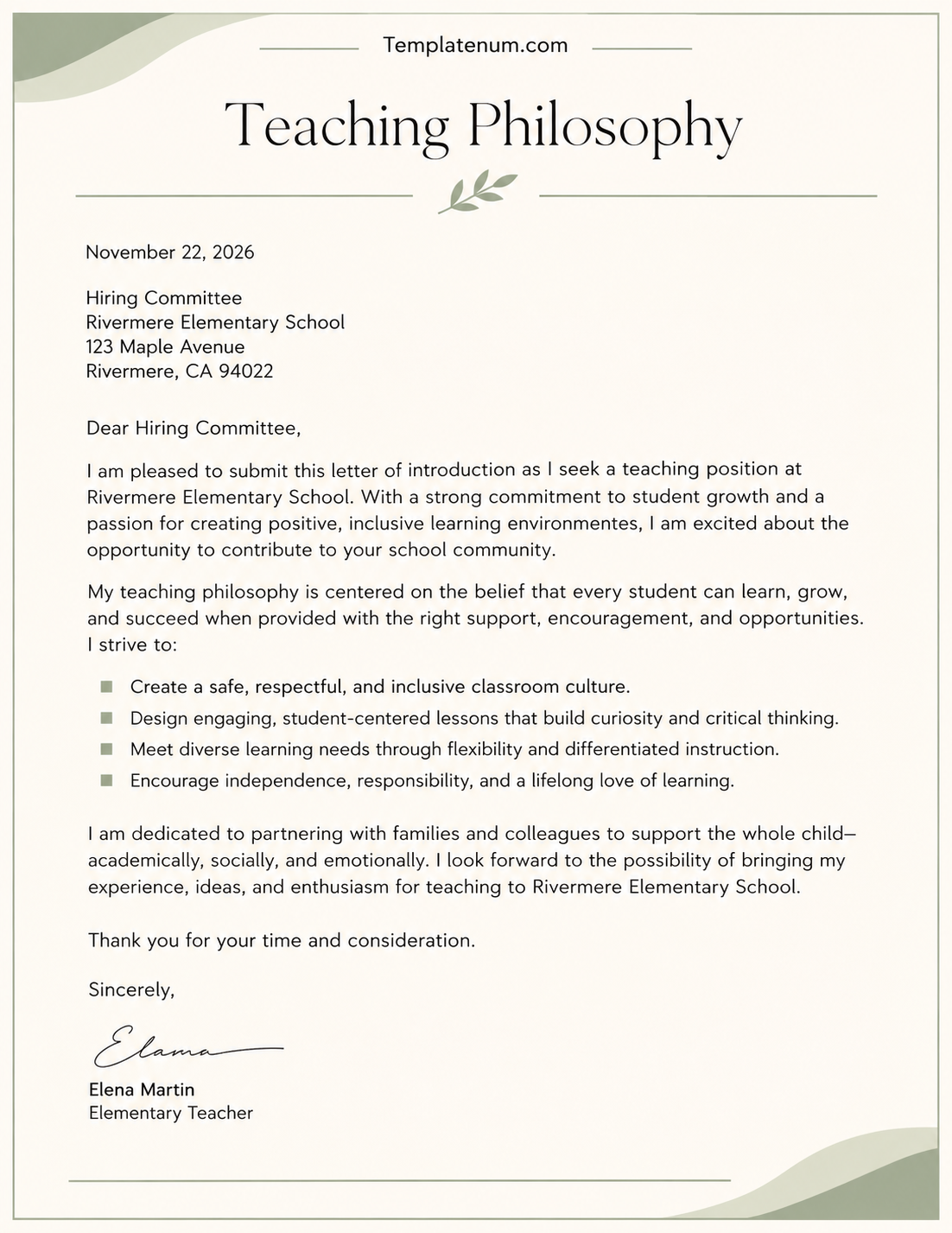
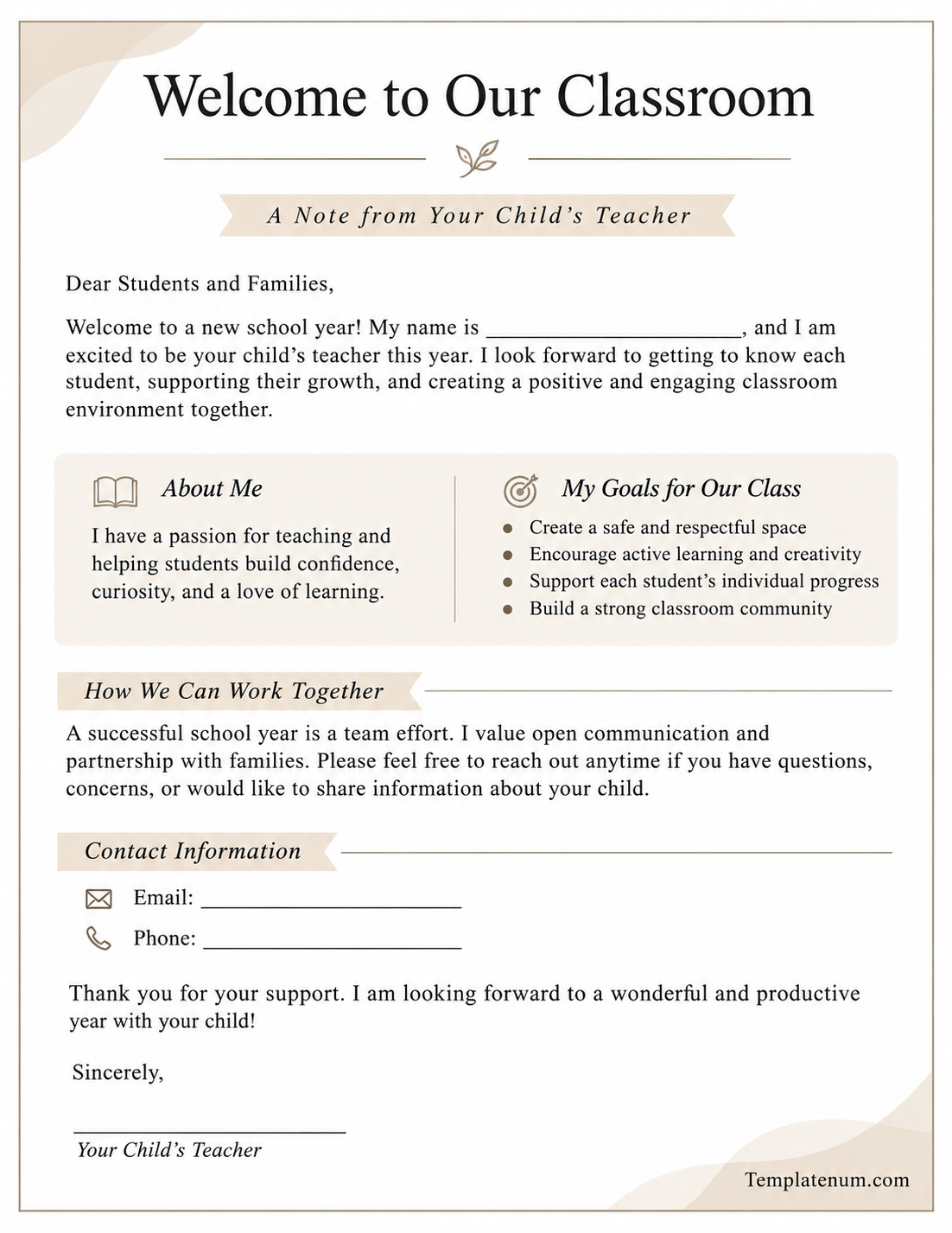
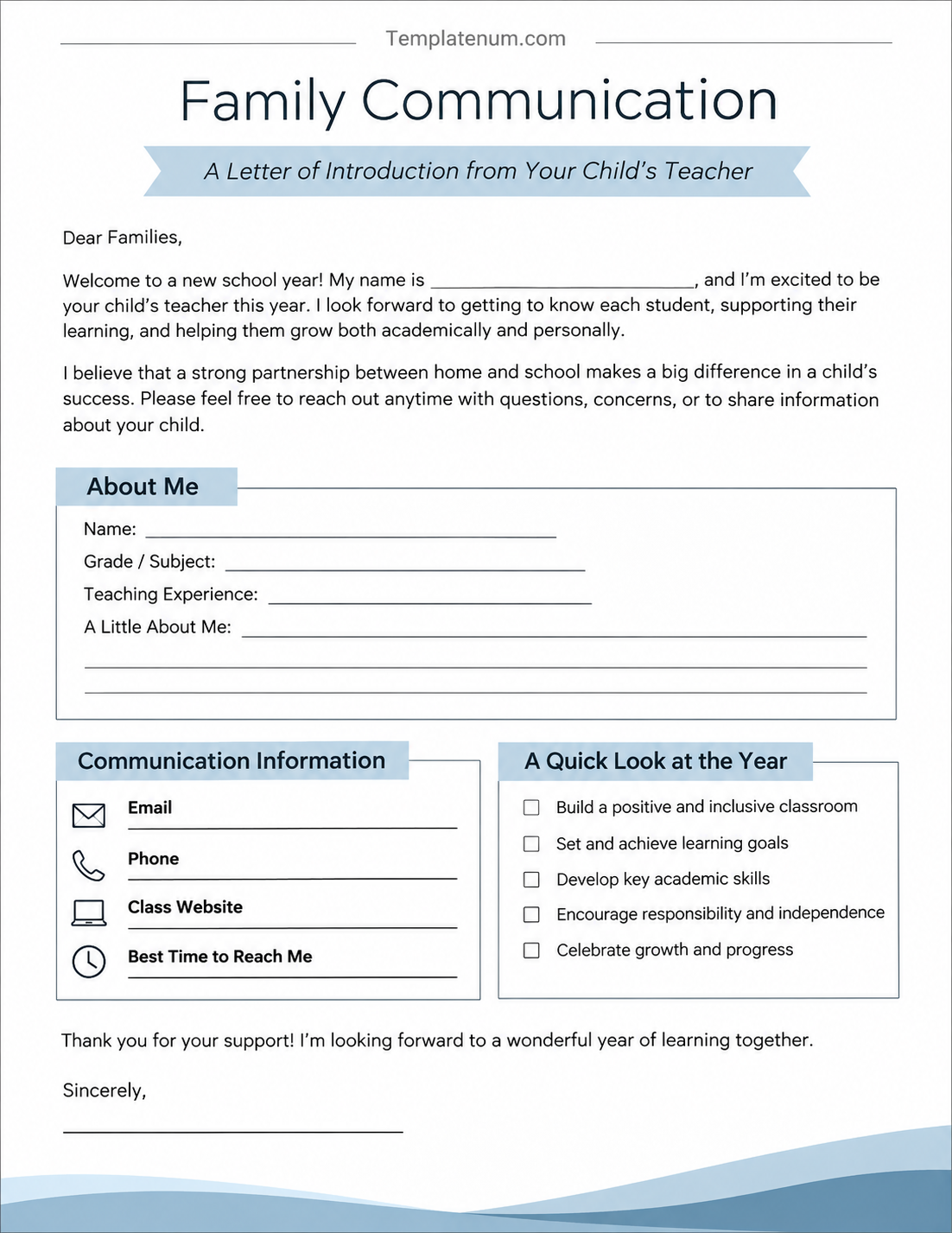
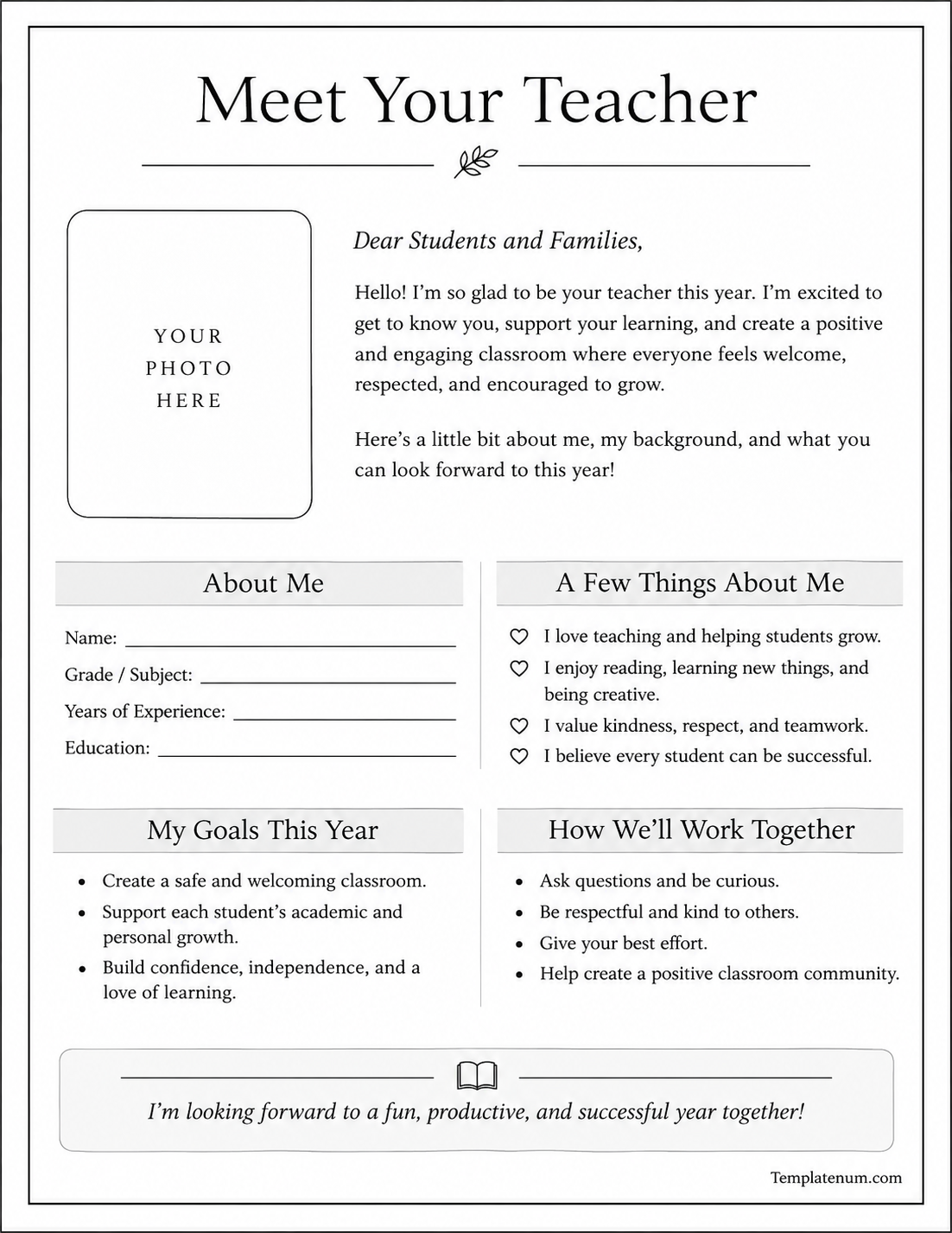
Letter of Introduction for Teacher Examples and Design Ideas
The format of your introduction letter can vary depending on your teaching style, grade level, and school communication preferences. Below are several presentation ideas to help you create a professional and welcoming message.
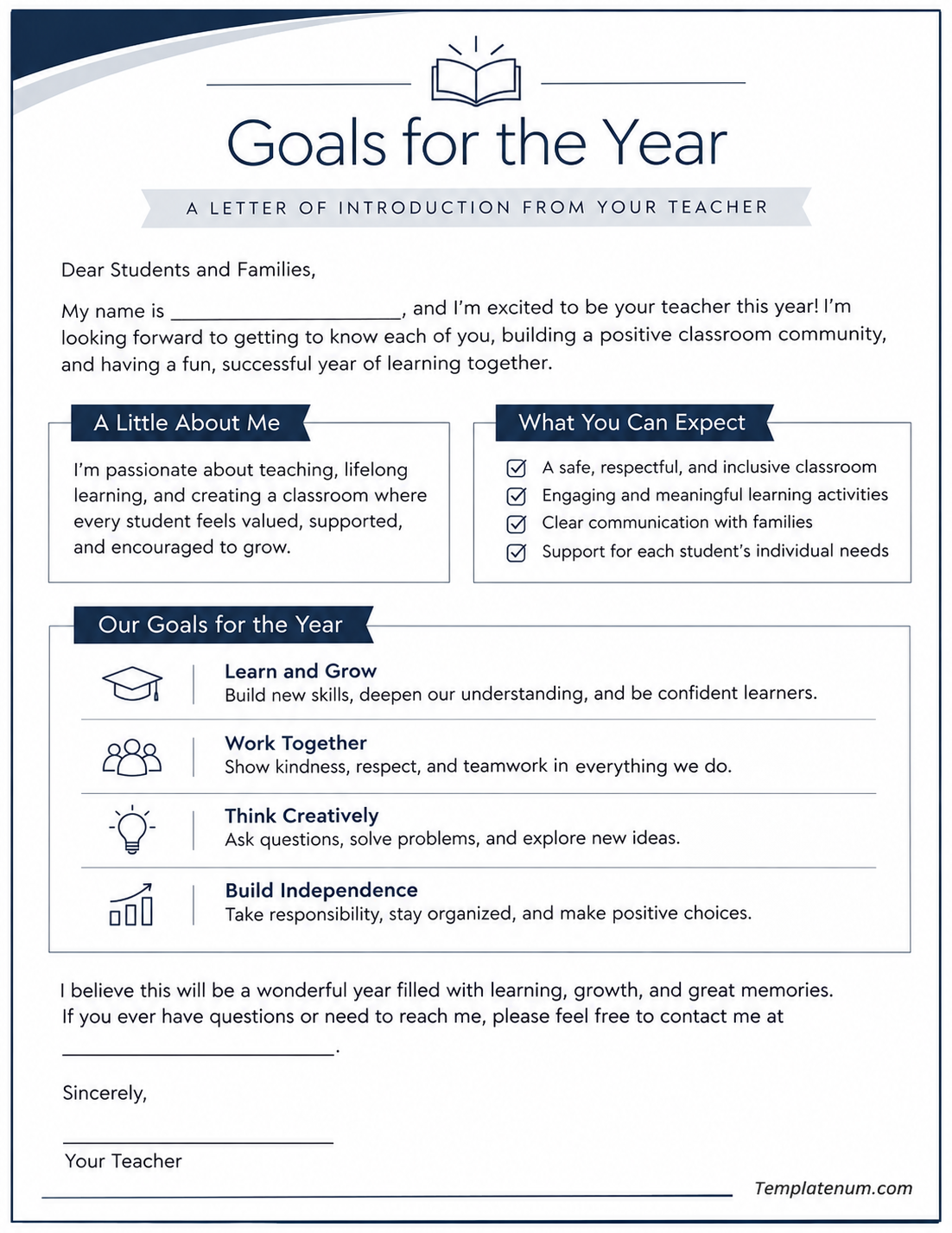
How to Write an Effective Teacher Introduction Letter
Once you know what information to include, focus on presenting it in a way that feels personal and professional. These practical tips can help you create a message that families will appreciate reading.
Keep Your Writing Friendly and Professional
Use natural language that reflects your personality while maintaining a respectful tone. Avoid overly formal expressions or complicated educational terminology. Parents should be able to understand your message easily.
Make the Letter Easy to Scan
Organize your content into short paragraphs and use headings or bullet points when appropriate. A clear layout helps busy parents quickly find important information, especially contact details and classroom expectations.
Focus on Students and Families
Although the letter introduces you, its primary purpose is to build a connection with families. Explain how you will support student learning, encourage development, and maintain communication throughout the year.
Set Realistic Communication Expectations
Be specific about how families can contact you and when you are generally available. Avoid promising immediate responses if your schedule does not allow it. Clear expectations help prevent misunderstandings later.
Personalize Your Message
Avoid sending a letter that feels generic or copied. Add a few details about your personality, classroom interests, and teaching priorities. A personal touch makes the introduction more memorable.
Proofread Before Sending
Check spelling, grammar, names, contact details, and school information. Make sure the letter follows your school’s communication policies and does not include private information that should not be shared.
When Should Teachers Send an Introduction Letter?
The best time to send a teacher introduction letter is usually before the first day of school. Sending it early gives families enough time to read the message, understand classroom expectations, and prepare any questions they may have.
Here are several suitable occasions:
- Before the school year begins: Introduce yourself and welcome families before students arrive.
- During back-to-school night: Share your letter with parents attending school orientation.
- When starting a new class: Help students and families become familiar with their new teacher.
- After a teacher assignment change: Introduce yourself when taking over an existing classroom.
- At the beginning of a new semester: Reintroduce yourself and explain updated classroom expectations when appropriate.
Common Mistakes to Avoid
Even a short introduction letter can become less effective if it includes unnecessary information or unclear expectations. Keep these common mistakes in mind:
- Writing too much about yourself: Include relevant background information without turning the letter into a personal biography.
- Using overly formal language: Choose a friendly tone that helps parents feel comfortable communicating with you.
- Forgetting contact information: Always explain how families can reach you through approved school channels.
- Making unrealistic promises: Set achievable expectations about communication and classroom support.
- Leaving out classroom goals: Give families an idea of what you hope students will accomplish during the year.
- Sending the same generic message to everyone: Personalize the introduction to reflect your grade level, subject, and teaching approach.
Frequently Asked Questions
What should a teacher include in an introduction letter to parents?
A teacher introduction letter should include your name, grade level or subject, professional background, teaching philosophy, classroom goals, communication methods, and a welcoming closing message. You can also share a few appropriate personal interests to help parents get to know you.
How do you start a letter of introduction for teacher?
Start with a warm greeting such as “Dear Parents and Guardians” or “Dear Students and Families.” Then introduce yourself, mention the class or grade you will teach, and express your excitement about the upcoming school year.
How long should a teacher introduction letter be?
A teacher introduction letter is generally most effective when it is about one page long. Keep the message concise while including the information families need to understand your teaching approach and contact you.
Should a teacher introduction letter be formal or informal?
A friendly and professional tone is usually the best choice. Your letter should sound approachable and welcoming while remaining respectful and appropriate for a school environment.
Can a first-year teacher write an introduction letter to parents?
Absolutely. First-year teachers can introduce themselves by highlighting their educational background, enthusiasm for teaching, classroom values, and commitment to student success. You do not need years of experience to create a meaningful introduction.
When should teachers send welcome letters to parents?
Teachers should ideally send welcome letters one or two weeks before the school year begins, if the school’s schedule and policies allow it. This gives families time to become familiar with the teacher and prepare for the first day.
Should teachers include personal information in their introduction letters?
Yes, sharing a few appropriate personal details can make your letter feel more genuine. Consider mentioning hobbies, favorite books, or interests related to education. However, avoid sharing private information that is not relevant to your professional role.
What is the difference between a teacher introduction letter and a welcome letter?
A teacher introduction letter focuses on introducing the educator, their background, teaching philosophy, and classroom expectations. A welcome letter focuses more broadly on greeting students and families and preparing them for the school year. In practice, both purposes can be combined into one message.
Conclusion
A thoughtful letter of introduction for teacher is a simple but valuable way to establish a positive relationship with students and their families. By sharing your background, personality, teaching philosophy, classroom goals, and contact information, you help parents understand what to expect and how they can support their child’s education.
Remember to keep your message warm, clear, and professional. Focus on building trust rather than simply providing information. Most importantly, let your enthusiasm for teaching and commitment to student success shine through your words.
A welcoming introduction is a great first step toward creating a supportive classroom community and making the new school year a successful experience for everyone.
Download: Letter of Introduction for Teacher
