A job profile is an essential document that describes a specific role within an organization. It outlines the main responsibilities, required skills, qualifications, and expectations associated with a position. Whether you are an employer creating a new vacancy or a job seeker exploring career opportunities, understanding a job profile can make the recruitment process more effective.
For employers, a well-written job profile helps attract qualified candidates by clearly communicating what a position involves. It also provides a useful reference for recruitment, employee performance management, workforce planning, and organizational development. For job seekers, it offers valuable insight into whether their experience and abilities match the requirements of a particular role.
In this guide, you will learn what a job profile is, what information it should include, how to create one, and how to use it effectively. You will also find a practical example to help you understand the structure of a professional job profile.
What Is a Job Profile?
A job profile is a document that provides an overview of a particular position within an organization. It describes the purpose of the role, its primary duties, necessary qualifications, required competencies, and expected working conditions.
Unlike a simple job title, a job profile explains what an employee is expected to accomplish and what capabilities are needed to perform the role successfully. It helps employers communicate their expectations while giving potential candidates a clearer understanding of the opportunity.
For example, a Marketing Specialist job profile may include responsibilities such as developing marketing campaigns, conducting market research, managing social media content, and analyzing campaign performance. It may also specify requirements such as communication skills, digital marketing knowledge, and relevant work experience.
Job profiles can be created for almost any position, including administrative assistants, sales representatives, accountants, project managers, human resource specialists, and department supervisors.
Why Is a Job Profile Important?
A clearly defined job profile benefits both employers and employees. It establishes a shared understanding of what a position involves and helps organizations manage their workforce more effectively.
1. Improves Recruitment and Candidate Selection
A detailed job profile helps employers attract applicants whose qualifications and experience match the position. By explaining the responsibilities and requirements clearly, recruiters can reduce unsuitable applications and focus on candidates with relevant capabilities.
2. Clarifies Job Responsibilities
Employees need to understand their duties and the results expected from them. A job profile provides a reference for daily responsibilities, reporting relationships, and performance expectations. This reduces confusion and helps employees stay focused on their priorities.
3. Supports Performance Management
Managers can use a job profile as a reference when evaluating employee performance. The responsibilities and competencies listed in the document help establish expectations and identify areas where additional training or development may be needed.
4. Helps With Workforce Planning
Organizations can use job profiles to identify the skills and positions required to achieve their business objectives. This information supports recruitment planning, organizational restructuring, succession planning, and talent development.
5. Maintains Role Consistency
When an employee leaves or changes positions, an established job profile helps the organization maintain continuity. It provides a reference for transferring responsibilities and preparing the next employee to take over the role.
What Should a Job Profile Include?
A professional job profile should contain enough information to explain the position without overwhelming readers with unnecessary details. Although the exact format may vary between organizations, most job profiles include the following sections.
1. Job Title
Start with the official title of the position. Use a clear and recognizable title that accurately represents the role, such as Marketing Specialist, Operations Manager, or Administrative Assistant.
2. Department and Reporting Structure
Identify the department where the position belongs and specify the person or position the employee reports to. This helps candidates understand the role’s place within the organization.
3. Job Summary
Provide a short overview explaining why the position exists and its main purpose. The summary should communicate the role’s primary contribution to the organization in a few sentences.
4. Key Responsibilities and Duties
List the most important tasks and responsibilities associated with the position. Use specific action verbs to make expectations easier to understand.
Common examples include:
- Developing and implementing departmental strategies.
- Preparing reports and maintaining accurate records.
- Coordinating projects and communicating with relevant teams.
- Monitoring progress and identifying opportunities for improvement.
- Supporting daily operational activities and business objectives.
5. Required Skills and Competencies
Describe the technical and interpersonal abilities needed to perform the job effectively. Depending on the position, these may include communication, problem-solving, leadership, analytical thinking, teamwork, or software proficiency.
6. Education and Qualifications
Specify the educational background, professional certifications, licenses, or other qualifications required for the position. Distinguish between essential requirements and preferred qualifications whenever possible.
7. Work Experience
Include the relevant experience expected from applicants. For example, a position may require two years of experience in sales, accounting, customer service, or project management. If the organization accepts entry-level candidates, mention that clearly.
8. Working Conditions
Explain important details about the work environment, employment type, location, working schedule, and travel requirements. This information helps candidates understand the practical conditions associated with the position.
Job Profile Example
A job profile is easier to understand when you can see how its sections work together. The following example demonstrates a professional layout for a Marketing Specialist position.
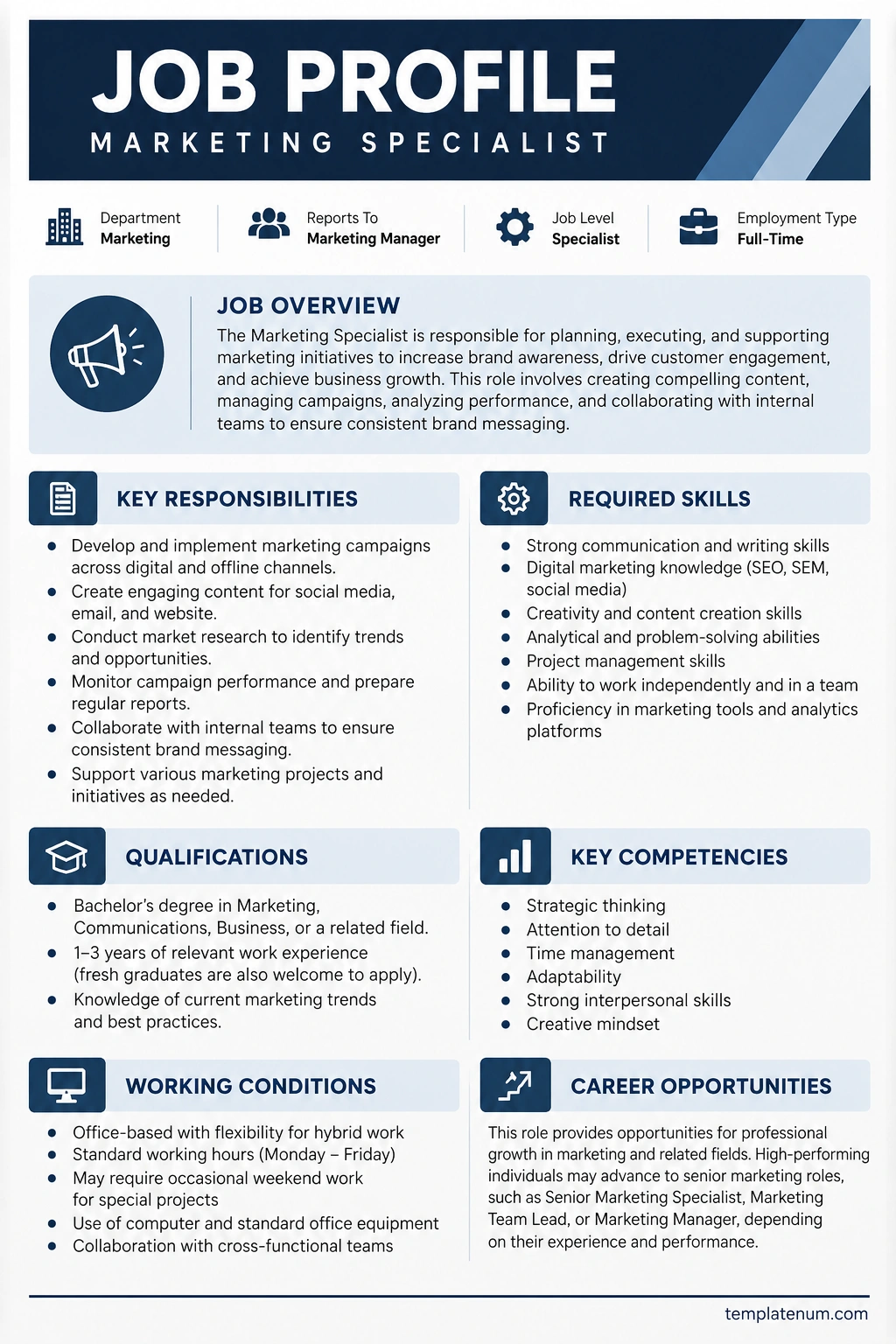
This example organizes important position details into clearly defined sections. Employers can use a similar structure when preparing job profiles for different departments and job levels.
Job Profile vs. Job Description: What Is the Difference?
Job profile and job description are closely related terms, but they do not always serve exactly the same purpose. Understanding the distinction helps employers choose the right document for their recruitment and workforce management needs.
Job Profile
A job profile provides a broader overview of a position. It commonly includes the job purpose, responsibilities, qualifications, required competencies, reporting structure, and working conditions. It helps organizations define the overall requirements and expectations of a role.
Job Description
A job description generally focuses on the specific duties, tasks, and responsibilities associated with a position. It explains what an employee does and the work they are expected to complete.
In practice, many organizations combine both documents into a single recruitment or HR document. The terminology and level of detail can also vary between companies.
How to Write an Effective Job Profile
Creating a useful job profile requires a clear understanding of the position and the organization’s expectations. Follow these steps to develop a document that supports recruitment and employee management.
1. Identify the Purpose of the Position
Start by determining why the position is needed. Consider the department’s objectives, the responsibilities that must be covered, and how the role contributes to organizational success.
2. Define the Main Responsibilities
Identify the essential duties that the employee will perform. Focus on the most important responsibilities rather than listing every minor task. Organize them in order of importance to make the document easier to read.
3. Determine Required Qualifications
Establish the education, experience, certifications, and technical knowledge needed for the position. Keep requirements realistic and directly related to the actual responsibilities of the job.
4. Identify Essential Skills and Competencies
Include both technical skills and personal competencies. Consider the communication, teamwork, leadership, decision-making, and problem-solving abilities necessary for successful performance.
5. Establish Reporting Relationships
Specify the employee’s supervisor, department, and important working relationships. This helps candidates understand the organizational structure and where the position fits.
6. Use Clear and Inclusive Language
Write in straightforward language that both employers and job seekers can understand. Avoid unnecessary jargon, vague requirements, and wording that could discourage qualified applicants without a legitimate job-related reason.
7. Review and Update the Document
Before finalizing the job profile, review the information with the relevant department manager or HR team. Update it whenever responsibilities, reporting structures, or qualification requirements change.
Common Mistakes to Avoid When Creating a Job Profile
Even a well-intentioned job profile can become ineffective if important information is missing or poorly presented. Avoid these common mistakes:
- Unclear responsibilities: Avoid vague statements that do not explain what the employee is expected to do.
- Unrealistic qualifications: Do not include unnecessary education or experience requirements that are unrelated to the position.
- Too much information: Focus on essential duties and requirements instead of including every minor workplace activity.
- Missing reporting details: Explain the position’s place within the organizational structure.
- Outdated information: Review the document regularly to reflect changes in business needs and job responsibilities.
- Confusing language: Use clear headings, concise descriptions, and consistent formatting throughout the document.
When Should a Job Profile Be Updated?
A job profile should not remain unchanged indefinitely. As organizations grow, introduce new technology, or adjust their business strategies, the responsibilities and requirements of individual positions may also change.
Consider reviewing a job profile when:
- A new position is created within the organization.
- An employee receives additional responsibilities or a promotion.
- Department structures or reporting relationships change.
- New software, technology, or working procedures are introduced.
- Performance reviews reveal gaps between actual duties and documented expectations.
- The organization begins a recruitment process for an existing position.
Regular reviews help ensure that job profiles remain accurate, relevant, and useful for both current employees and prospective candidates.
Frequently Asked Questions About Job Profiles
What is the main purpose of a job profile?
The main purpose of a job profile is to explain the responsibilities, qualifications, skills, and expectations associated with a specific position. It supports recruitment, employee management, performance evaluation, and workforce planning.
What are the main components of a job profile?
A typical job profile includes the job title, department, reporting structure, job summary, key responsibilities, required skills, educational qualifications, work experience, and working conditions.
Who creates a job profile?
Job profiles are usually prepared by HR professionals in collaboration with department managers or supervisors. These individuals understand the organization’s staffing needs and the practical responsibilities of each position.
Is a job profile the same as a job description?
Not necessarily. A job profile generally provides a broader overview of a position, including its purpose, competencies, qualifications, and responsibilities. A job description typically focuses more directly on the duties and tasks an employee performs. However, organizations may use these terms differently.
How long should a job profile be?
There is no fixed length for a job profile. Most positions can be described in one to three pages, depending on the complexity of the role and the level of detail required. The document should be comprehensive without becoming unnecessarily lengthy.
Why is a job profile important for job seekers?
A job profile helps candidates understand the responsibilities, skills, qualifications, and expectations of a position before applying. It allows them to evaluate whether their background and career goals are suitable for the opportunity.
How often should a job profile be reviewed?
Organizations should review job profiles periodically and whenever significant changes occur in responsibilities, qualifications, reporting structures, or business operations. An annual review can be a useful starting point.
Can a job profile be used for performance evaluation?
Yes. Managers can use a job profile as a reference when assessing whether employees are meeting their responsibilities and demonstrating the competencies expected for their positions. It can also help identify training and development needs.
Conclusion
A job profile is an important organizational document that defines the purpose, responsibilities, skills, and qualifications associated with a position. It provides employers with a structured foundation for recruitment, workforce planning, and performance management while helping job seekers understand what a role requires.
To create an effective job profile, focus on clear responsibilities, realistic qualifications, relevant competencies, and accurate working conditions. Review the document regularly to ensure that it reflects the organization’s current needs.
Whether you are hiring new employees or exploring your next career opportunity, a well-structured job profile makes it easier to understand expectations and find the right match between a position and a qualified candidate.
Download: Job Profile Template
