A Home Improvement Contract is a written agreement between a property owner and a contractor that describes the work to be completed, materials to be used, project timeline, payment terms, and other important conditions. Having these details in writing can help both parties understand their responsibilities before a home improvement project begins.
Whether the project involves remodeling a kitchen, renovating a bathroom, replacing flooring, painting rooms, repairing a roof, or making other improvements, a clear contract provides a structured record of what the homeowner and contractor have agreed to do.
A well-organized home improvement agreement does not need to be unnecessarily complicated. The most useful contracts clearly describe the project scope, identify the parties, establish expectations, and provide space for signatures. Because contractor and home improvement requirements can vary by location, the contract should also be reviewed against applicable local laws and regulations.
What Is a Home Improvement Contract?
A Home Improvement Contract is a formal written agreement used to document the terms of a residential construction, remodeling, repair, or improvement project.
The contract typically identifies the homeowner and contractor and describes what the contractor has agreed to provide. It can also specify the expected project schedule, materials, payment arrangements, change procedures, and other conditions.
The exact contents and legal requirements of a home improvement contract can differ depending on the type of work and the state or local jurisdiction. Some areas may have specific requirements for contractor agreements, disclosures, cancellation rights, licensing information, or payment terms.
Why Is a Home Improvement Contract Important?
Home improvement projects can involve many details, particularly when several types of work or materials are involved. A written agreement gives the homeowner and contractor a shared reference point for those details.
A well-prepared contract can help:
- Define the scope of the project.
- Identify the homeowner and contractor.
- Describe the property where the work will take place.
- Document the agreed project price.
- Establish payment terms and schedules.
- Identify materials and who is responsible for providing them.
- Set expected start and completion dates.
- Record additional terms and conditions.
- Provide a written record of the agreement.
The contract is not a guarantee that every project will proceed exactly as planned, but it can make expectations clearer and provide a useful reference if questions arise during the work.
What Should a Home Improvement Contract Include?
A useful home improvement contract should contain enough information to describe the project clearly. The following sections are commonly useful when preparing an agreement.
1. Information About the Parties
Start by identifying the property owner and contractor. Include the names and relevant contact information for both parties.
For a contractor, useful information may include the business name, contact person, address, phone number, email address, and applicable license information.
2. Property Information
Identify the property where the work will be performed. The contract can include the complete property address, city, state, and ZIP code.
Accurate property information helps ensure that the agreement clearly identifies the location associated with the project.
3. Scope of Work
The scope of work is one of the most important parts of the agreement. It should describe what the contractor is expected to do.
Instead of using a vague description such as “remodel the house,” provide specific details about the work. Depending on the project, this might include demolition, installation, repairs, painting, flooring, electrical work, plumbing, cabinetry, or other tasks.
4. Materials
The contract should clarify which materials will be used and who is responsible for purchasing or providing them.
When appropriate, include relevant specifications such as product type, quantity, grade, model, finish, color, or other characteristics that are important to the project.
5. Project Timeline
Include the expected start date and estimated completion date. For longer projects, additional milestones can be documented when appropriate.
Construction schedules can change because of weather, material availability, inspections, unexpected site conditions, or other circumstances. The contract can explain how schedule changes will be handled.
6. Payment Terms
The payment section should explain how and when the contractor will be paid. Depending on the agreement, this may include the total contract price, deposit, progress payments, and final payment.
The contract can also identify accepted payment methods and describe the conditions associated with each payment stage.
7. Additional Terms and Conditions
Additional terms can address project-specific matters that do not fit neatly into the other sections. This area can be used for agreed conditions, responsibilities, access arrangements, cleanup expectations, or other relevant details.
8. Signatures
The agreement should provide signature areas for the homeowner and contractor. Both parties should review the completed contract before signing and retain a copy of the signed agreement.
How to Write a Home Improvement Contract
Creating a useful home improvement agreement starts with clearly describing the project before work begins.
Start With the Project Description
Write a concise description of the improvement or renovation. Identify the rooms, structures, or areas that will be affected.
For example, a bathroom renovation contract could specify whether the project includes removing existing fixtures, installing new flooring, replacing cabinets, updating plumbing fixtures, painting, or other work.
List the Work in Detail
Break the project into individual tasks where possible. Specific descriptions can reduce confusion about what is included in the agreed scope.
Identify Materials
Specify important materials and clarify who will purchase them. If the homeowner will select certain finishes or fixtures, establish how selections and approvals will be handled.
Document the Price
Clearly state the agreed contract price or explain how the project price will be calculated. If the project uses allowances, estimates, or separate charges, describe how those amounts will be handled.
Establish Payment Milestones
For projects involving multiple stages, payment milestones can make the schedule easier to understand. Each payment should be connected to a clearly defined stage or condition when appropriate.
Explain Changes to the Project
Home improvement projects sometimes change after work begins. A contract can establish a process for handling changes, including how additional work, material changes, or price adjustments will be documented and approved.
Scope of Work: The Most Important Section
The scope of work deserves special attention because it defines what the contractor is expected to deliver.
A detailed scope can include:
- Work areas or rooms included in the project.
- Specific construction or repair tasks.
- Materials and finishes.
- Items that will be removed or demolished.
- Installation requirements.
- Cleanup responsibilities.
- Work that is specifically excluded.
Clearly identifying exclusions can be just as important as listing included work. If a particular task is not part of the contract, stating that clearly can help prevent misunderstandings.
Payment Terms in a Home Improvement Contract
Payment terms should be clear enough that both parties understand the expected payment schedule. The agreement can identify the total contract amount and explain when payments are due.
A payment section may include:
- Total contract price.
- Initial deposit, if applicable.
- Progress payment amounts.
- Payment milestones.
- Final payment requirements.
- Accepted payment methods.
- Procedures for approved additional work.
Payment requirements can be subject to state or local rules, so homeowners and contractors should verify applicable requirements before finalizing the agreement.
Handling Changes to the Original Agreement
Renovation projects can sometimes require changes after work begins. A homeowner may select a different material, discover an unexpected condition, or request additional work.
A good contract should provide a method for documenting changes rather than relying solely on informal conversations.
Written Change Orders
A written change order can describe the requested change, additional or reduced cost, material changes, and any effect on the project schedule.
Both parties should review and approve significant changes before the additional work is performed whenever practical.
Home Improvement Contract for Different Projects
The basic contract structure can be adapted to different types of residential work.
Kitchen Remodeling
A kitchen remodeling agreement may cover cabinets, countertops, flooring, appliances, lighting, plumbing, painting, demolition, and installation.
Bathroom Renovation
A bathroom project may involve fixtures, tile, flooring, plumbing, cabinets, lighting, ventilation, and other improvements.
Roofing Work
A roofing contract may need to describe removal of existing materials, roof preparation, replacement materials, flashing, cleanup, and other project-specific work.
Painting Project
A painting agreement can identify the rooms or exterior areas being painted, surface preparation, number of coats, paint specifications, colors, and cleanup responsibilities.
Flooring Installation
A flooring contract can specify the flooring material, preparation requirements, installation areas, removal of existing flooring, trim work, and cleanup.
Common Mistakes to Avoid
A contract can be less useful when important information is vague, incomplete, or inconsistent. Before signing, review the agreement carefully for common problems.
- Vague scope of work: Avoid descriptions that do not clearly explain what will be completed.
- Missing payment terms: Make sure the price and payment schedule are documented.
- Unclear materials: Identify important products, finishes, or materials where necessary.
- No change procedure: Establish how modifications to the original project will be approved.
- Missing dates: Record the expected project schedule.
- Incomplete contact information: Make sure both parties can be identified and contacted.
- Unsigned agreement: Confirm that the required parties have signed the final version.
- Ignoring local requirements: Check applicable state and local rules before relying on a general template.
Tips for Homeowners Before Signing
Homeowners can take several practical steps before signing a home improvement contract.
- Read the entire agreement rather than reviewing only the price.
- Make sure the scope of work matches the project discussed with the contractor.
- Confirm which materials are included.
- Review the payment schedule.
- Ask how changes will be handled.
- Check the expected start and completion dates.
- Verify contractor information and any applicable licensing requirements.
- Keep copies of estimates, specifications, and signed agreements.
- Make sure important verbal agreements are documented in writing.
Tips for Contractors
Contractors can also benefit from using a detailed written agreement. A clear contract helps communicate project expectations and provides a reference throughout the work.
- Describe the scope of work precisely.
- Identify materials and responsibilities.
- Document the agreed pricing structure.
- Establish payment milestones.
- Explain how change orders will be handled.
- Identify expected project dates.
- Document exclusions from the scope.
- Provide the homeowner with a completed copy.
Using a Printable Home Improvement Contract Template
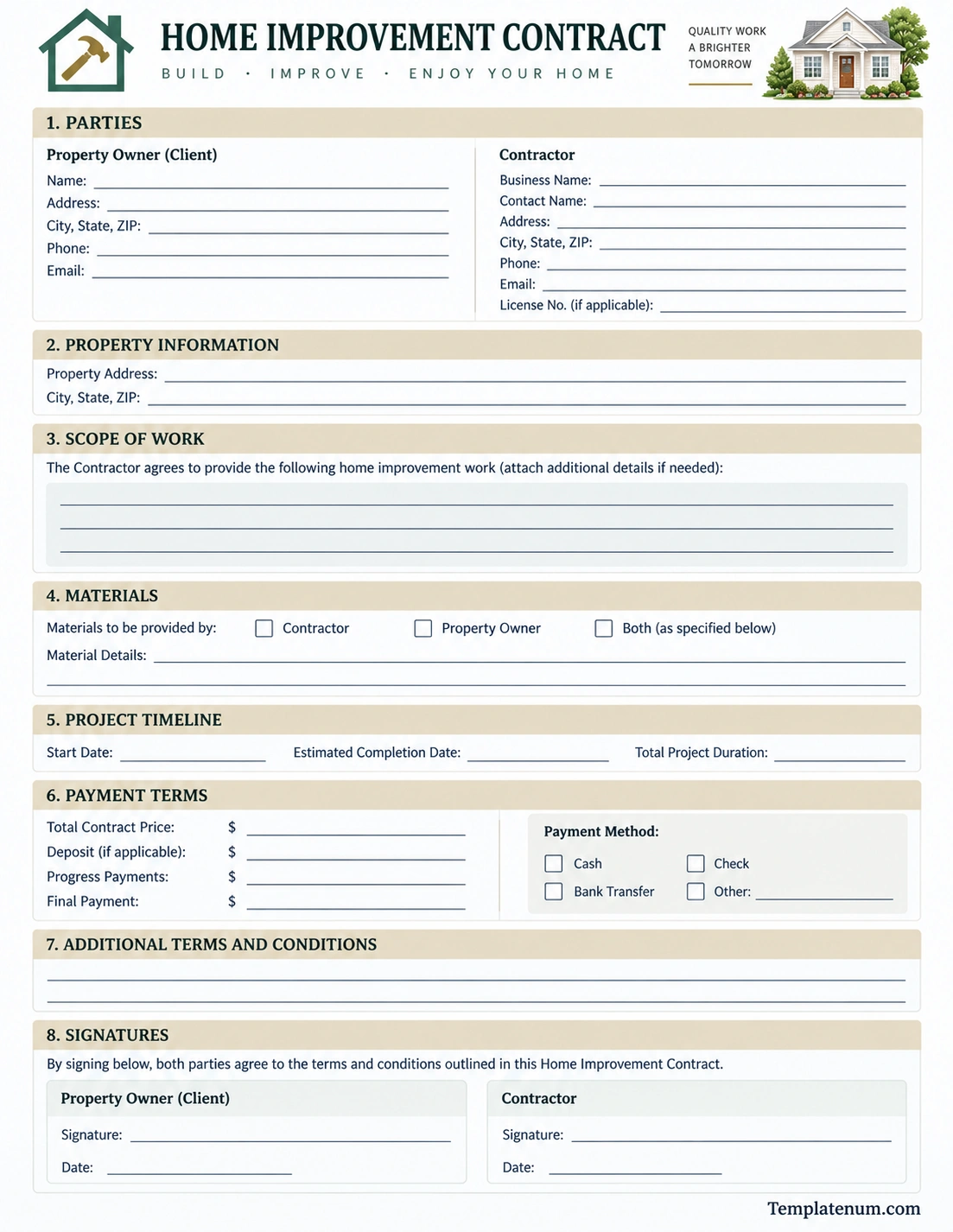
A printable Home Improvement Contract template can provide a convenient starting point for organizing the agreement. Instead of creating every section from scratch, the homeowner and contractor can work from a structured document containing common contract fields.
A practical template can include sections for the parties, property information, scope of work, materials, timeline, payment terms, additional conditions, and signatures.
However, a general template should be treated as a starting point rather than a substitute for legal advice or jurisdiction-specific requirements. Contracts for certain types of home improvement work may be subject to specific state or local rules.
How to Keep a Home Improvement Contract Organized
After the contract is signed, keep the agreement together with other important project documents. This can include estimates, invoices, receipts, approved change orders, product specifications, warranties, and project correspondence.
Keeping these records organized makes it easier to review the original agreement and track changes throughout the project.
Final Thoughts
A Home Improvement Contract provides a structured way for homeowners and contractors to document the expectations of a renovation, repair, or remodeling project. A clear agreement can identify the parties, property, scope of work, materials, timeline, payment terms, additional conditions, and signatures.
The most useful contracts are specific enough to reduce uncertainty while remaining practical for the project. Before signing, both parties should review the agreement carefully and make sure important terms are documented clearly.
Because home improvement contract requirements can vary by state and locality, always check the rules that apply to the project and consider professional legal advice when appropriate. A well-organized printable contract can then serve as a useful foundation for keeping the project, responsibilities, and expectations clearly documented.
Download: Home Improvement Contract Template
