An Employment Reference Letter is an important document that helps verify a person’s professional background, work experience, and qualifications. Employers, hiring managers, and recruitment professionals often use this letter to learn more about a candidate’s previous employment, workplace performance, and professional character.
Whether you are an employer preparing a recommendation for a former employee or a professional requesting a reference from a previous manager, having a clear and well-written letter can make the process much easier. A strong employment reference provides relevant information about the employee’s role, responsibilities, achievements, and professional qualities.
In this guide, you will learn what an employment reference letter is, what information it should include, and how to write one professionally. You will also find a practical employment reference letter sample and useful tips to help you create a letter that meets professional expectations.
What Is an Employment Reference Letter?
An employment reference letter is a formal document written by a current or former employer, manager, supervisor, or other appropriate professional contact. It confirms an individual’s employment history and may describe their skills, responsibilities, work performance, and professional behavior.
Employees commonly request this type of reference when applying for a new job, seeking a promotion, changing industries, or pursuing professional opportunities. Employers may also use employment references as part of their recruitment and background-checking processes.
Depending on its purpose, an employment reference letter may simply confirm basic employment details or provide a more detailed recommendation of the individual’s abilities and qualifications.
A professional reference letter generally includes the following information:
- The employee’s full name.
- The employer’s company name.
- The employee’s job title or position.
- The employment start and end dates, when applicable.
- A summary of job responsibilities.
- Relevant skills, achievements, and professional qualities.
- The writer’s name, position, and contact information.
Why Is an Employment Reference Letter Important?
An employment reference letter can help candidates demonstrate their professional experience and build credibility with potential employers. It provides information from someone who has direct knowledge of the employee’s work history or professional performance.
Here are several reasons why this document can be valuable:
- Verifies employment history: It can confirm where an individual worked, their job title, and their period of employment.
- Highlights professional skills: It allows a previous employer to describe the employee’s abilities, strengths, and relevant experience.
- Supports job applications: A positive reference can provide additional context to a candidate’s resume and application.
- Demonstrates professional character: The letter may describe qualities such as reliability, communication, teamwork, and responsibility.
- Builds professional credibility: A reference from an appropriate workplace contact can help a prospective employer evaluate a candidate.
Although an employment reference letter can strengthen a job application, it does not guarantee employment. Hiring decisions depend on several factors, including qualifications, experience, interviews, and the employer’s requirements.
What Should an Employment Reference Letter Include?
A well-structured employment reference letter should be professional, informative, and easy to read. While the exact content depends on the purpose of the document, most letters follow a similar format.
1. Date and Recipient Information
Begin with the date the letter is written. If you know the recipient’s name and company, include their details below the date. Otherwise, you can use a general greeting such as “To Whom It May Concern.”
2. Employee Information
Clearly identify the person being recommended. Include their full name and, when appropriate, their previous job title and department.
3. Employment Details
State the company where the individual worked, their position, and the employment period. Make sure all dates and job details are accurate before issuing the letter.
4. Job Responsibilities and Achievements
Briefly describe the employee’s main responsibilities and relevant accomplishments. Focus on information that demonstrates their professional experience and suitability for future opportunities.
5. Professional Skills and Qualities
Highlight qualities that you can reasonably support through your professional experience with the employee. Examples include communication skills, problem-solving abilities, leadership, teamwork, reliability, and attention to detail.
6. Recommendation Statement
If you are comfortable recommending the individual, include a clear and positive statement. Explain why you believe the employee would be a valuable addition to another organization.
7. Contact Information and Signature
Finish the letter with a professional closing, your full name, job title, company name, and appropriate contact details. Add your signature if the letter will be printed or formally issued.
Employment Reference Letter Sample
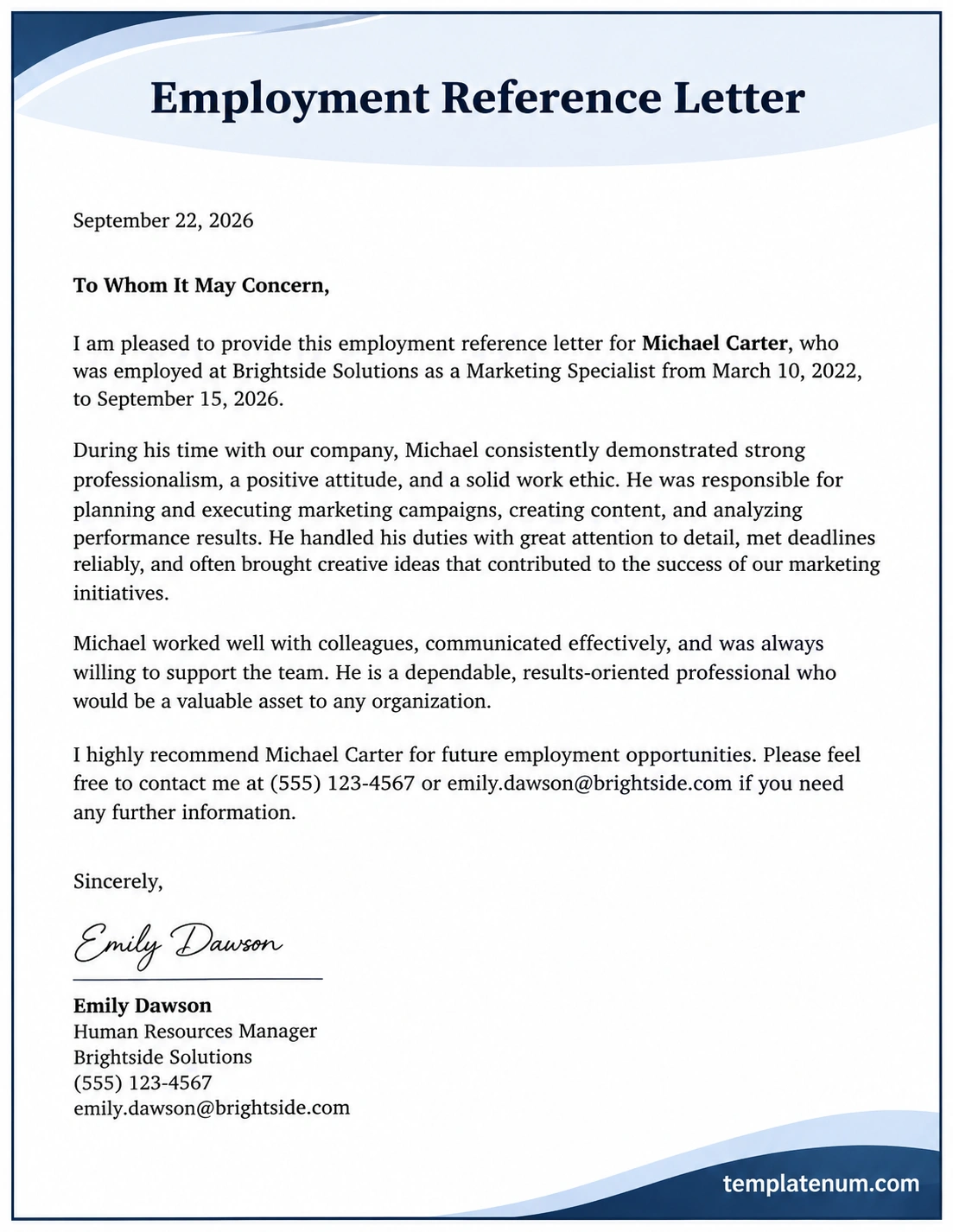
Below is a sample employment reference letter that you can use as a guide when preparing your own document. This example demonstrates how to present employment information, describe professional responsibilities, and provide a recommendation in a formal business letter format.
The sample uses a fictional employee and company. Replace the names, dates, contact details, and employment information with accurate details before using it.
How to Write an Employment Reference Letter
Writing an employment reference does not need to be complicated. The most important thing is to provide accurate information in a clear and professional format.
Follow these steps to create an effective employment reference letter.
Step 1: Confirm the Purpose of the Letter
Before writing, find out why the employee needs the reference. A letter for a new job application may emphasize professional skills and achievements, while an employment verification letter may focus primarily on job title and employment dates.
Step 2: Gather Accurate Employment Information
Confirm the employee’s full name, position, department, employment dates, and main responsibilities. Check company records when necessary to avoid providing incorrect information.
Step 3: Choose Relevant Professional Qualities
Select two or three strengths that are relevant to the employee’s experience. Rather than using generic descriptions, provide specific examples whenever possible.
For example, instead of simply writing that someone is hardworking, explain how they consistently completed projects on time or managed important responsibilities effectively.
Step 4: Use a Professional Letter Format
Organize the information into short paragraphs. Start with an introduction, explain the employment relationship, describe the employee’s strengths, and finish with a recommendation or contact statement.
Step 5: Review and Proofread
Check the letter for spelling errors, grammar mistakes, inaccurate dates, and unclear statements. Make sure the information is factual and that you have permission to share any personal or employment details included in the document.
Step 6: Sign and Deliver the Letter
Use company letterhead when appropriate. Add your signature and contact information, then deliver the document in the format requested by the employee or recipient.
Employment Reference Letter Example
The following example shows how an employer can write a professional reference for a former employee. You can adapt the wording to suit different industries, job positions, and employment situations.
Employment Reference Letter
September 22, 2026
To Whom It May Concern,
I am pleased to provide this employment reference for Michael Carter, who was employed at Brightside Solutions as a Marketing Specialist from March 10, 2022, to September 15, 2026.
During his time with our company, Michael consistently demonstrated strong professionalism, a positive attitude, and a solid work ethic. His responsibilities included planning and executing marketing campaigns, creating content, and analyzing campaign performance. He handled his duties with attention to detail and consistently worked to meet project deadlines.
Michael also demonstrated excellent communication and teamwork skills. He worked effectively with colleagues, contributed creative ideas, and remained dependable when handling important assignments.
I am pleased to recommend Michael Carter for future employment opportunities. I believe his professional experience and positive approach to work would make him a valuable addition to another organization.
Please feel free to contact me if you require any additional information.
Sincerely,
Emily Dawson
Human Resources Manager
Brightside Solutions
Phone: (555) 123-4567
Email: [email protected]
Employment Reference Letter vs. Employment Verification Letter
An employment reference letter and an employment verification letter are related documents, but they serve different purposes. Understanding the difference will help you choose the appropriate document for your situation.
Employment Reference Letter
An employment reference letter provides information about an individual’s work experience, professional skills, responsibilities, and workplace performance. It may also include a recommendation for future employment.
Employment Verification Letter
An employment verification letter primarily confirms factual employment information. It typically includes the employee’s job title, employment dates, and current employment status. It may also confirm salary or other details when appropriate and authorized.
In simple terms, an employment reference focuses on professional experience and qualities, while an employment verification letter focuses on confirming employment facts.
Tips for Writing a Professional Employment Reference
A strong reference letter should provide useful information without becoming unnecessarily long. Keep these tips in mind when preparing your document:
- Be honest and accurate: Only include information you can verify or reasonably support through your professional experience.
- Keep the letter concise: Most employment reference letters can be presented in one page.
- Use specific examples: Mention relevant achievements or responsibilities instead of relying entirely on generic compliments.
- Maintain a professional tone: Avoid overly casual language, exaggerated claims, or unnecessary personal information.
- Customize each letter: Focus on the employee’s actual experience and the purpose of the reference.
- Protect confidential information: Do not disclose sensitive company information or personal employee details without appropriate authorization.
- Include reliable contact details: Make it easy for the recipient to contact the person who issued the reference.
Common Mistakes to Avoid
Even a positive reference can become less effective if it contains unclear or inaccurate information. Avoid these common mistakes when writing an employment reference letter:
- Providing incorrect employment dates or job titles.
- Using vague statements without meaningful examples.
- Including information unrelated to the employee’s professional experience.
- Making claims that cannot be supported.
- Forgetting to include the writer’s contact information.
- Using an informal tone or inconsistent formatting.
- Sharing confidential information without authorization.
Taking a few minutes to review these details can help ensure that your letter is professional, credible, and appropriate for its intended purpose.
Frequently Asked Questions About Employment Reference Letters
Who can write an employment reference letter?
An employment reference letter can be written by a current or former employer, direct manager, supervisor, human resources representative, or another professional who has sufficient knowledge of the individual’s employment and work performance.
How long should an employment reference letter be?
Most employment reference letters are approximately one page long. The letter should provide enough information to explain the employee’s experience and professional qualities without including unnecessary details.
Can I write my own employment reference letter?
You can prepare a draft for your former manager or employer to review. However, the person providing the reference should verify the information, make any necessary changes, and authorize or sign the final document.
Is an employment reference letter the same as a recommendation letter?
Not exactly. An employment reference letter generally focuses on a person’s employment history and professional experience. A recommendation letter may be broader and emphasize why someone is suitable for a particular job, academic program, or other opportunity. The two documents can overlap in purpose and content.
Does an employment reference letter need to be on company letterhead?
Company letterhead is recommended when the letter is issued in an official company capacity. However, requirements vary depending on the recipient and purpose of the document.
Can an employer refuse to provide an employment reference?
Whether an employer must provide a reference depends on applicable laws, employment agreements, and company policies. Some organizations provide only basic employment verification, while others allow managers to write more detailed professional references.
What should I do if my previous employer cannot provide a reference?
Consider asking another professional contact who has direct knowledge of your work, such as a former supervisor, team leader, or project manager. You can also ask whether the company can provide a basic employment verification letter instead.
Can an employment reference letter be sent by email?
Yes. An employment reference letter can generally be sent as a PDF attachment through email. However, follow the recipient’s instructions regarding document format, signatures, and delivery requirements.
Conclusion
An Employment Reference Letter is a valuable professional document that helps verify an individual’s work experience and communicate their professional strengths to potential employers. A well-written letter should include accurate employment details, relevant responsibilities, specific professional qualities, and appropriate contact information.
Whether you are an employer preparing a reference or an employee requesting one, using a clear structure can make the process easier and more efficient. Follow the sample and writing tips in this guide to create a professional employment reference that communicates the right information.
Take the time to review every detail before submitting the final document. An accurate, well-organized reference letter can help present an individual’s professional background clearly and confidently.
Download: Employment Reference Letter Template
